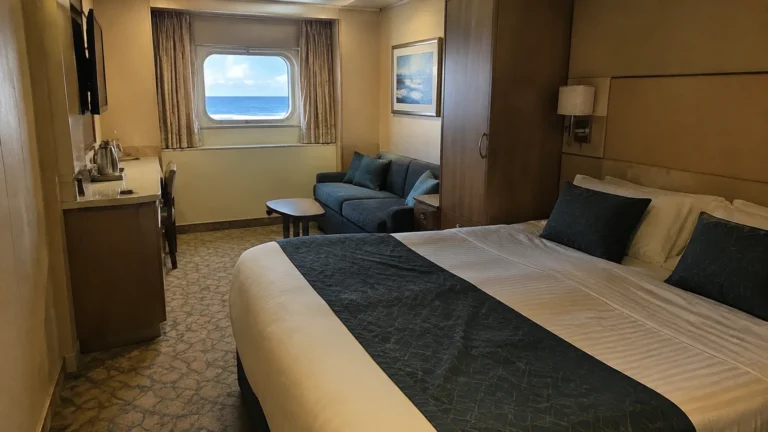
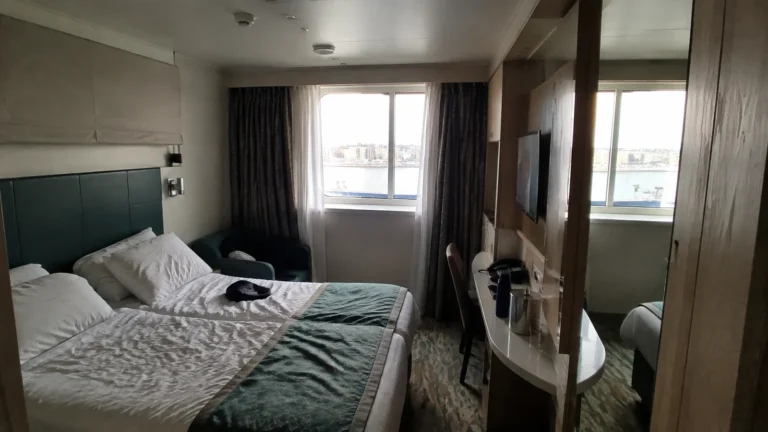
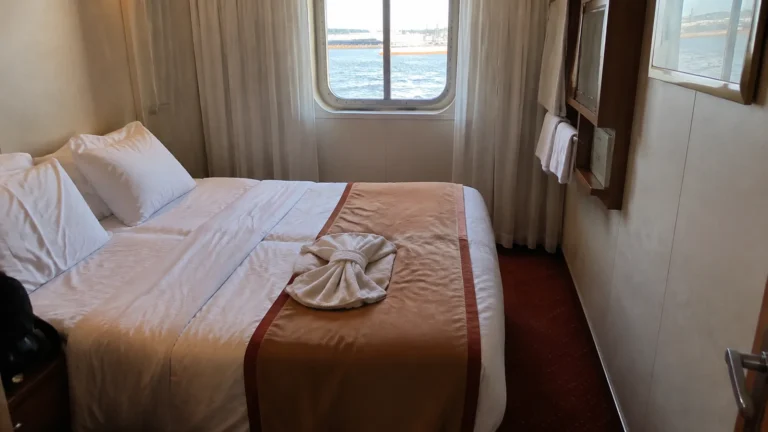
Independence of the Seas Cabins to Avoid, Plus Quiet Picks
The Independence of the Seas cabins to check most carefully sit above the Royal Promenade, below pools and buffet space, beside entertainment venues, or high at the bow. None is universally bad, but the wrong location can turn a clever fare into a nightly reminder that deck plans matter.
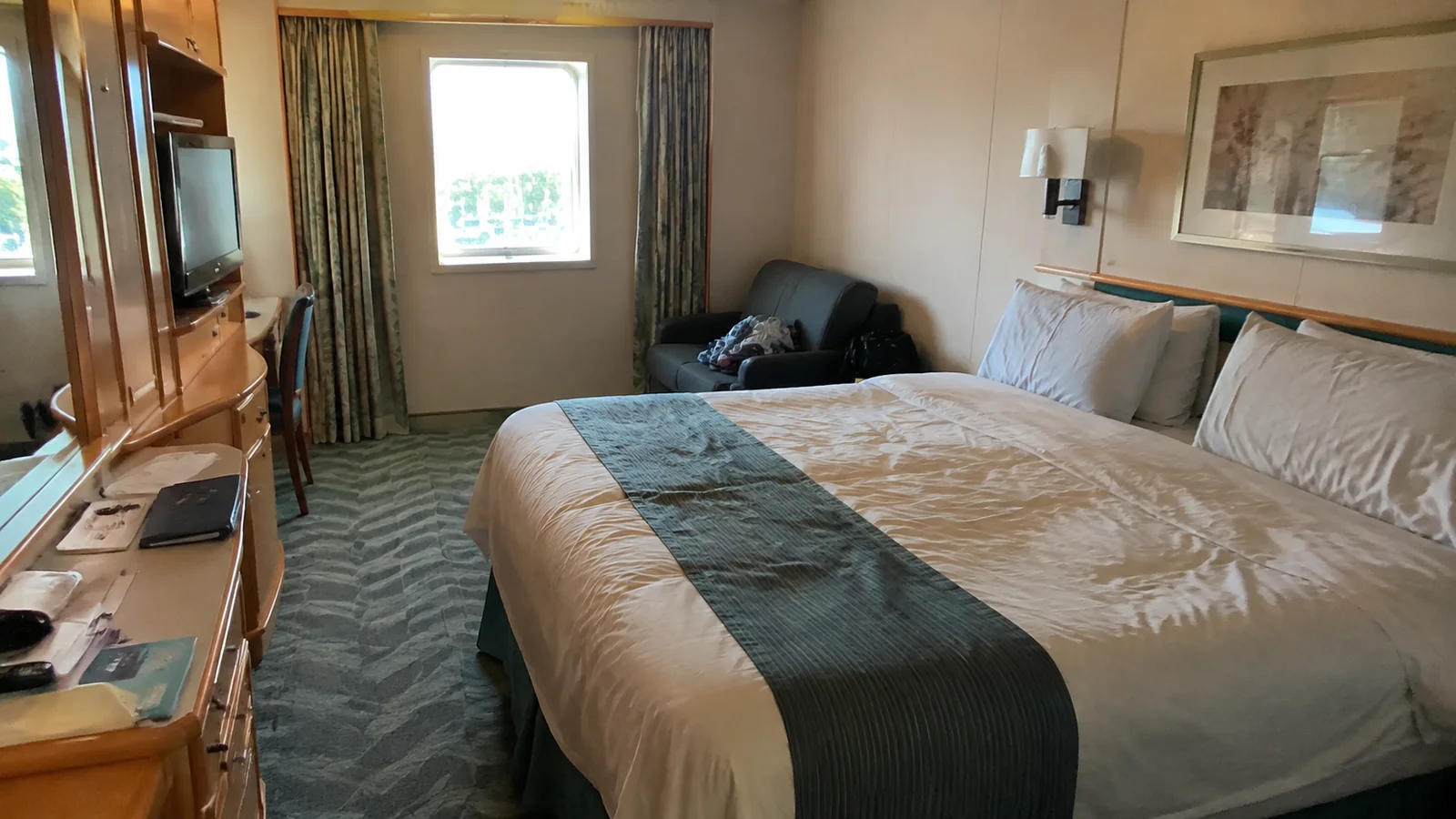
Choose the correct sailing-date profile
Royal Caribbean’s official planner currently offers a profile for April 23, 2026 through April 18, 2027 and a later version beginning in 2027. This guide was checked using the current Independence of the Seas deck plans.
Select the dates matching your cruise before relying on any cabin number. A refurbishment or recategorization can move a venue, rename a category, or change which description applies.
The plan verifies decks, cabins, and venue footprints. Noise, vibration, motion discomfort, and privacy satisfaction are possible outcomes rather than structural facts.
Cabin areas to check twice
- Deck 6 rooms directly above Deck 5 entertainment, shops, bars, and the Royal Promenade.
- Deck 10 rooms below the spa, pools, Splashaway Bay, and Windjammer.
- Deck 3 cabins beside the Royal Theatre, Studio B, photo gallery, and dining areas.
- Deck 2 rooms near Conference Center and Studio B footprints.
- High forward Deck 12 cabins near spa and fitness spaces.
- Far-forward or far-aft rooms when motion or vibration matters.
- Connecting or guarantee cabins when exact control matters.
This is a screening list, not a command to avoid hundreds of rooms. Proximity often improves convenience, particularly for travelers who use the nearest venue.
Deck 6 above the Royal Promenade
Deck 6 is the main lower-neighbor caution because Deck 5 is public from bow to stern. It includes the Royal Theatre, Star Lounge, library, shops, bars, Royal Promenade, Guest Services area, and the upper dining-room footprint.
Forward Deck 6
The forward cabin block sits above or near the Royal Theatre and Star Lounge area. Shows, rehearsals, stage operations, music, doors, and departing crowds may create sound at scheduled times.
The bow location can also feel more pitching in rough seas. A traveler who stays out late and loves live entertainment may find the same location delightfully practical.
Midship Deck 6
Midship cabins run above shops, bars, and the Royal Promenade. Parades, music, guest traffic, and venue operations are plausible below, with exposure depending on the room’s exact alignment.
Study the cabin walls against Deck 5 instead of treating the entire corridor alike. A retail area, open promenade, and bar stage are three different neighbors wearing one deck number.
Aft Deck 6
Aft rooms align above dining and public circulation areas. Meal service, carts, doors, and guest flow may matter around dinner, while the stern position can add vibration or turning sensation.
Central Deck 7 or 8 is the cleaner quiet-first alternative. Those decks have passenger rooms above and below across most of their length.
Deck 10 below pools, spa, and Windjammer
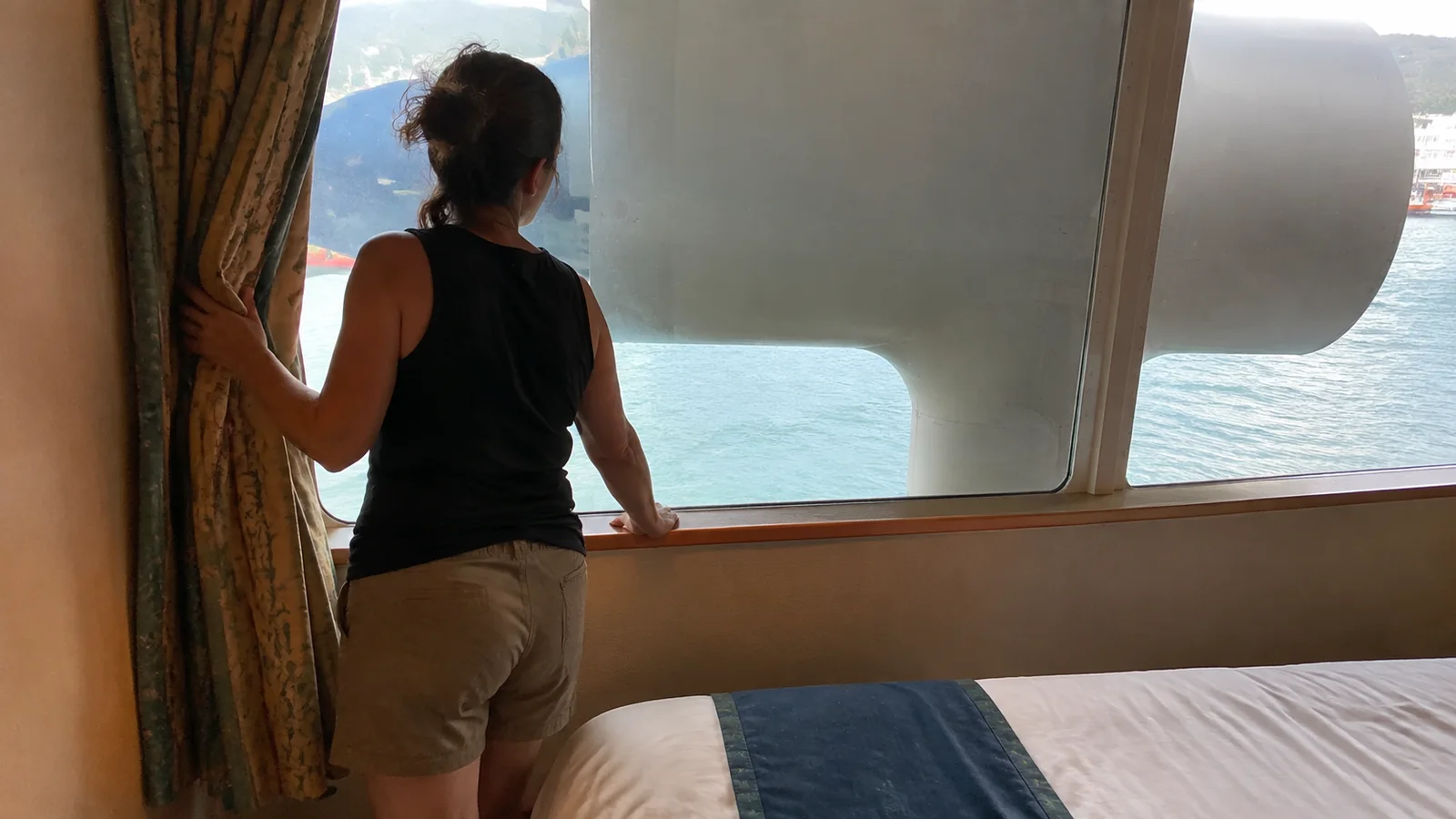
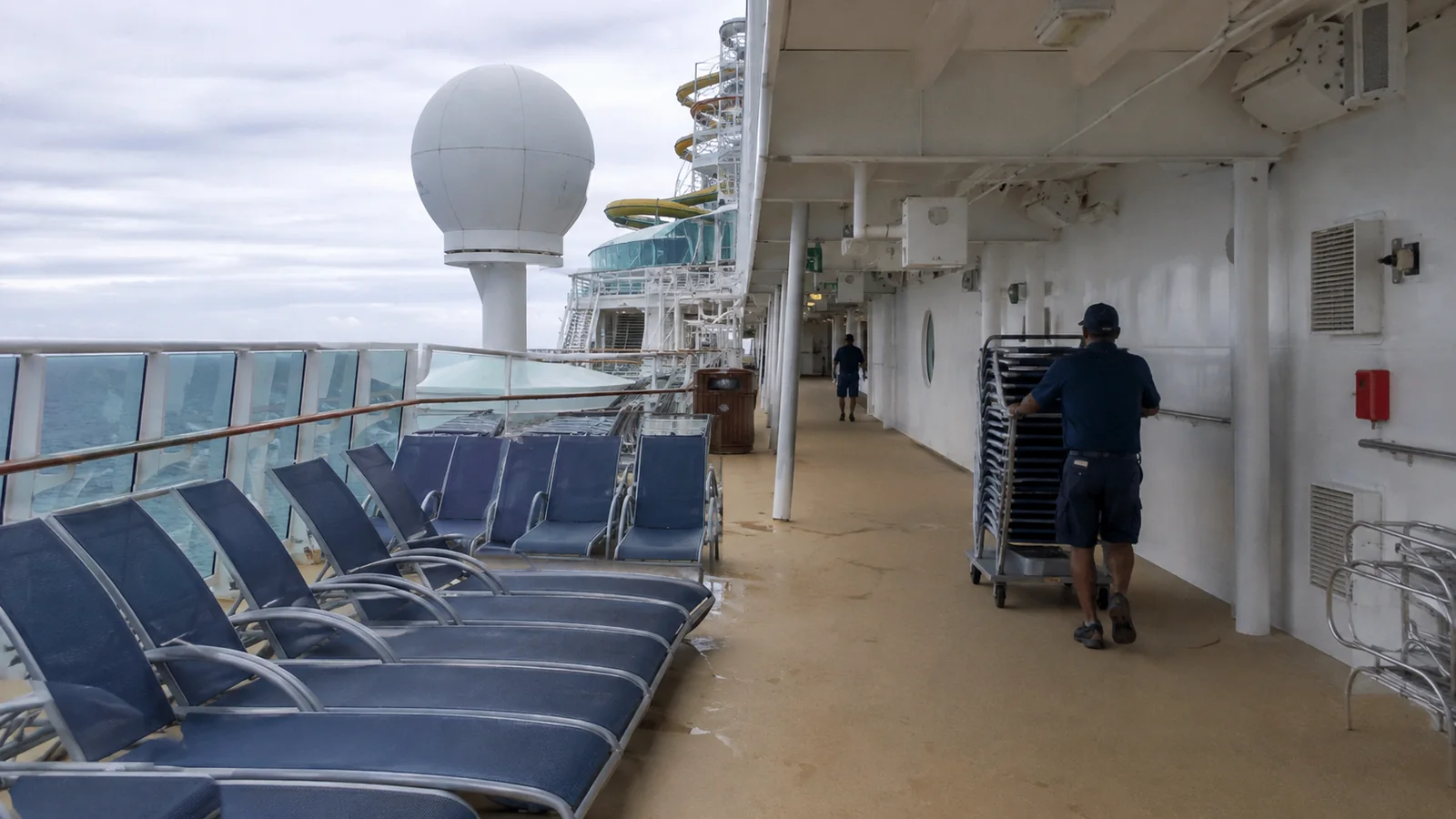
Deck 10 sits directly under Deck 11, which contains the spa and fitness center, Solarium, main pools, Splashaway Bay, bars, casual dining, and Windjammer Café. Possible overhead sounds include chairs, carts, footsteps, music, exercise activity, setup, and cleanup.
The risk changes by location. A room below the spa footprint does not share the same overhead schedule as a cabin beneath a pool deck or buffet station.
Forward Deck 10
Forward Deck 10 rooms align beneath the fitness center, spa, and forward Solarium zone. Early activity and daytime circulation may matter, while the high bow location can feel more ship movement.
Choose this area when spa and Solarium access outweigh those concerns. A lower, central room on Deck 8 or 9 is the more conservative motion choice.
Midship Deck 10
Midship sections sit below pools, whirlpools, bars, and Splashaway Bay. Pool programming and furniture movement are conditional risks, especially for guests who sleep late or nap in the afternoon.
Families may appreciate being one flight from the water attractions. That convenience is real even though “quiet” is not part of the location’s job description.
Aft Deck 10
The aft run lies beneath casual dining and Windjammer Café. Breakfast preparation, carts, guest traffic, and cleanup may create overhead activity at various times.
Central Deck 9 provides cabins above and below with only a short elevator ride to food. It is the most straightforward nearby alternative for a light sleeper.
Deck 3 beside theater, ice rink, and dining
Deck 3 combines long cabin corridors with major public spaces. The plan places the Royal Theatre forward, Studio B and the ice rink in the middle, the photo and art gallery nearby, and the dining room aft.
Cabins at those transition points may encounter show crowds, venue doors, skaters and event activity, gallery traffic, or dining movement. Walls, vestibules, schedule, and exact distance determine what reaches a room.
Deck 3 remains relatively low, which may suit motion-sensitive travelers. Choose a cabin deeper inside a residential run rather than immediately beside a public-space entrance when sleep is the stronger priority.
Deck 2 near Conference Center and Studio B
Deck 2 cabins wrap around the Conference Center and lie in the same vertical stack as Studio B and Deck 3 public spaces. Conference use, events, rehearsals, or operational activity can vary by sailing.
The low deck may reduce some felt motion, although forward and aft position still matters. Low does not magically turn the bow into midship.
Check the cabin directly above on Deck 3 and ask what large blank or venue spaces represent. A lower central room with cabin neighbors can be a good value when the footprint lines up well.
High forward Deck 12 cabins
Independence has a compact group of high forward rooms on Deck 12, surrounding or near the spa and fitness area in the official plan. They offer quick wellness access and one of the ship’s most motion-sensitive elevations.
Daytime gym or spa circulation may be the practical concern, rather than late-night entertainment. Wind and sea conditions determine whether the height and bow location affect comfort.
Book these rooms because the position suits your habits. Move lower and closer to midship when stability matters more than being first to the treadmill.
Interior-facing and Promenade-view expectations
Independence’s Royal Promenade creates interior sightlines and cabin positions different from a conventional outside window. A window facing the ship’s interior is not an ocean view, and public-space lighting or passersby can affect privacy.
Confirm the exact room description in Royal Caribbean’s booking flow rather than relying on a generic photograph. Close curtains when privacy matters, especially after dark.
An interior-facing view can be entertaining and help a cabin feel less enclosed. It is not the right substitute when natural daylight and a sea horizon are the reasons you are paying for a view.
What the current plan does not label obstructed
The 2026-2027 room inventory reviewed for this guide does not list a dedicated Obstructed Ocean View Balcony subtype. That is not a promise that every angle is identical or completely free of railings and ship structure.
Inspect the exact interactive cabin, including window direction and nearby lifeboats or equipment. Do not import an obstruction claim from Freedom or Liberty of the Seas just because they belong to the same class.
Sister ships are useful for understanding the broad layout, not proving exact cabin facts. This article names only relationships shown for Independence.
Forward, aft, and guarantee cabins
Far-forward cabins may feel more pitching, while aft cabins may transmit vibration or turning sensation. Route, weather, speed, machinery, and personal sensitivity govern the outcome.
A guarantee rate can save money while allowing the cruise line to choose an eligible room. Select a specific cabin if location, connection, sightline, or accessibility could change the vacation.
Our cruise booking comparison helps weigh direct reservations, advisors, and online sellers. Whoever handles the booking should be able to explain the exact category and assignment terms.
Connecting cabins
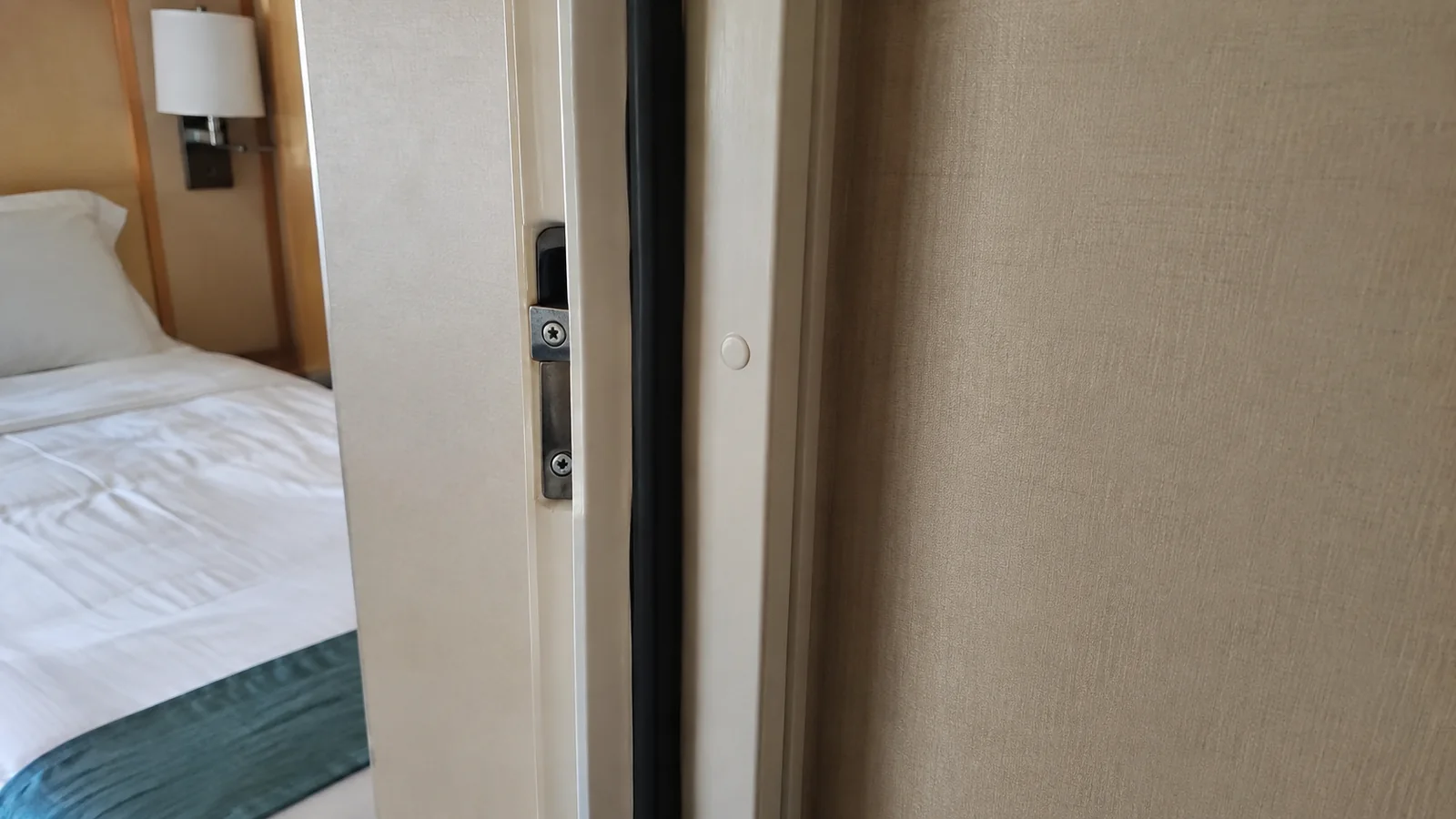
The official plan marks connecting rooms across several decks. They are excellent for families, but the interior door may provide less acoustic separation than a continuous wall.
That does not guarantee audible neighbors. A sound-sensitive traveler who does not need the connection can simply remove one avoidable variable.
Verify occupancy and bed symbols too. Two adjacent cabins are not necessarily connecting, and a sofa or Pullman can change usable floor space once opened.
Elevators and blank service areas
Elevator proximity can be a gift on a large Freedom-class ship, particularly for limited stamina. The realistic concern is guest conversation and traffic concentrated around the lobby, not the elevator’s mere existence.
A few doors of separation often balances access and quiet. Large blank spaces can contain machinery, storage, ducts, crew routes, or structure, so ask Royal Caribbean what is there.
Do not let an internet legend transform every blank rectangle into a secret industrial laundry. The official line is the right place to verify an unclear space.
Accessibility requires precise matching
Royal Caribbean says its ships have rooms designed for guests who need accessibility features. Its official room overview lists a fleet-wide accessible-room range of 159 to 298 square feet and a 5-foot turning radius in sleeping, bathroom, and sitting areas.
Those are not exact dimensions for every Independence cabin. Confirm doorway width, bathroom layout, bed approach, balcony threshold, equipment storage, and an accessible route with the Accessibility Department.
Reserve accessible inventory because its features are needed, not as a casual size upgrade. The best accessible location may prioritize elevator routes over a generic quiet-deck recommendation.
Quieter Independence locations to consider
- Central Deck 7 or 8: broad cabin-above and cabin-below buffers.
- Central Deck 9: another residential option below Deck 10 cabins.
- Midship rather than extreme ends: the conservative motion choice.
- Non-connecting room: removes the interior-door variable.
- Several doors from an elevator lobby: convenient without sitting on the main traffic turn.
No deck guarantees silence. Neighbors, weather, maintenance, and suitcase wheels are stubbornly independent travelers.
Seven checks before final payment
- Select the official plan version matching your sailing dates.
- Search the exact cabin on Independence, not a sister ship.
- Align the room with the decks directly above and below.
- Identify theaters, pools, restaurants, bars, elevators, and service spaces.
- Confirm view direction, category, connection, occupancy, and bed symbols.
- Request exact accessibility details when relevant.
- Save the description and recheck it before final payment.
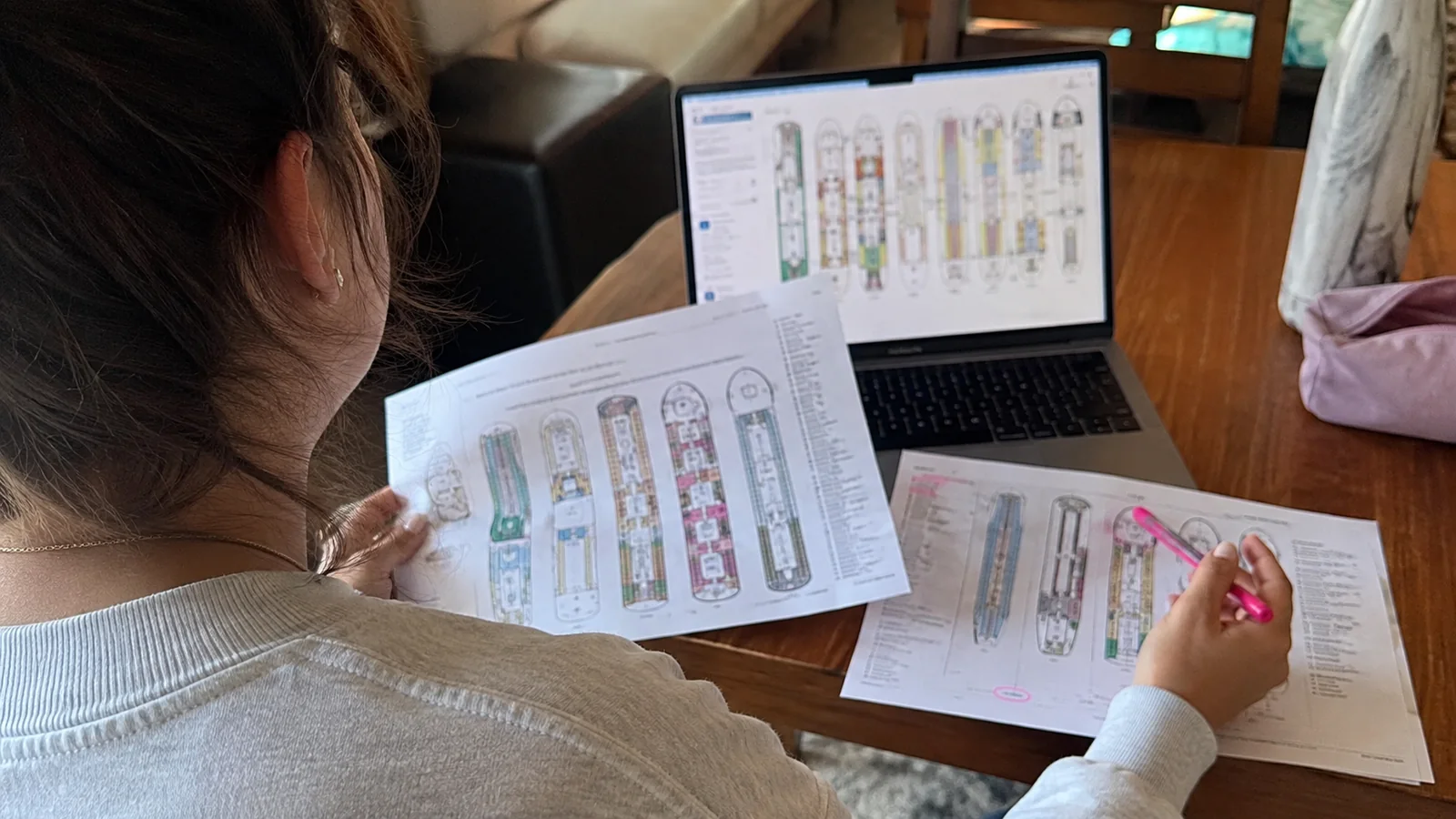
The official Independence ship page helps confirm the current venue lineup, while the dated planner supplies locations. Use both because marketing photos are excellent at sunshine and less committed to ceiling diagrams.
Our first-time cruise tips connect the cabin choice with embarkation and onboard routines. Once booked, the cruise packing list keeps your room usable instead of turning it into a luggage annex.
Frequently asked questions
What is the quietest deck on Independence of the Seas?
Central Decks 7, 8, and 9 offer the clearest broad residential buffers. Exact connecting doors, elevator lobbies, and service areas still need checking.
Should I avoid all Deck 6 cabins?
No. Deck 6 is convenient, but early sleepers should identify the exact Royal Promenade or entertainment space below.
Is Deck 10 always noisy?
No. It has public space overhead, but exact venue, schedule, insulation, weather, and individual sensitivity determine whether activity matters.
Are Deck 12 cabins bad?
No. They are high and forward near spa or fitness space, which suits some travelers and gives motion-sensitive guests more to consider.
The bottom line
Check Deck 6 for Royal Promenade venues below, Deck 10 for pools and dining above, Decks 2 and 3 for entertainment adjacency, and Deck 12 for high-forward motion. These are conditional tradeoffs, not universal failures.
For the simplest quiet-first option, begin midship on Deck 7, 8, or 9 with cabins above and below. A careful match beats a dramatic cabin blacklist, and it leaves far more money available for something cheerful.