How Many People Are on a Cruise Ship? Capacity Explained
A cruise ship may carry about 100 guests or more than 7,000, depending on the vessel. Add the crew and the total number of people aboard climbs again, but advertised capacity, maximum capacity, and the actual headcount on your sailing are three different numbers.
The quick answer
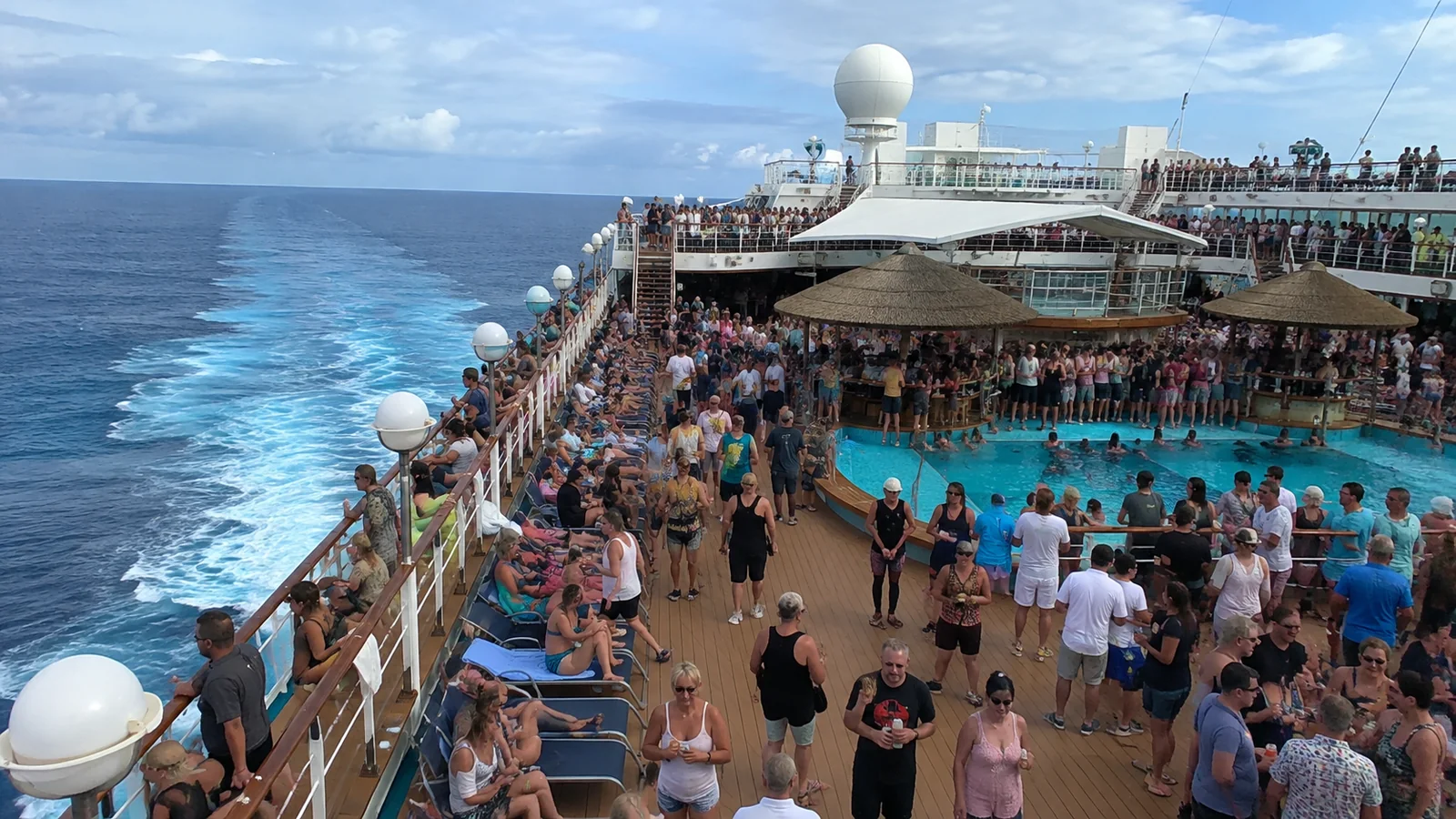
Small expedition ships may carry around 100 guests, many river ships carry dozens or low hundreds, and contemporary ocean ships commonly carry several hundred to several thousand. The largest resort-style ships can accommodate more than 7,000 guests at maximum occupancy.
That enormous range is why “How many people are on a cruise?” needs a ship name and a definition. It is a little like asking how many people fit in a hotel, except this hotel also has a bridge, lifeboats, and very strong opinions about being back onboard by 4:30.
Four cruise ship numbers people confuse
A cruise line may publish several figures for the same ship, and all of them can be correct. Look for the label beside the number before using it to compare vessels.
- Double-occupancy capacity: The number of guests when two people occupy each standard passenger cabin or lower-berth space used in the calculation.
- Maximum guest capacity: The highest guest total when permitted third, fourth, and other additional berths are occupied.
- Actual guests: The people who really sail on a particular voyage after bookings, cancellations, no-shows, and cabin occupancy are resolved.
- Crew complement: The published or actual number of officers and crew who operate the ship and serve guests.
Guests and crew should not be combined under “passenger capacity.” If you want every human aboard, ask for persons onboard, which includes both groups.
Real examples show the range
At one end, Celebrity Flora is listed by Celebrity as a 100-guest ship designed for the Galápagos. That figure describes guest occupancy, not a total that includes naturalists, officers, or crew.
Viking describes Viking Sky as a 930-guest ocean ship. A capacity under 1,000 feels substantial on land, but it sits well below the guest count of a large mainstream vessel.
Norwegian Cruise Line lists Norwegian Getaway at 3,903 guests based on double occupancy and 1,646 crew. Those published figures would equal 5,549 people if both numbers matched the exact onboard totals, but the page does not claim that every voyage carries precisely that many.
At the giant end, Royal Caribbean’s current comparison lists Icon of the Seas at a maximum of 7,600 guests. That is a maximum guest figure, so it should not be compared directly with Getaway’s double-occupancy number.
Ship specifications were checked on September 4, 2026 and can change after renovations or fleet updates. Always use the official page and deck plan for the ship and sailing you are considering.
What double occupancy really means
Double occupancy is a standardized planning figure based broadly on two guests per cabin or two lower berths. It makes ship-to-ship comparisons more consistent because it does not assume every foldout sofa, upper berth, or family cabin is full.
It is not a prediction that every room contains two adults. One cabin may hold a solo traveler, the next a couple, and the next two adults with two children, with the totals partially balancing one another.
Cruise lines often use double occupancy for ship fact sheets, pricing language, and business reporting. When a page simply says “occupancy” or “guest capacity,” inspect the notes rather than guessing which basis it uses.
Why it is sometimes called lower berths
Traditional capacity language counts the main sleeping positions in cabins, historically the lower beds rather than bunks above them. Modern cabins may use twins that combine into a queen, sofa beds, Pullman-style berths, or other configurations, but the comparison concept remains useful.
The number of cabins multiplied by two can provide a rough double-occupancy estimate. It may not match the published figure exactly because suites, solo cabins, inaccessible inventory, and the operator’s counting method complicate the arithmetic.
Maximum capacity is a different ceiling
Maximum guest capacity includes additional approved berths in cabins designed for three, four, or more people. Family-heavy sailings during school breaks can therefore operate farther above double occupancy than a voyage with many couples and solo guests.
Not every cabin can hold extra guests, and the cruise line cannot necessarily sell every bed in every cabin at once. Muster-station assignments, lifesaving arrangements, ship limits, and operational inventory all influence what can be booked.
Do not estimate maximum capacity by counting tiny bed symbols and declaring victory. The official maximum, when published, is the defensible number.
Actual occupancy changes every sailing
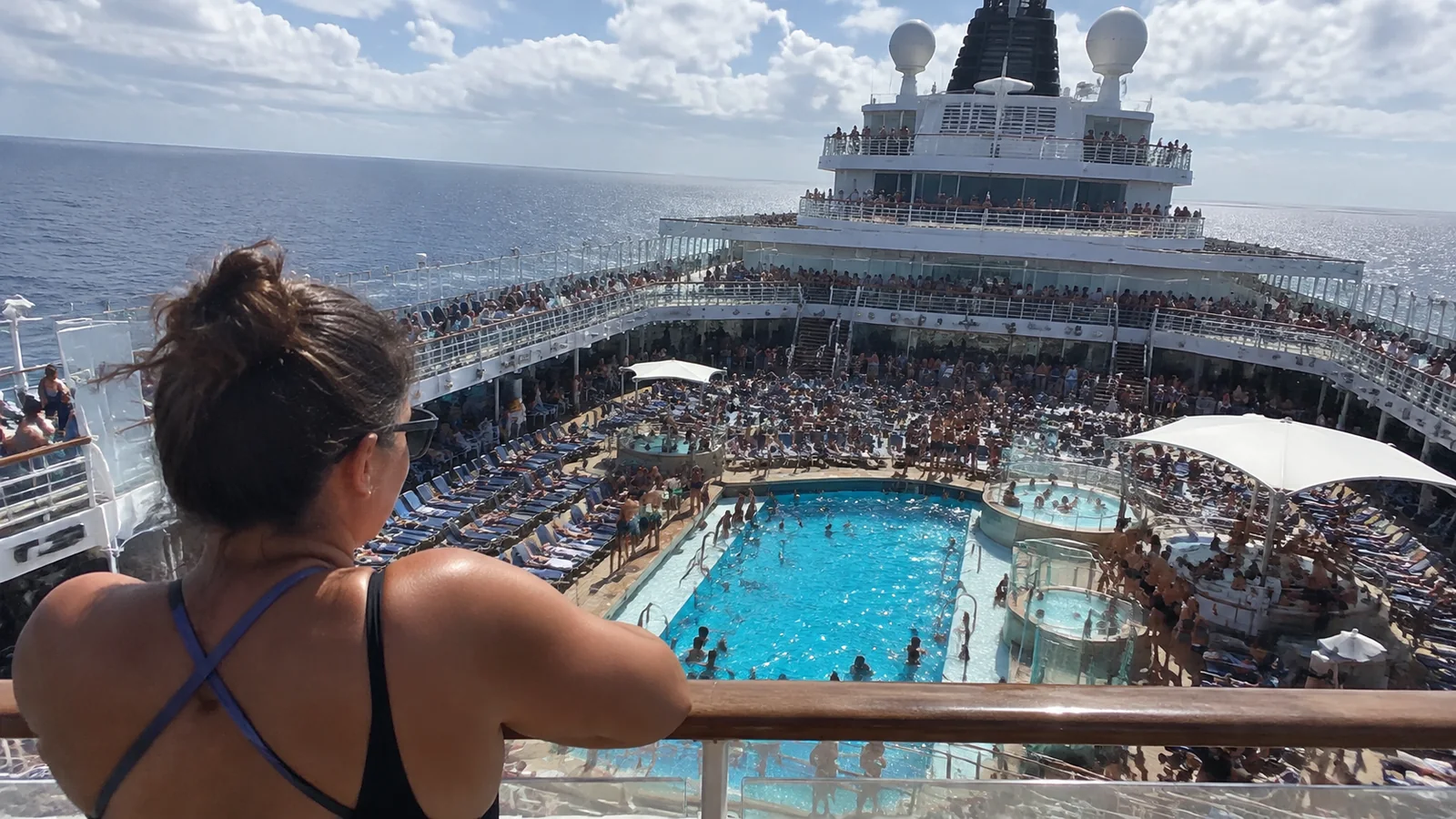
The live guest count depends on demand, itinerary, price, season, cabin mix, group bookings, cancellations, and no-shows. A sold-out ship means its sellable cabin inventory is committed, not necessarily that every possible berth contains a person.
A ship can be sold out below maximum capacity if mostly couples occupy cabins that could sleep four. Conversely, guest occupancy can exceed 100 percent when the percentage is measured against double-occupancy capacity.
That does not mean anyone has been tucked into the linen closet. It means the denominator counts two guests per standard cabin while real families are using approved third and fourth berths.
Can you learn the exact count before sailing?
Usually not with certainty. Inventory changes until departure, and customer-service representatives may not provide a live manifest total.
After boarding, a captain or cruise director sometimes announces the guest count, but this is not guaranteed. Treat forum posts about another date as an anecdote, not your sailing’s census.
How many crew members are on a cruise ship?
Crew can number from a few dozen on a small vessel to well over 2,000 on the largest ships. The necessary team includes deck and engine officers, hotel operations, food and beverage staff, housekeeping, entertainment, medical personnel, security, youth staff, technicians, and many other roles.
The published crew figure is often a standard complement rather than a verified headcount for every departure. Staffing can vary with itinerary, maintenance work, vacancies, contractors, and which venues are operating.
Crew sleep in separate accommodations and do not consume the guest capacity shown on a booking page. They do count toward total persons onboard and shipboard safety planning.
Does a guest-to-crew ratio predict service?
Divide published guests by published crew and you get a rough ratio, but it is not a service guarantee. A lower number can suggest more staffing per guest, while job mix, training, venue design, automation, and how full the ship is matter just as much.
Use ratios only when the two ships’ numbers share the same basis. Comparing one ship at maximum guests with another at double occupancy produces precision-shaped nonsense.
Passenger ship has a regulatory meaning too
The International Maritime Organization says a passenger ship is a ship carrying more than 12 passengers under SOLAS definitions. Its ship-safety overview is a reminder that “passenger ship” extends well beyond vacation megaships.
Ferries, expedition vessels, small coastal ships, and cruise ships can all fall into passenger-vessel frameworks. National rules and voyage type also matter, so one global marketing category does not supply a universal hotel-style capacity formula.
Why the biggest number does not predict crowding
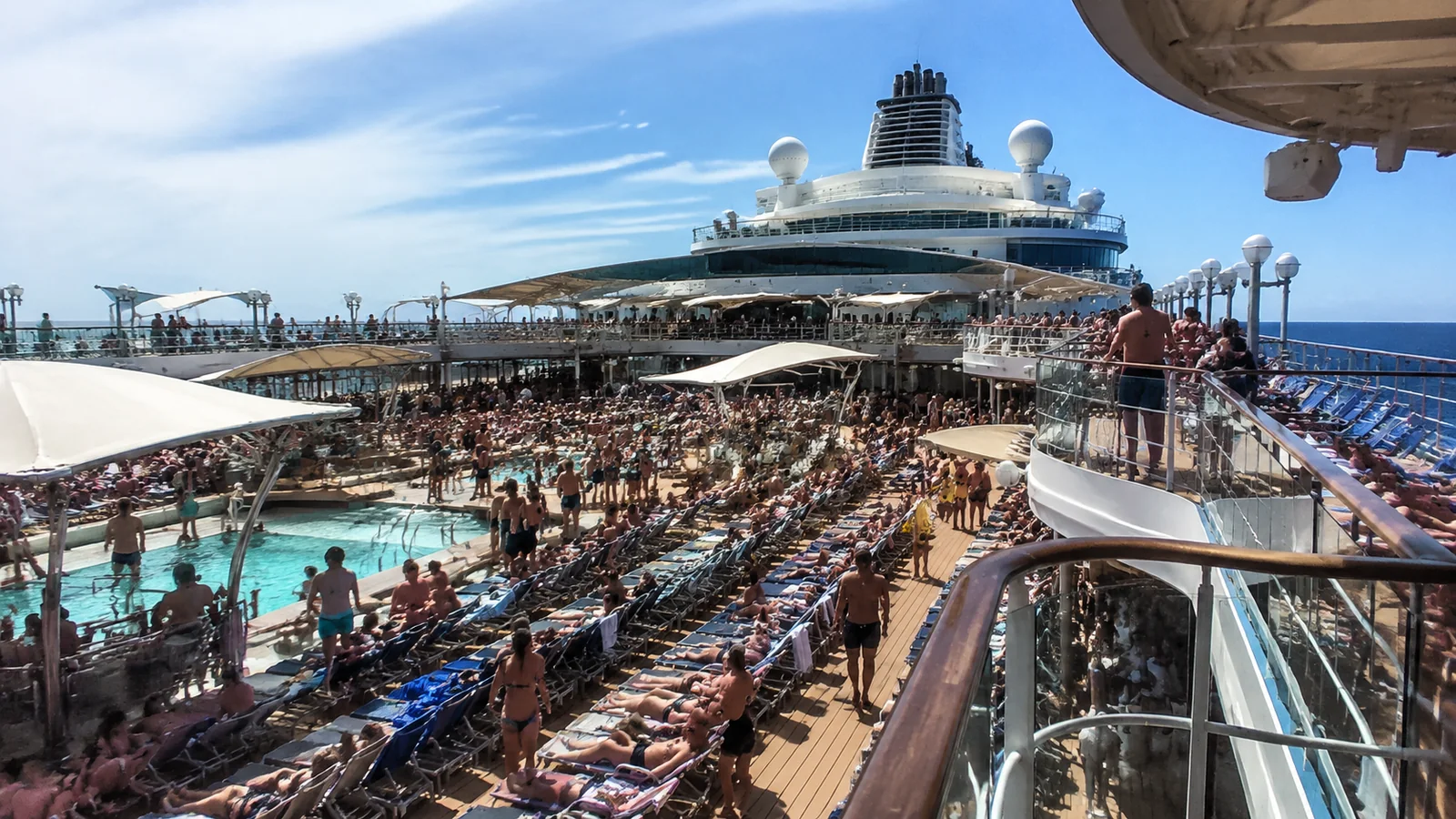
A 5,000-guest ship may distribute people across multiple neighborhoods, pools, restaurants, and entertainment venues. A much smaller ship can feel busy if everyone arrives at one lounge, tender platform, or buffet at the same time.
Design and schedule shape crowding more than raw capacity alone. Look at how passengers move through the ship and where demand concentrates.
- Elevators: How many banks serve the busiest cabin and venue decks?
- Dining: Are there multiple included venues, fixed seatings, reservations, or one main room?
- Pools: Does the ship separate family, activity, and adults-only spaces?
- Entertainment: Must major shows be reserved, and does the main theater seat a large share of guests?
- Ports: Will thousands of people need tenders or coaches during the same short window?
- Weather: Is there enough pleasant indoor space when an outdoor deck closes?
Cabin location can also change your daily experience without changing the ship’s headcount. The conditional-risk approach used in this Norwegian Getaway cabin guide helps identify long walks, venue adjacency, and possible noise without pretending one room is bad for everyone.
Gross tonnage is not passenger count
Gross tonnage measures the ship’s enclosed internal volume through a technical formula; it is not the ship’s weight and does not tell you how many guests are onboard. Two ships with similar tonnage can have different cabin counts, crew complements, and public-space layouts.
A common space ratio divides gross tonnage by a chosen passenger capacity. It can be a useful comparison clue, but the result changes depending on whether the calculation uses double or maximum occupancy and says nothing about where the space is located.
A huge atrium adds volume but may not help when you want a quiet pool chair. Deck plans tell a more human story than one tidy ratio.
How many people will you encounter in port?
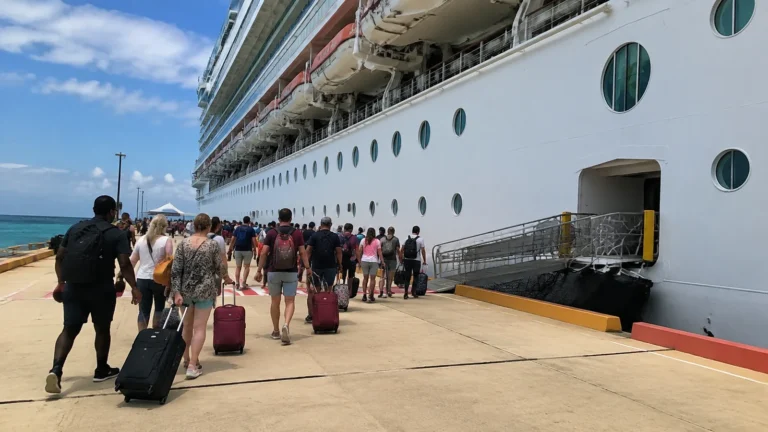
Your ship is only part of the port-day crowd. Several vessels may berth together, independent visitors and residents share the same streets, and tours often converge at the best-known attraction shortly after arrival.
Check the port authority’s schedule near your date, but expect berth assignments and calls to change. An early private departure, a later museum entry, or a walk beyond the first shopping blocks can make more difference than choosing a ship with 300 fewer guests.
Tender ports concentrate movement because guests transfer into smaller boats in groups. Mobility needs, local clearance, weather, tender priority, and distance to shore can all affect the wait.
Small ship, midsize ship, or megaship?
Small ships
Small ships can offer simpler navigation, fewer lines, closer social contact, and access to ports that cannot host large vessels. The tradeoff is fewer dining choices, less entertainment variety, and a greater chance that one closed venue affects everyone.
Midsize ships
Midsize vessels often balance activity choices with manageable distances. They can be a comfortable starting point for travelers who want a recognizable cruise experience without making a daily expedition from cabin to breakfast.
Large resort ships
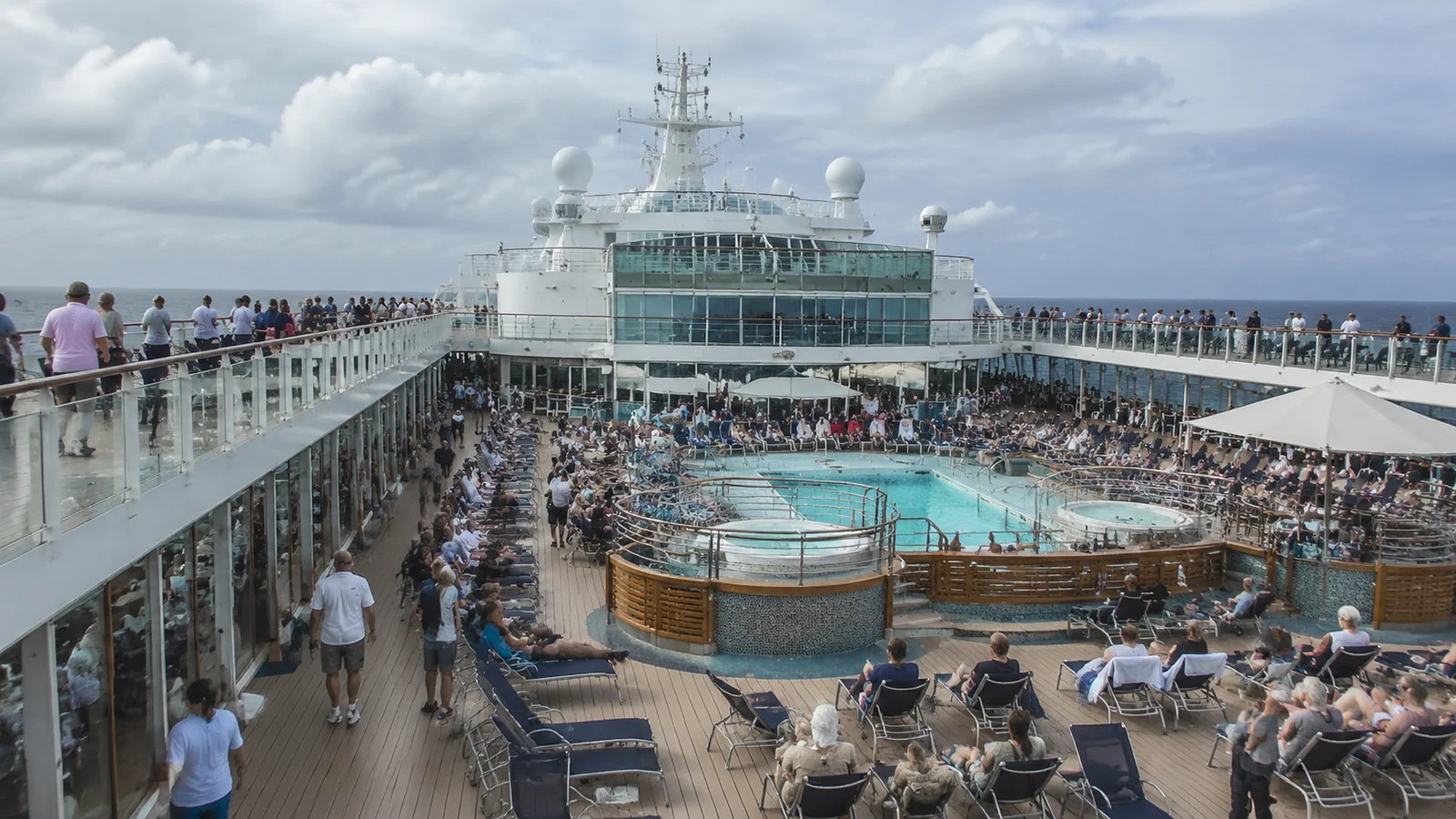
The biggest ships offer extensive dining, entertainment, family facilities, and cabin categories. They also require more planning for reservations, embarkation, elevators, and popular attractions, especially on high-occupancy dates.
New cruisers can prepare for that rhythm with these first-time cruise tips. The goal is not to avoid other people, which is difficult on communal transportation, but to choose a scale whose benefits outweigh its friction.
How to estimate the count before booking
- Find the official ship page and note whether capacity is double occupancy or maximum.
- Record the published crew number separately, if available.
- Open the current deck plan and identify family cabins, solo rooms, passenger decks, and major venues.
- Consider the sailing date, school calendar, itinerary, and typical party mix without assuming an exact percentage.
- Check how many ships are scheduled in key ports and whether any calls require tenders.
- Compare layout and reservation systems, not capacity alone.
If a cruise line publishes only one guest number without a label, ask which occupancy basis it uses. If no clear answer exists, state the ambiguity rather than silently turning an uncertain number into a fact.
Frequently asked questions
Does cruise ship capacity include crew?
Usually no. Guest or passenger capacity refers to travelers, while crew is listed separately; add actual guests and actual crew to calculate persons onboard.
What does 100 percent occupancy mean?
In cruise business reporting it commonly refers to a double-occupancy baseline, so more than two guests in some cabins can push occupancy above 100 percent. It does not mean the vessel exceeded its lawful maximum.
Is every cruise ship full?
No, but a ship can sail with strong demand, and “sold out” does not reveal how many extra berths are occupied. Actual totals vary by departure.
Are there enough lifeboats for everyone?
Passenger ships operate under lifesaving-appliance and evacuation requirements that are more complex than counting visible orange boats from a pier. Do not use a casual lifeboat count to reverse-engineer capacity, and follow the muster information provided onboard.
Do all-inclusive ships carry fewer people?
Not necessarily, because inclusions describe the fare rather than vessel size. Compare the specific ships in an all-inclusive cruise search just as carefully as any other category.
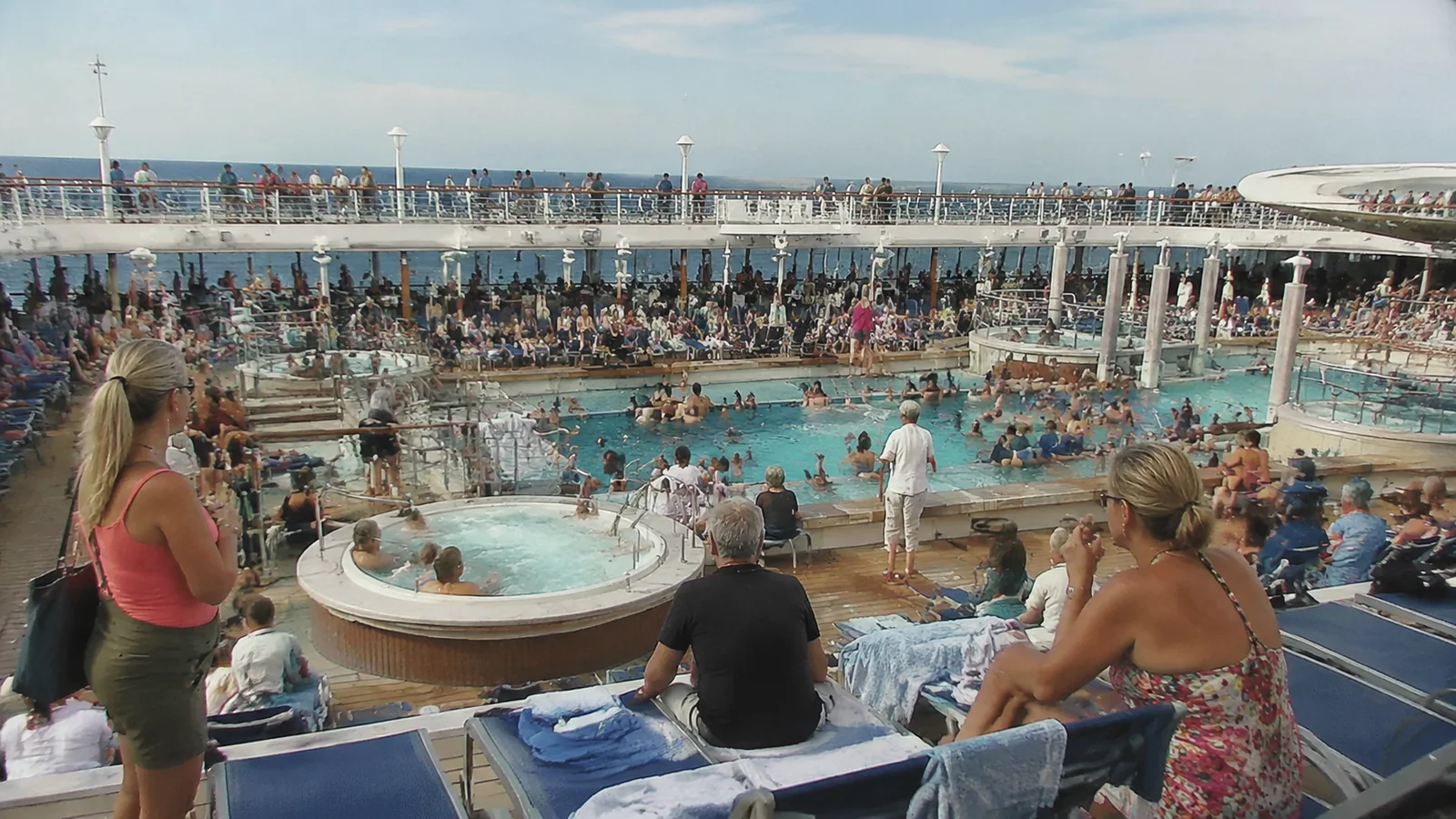
The number that matters
Use double occupancy to compare baseline ship size, maximum capacity to understand the upper guest limit, actual guests to describe one voyage, and guests plus crew for everyone onboard. Keeping those labels attached prevents most cruise-capacity confusion.
Then look beyond the number. A ship that moves people well can feel easier than a smaller one with a single bottleneck, and the right amount of company depends on whether you see 5,000 fellow travelers as a crowd or an impressively organized dinner party.