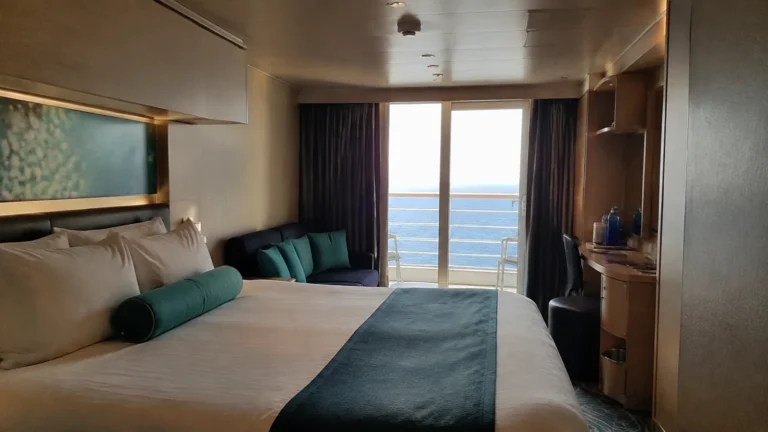
Carnival Splendor Cabins to Avoid: Exact Rooms and Better Picks
Carnival Splendor has plenty of perfectly comfortable cabins, but a few locations deserve extra homework. The real red flags are not dramatic online reviews; they are fixed features such as obstructed categories and public-space adjacency that may conflict with your sleep, view, or mobility needs.
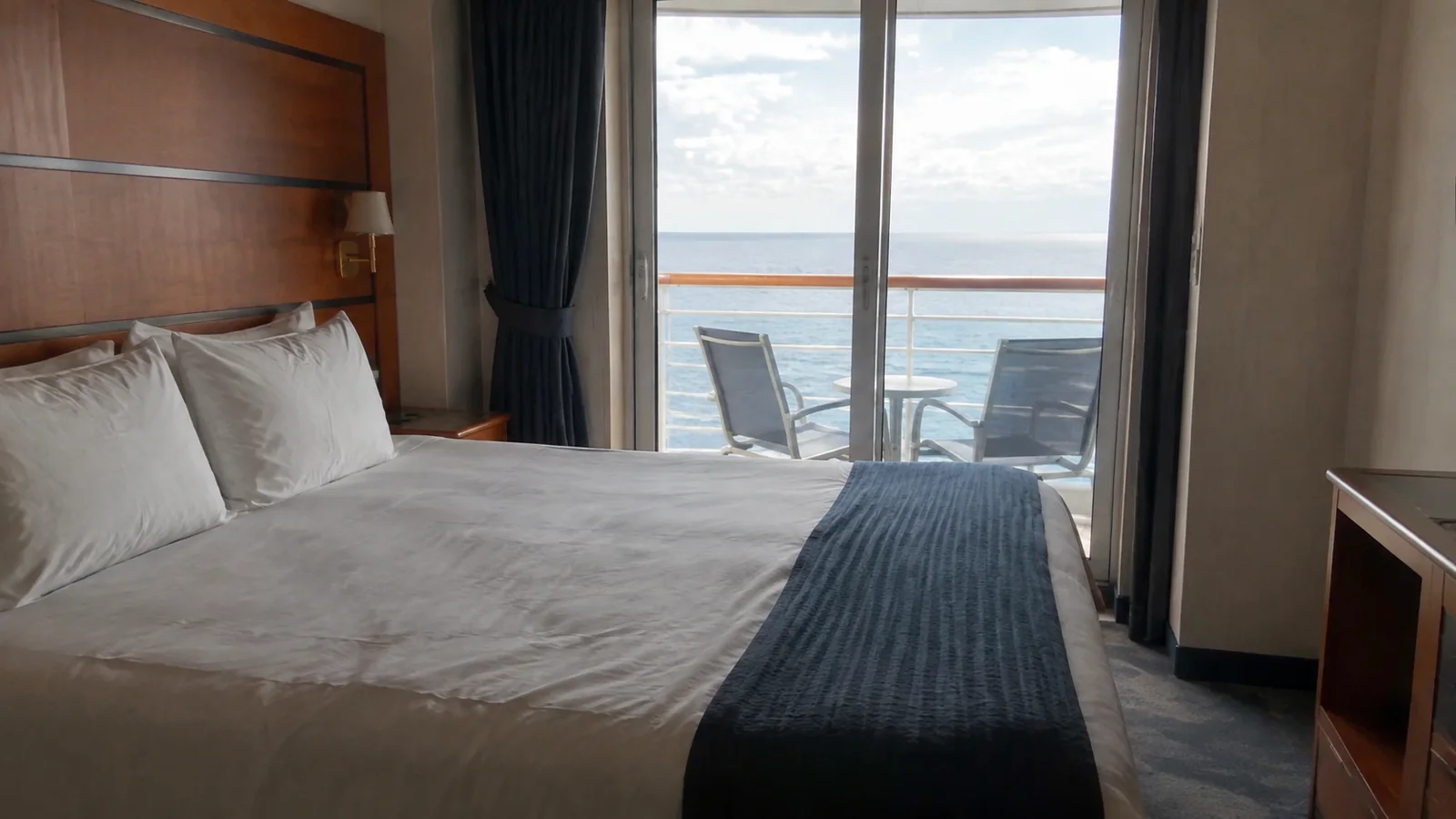
Carnival Splendor cabins to inspect first
The official deck plan points to four useful checks: Upper Deck rooms over Promenade entertainment, Verandah rooms below Lido activity, forward Panorama rooms below Cloud 9 Spa facilities, and categories explicitly labeled with obstructed views.
- For nighttime quiet: Inspect Upper Deck 6 against the venues on Promenade Deck 5.
- For quiet mornings: Check Deck 8 cabins from the low 8300s aft against Lido Deck 9.
- For an honest view: Read the full description for Category 4J and Category 6S.
- For less movement: Favor a lower midship room over a high room at either end.
- For privacy: Remove unneeded connecting cabins from your shortlist.
A structural feature can be verified; its effect on one traveler cannot. I will call a venue directly above or below a fixed fact, while treating sound, motion, and vibration as possibilities.
Check the plan for your sailing
Open the deck section on the official Carnival Splendor page and search your exact room number. The official standard and accessible deck-plan PDF says that deck plans and stateroom layouts are subject to change.
The PDF does not publish a sailing-date range, so verify it again before final payment. A saved diagram from years ago may not reflect later venue or category changes.
My quickest check is to place the cabin’s deck between the decks immediately above and below it. Look at public-space outlines, elevator lobbies, blank service areas, connecting symbols, category colors, and accessibility marks.
Do not copy room advice from Carnival Valor just because its overall deck names look familiar. Our Carnival Valor room guide uses that ship’s own plan, while this guide sticks to Splendor.
Upper Deck 6 above the main show lounge
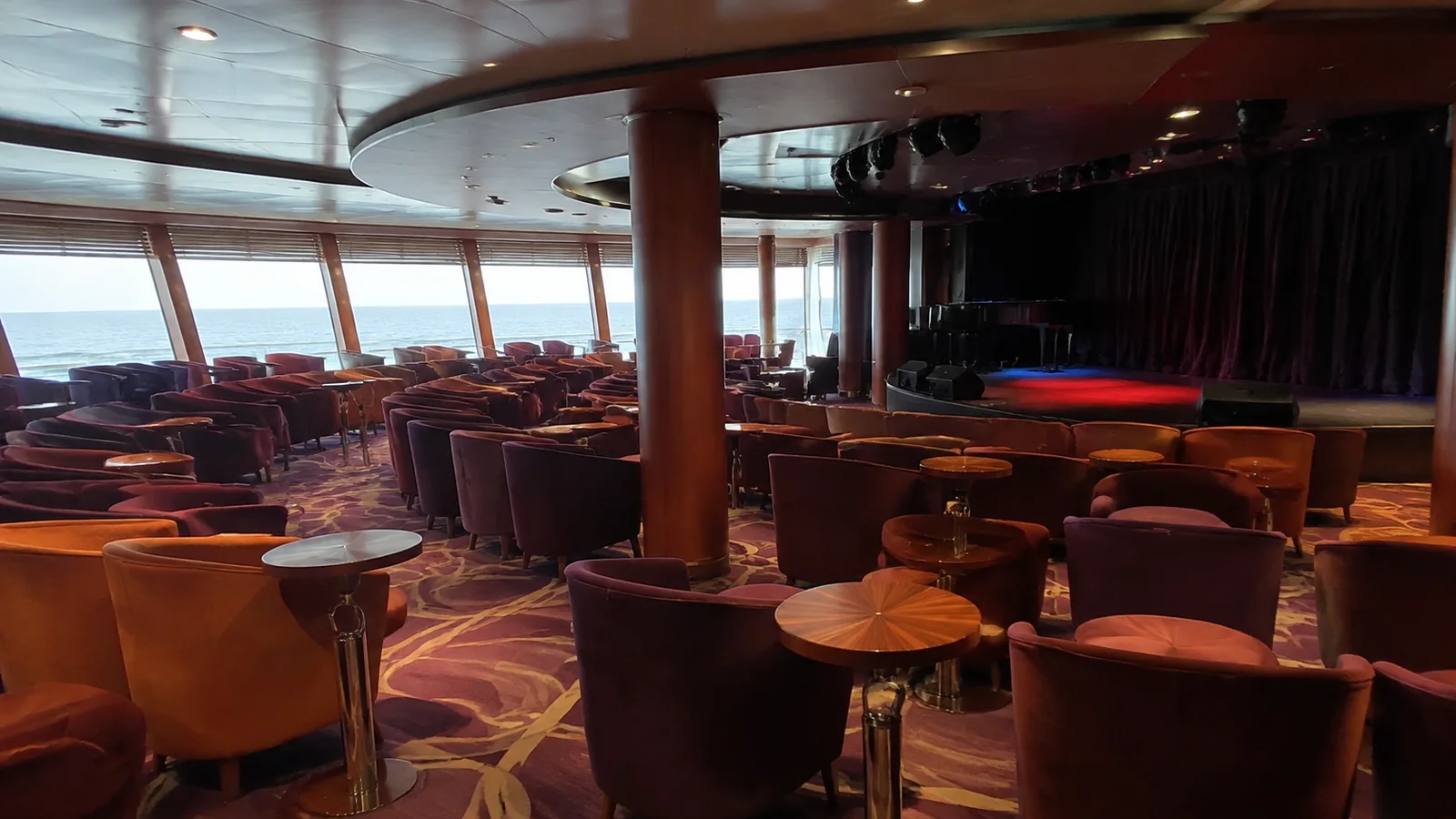
The forward Upper Deck cabins beginning with 6201 and 6202 sit over the Spectacular Spectacular Main Lounge and the forward atrium zone on Promenade Deck. The broad area continues through approximately the 6260-series rooms as the public-space footprint changes.
The adjacency is visible on Carnival’s plan, but audible performances or rehearsals are not guaranteed. Sound levels, timing, insulation, and the sleeper’s sensitivity can all change the experience.
Avoid the forward Upper Deck if: You retire early or wake easily when you hear bass and applause. Choose it if: You attend the evening shows and value getting back to your cabin quickly.
A room near the venue edge may behave differently from one centered over the seating or stage. Overlay the exact door position instead of treating every 62xx room as equal.
Midship Upper Deck above the casino and Promenade
The 6270s through roughly the mid-6350s occupy the central part of Deck 6. Below are the Splendor Atrium, shops, Royal Flush Casino, Oceanview Bar, and heavily used Promenade routes.
Possible disturbances include music, voices, amplified activity, and late foot traffic. A deck plan proves the location, not the volume that reaches a bed.
Interior rooms around the atrium and elevator opening may also face a lively corridor intersection. The concern is people gathering or talking nearby, not a blanket claim that elevator machinery makes the room noisy.
A quieter alternative: Start with a central Empress Deck 7 room, which usually has cabins on both neighboring decks. Then check its connecting and elevator-lobby symbols before booking.
Aft Upper Deck over clubs and lounges
From roughly the high 6350s through the 6410 area, Deck 6 runs over later-night Promenade venues, including RedFrog Pub and the Red Carpet Dance Club zone. The final aft group, around 6412 through 6485, lies above the El Morocco lounge and its stage area.
This is the Upper Deck section I would inspect most carefully for an early bedtime. Bass and crowd energy are possible, but the experience can vary from cabin to cabin and sailing to sailing.
Night owls may love the convenience and never consider it a drawback. Families with small children, light sleepers, and anyone planning early port mornings may prefer Deck 7.
Remember that room-number ranges describe broad zones rather than perfect venue boundaries. The side of the ship and precise fore-aft position matter as much as the first two digits.
Verandah Deck 8 below Lido Deck
Lido Deck 9 has passenger cabins at the front through 9296 and 9295, then changes into the main pool, Lido Marketplace, and aft Serenity pool areas. On Deck 8, that transition places much of the low 8300-series and everything farther aft beneath public space.
Inspect the broad run from approximately 8304 and 8305 through aft rooms 8459 and 8448. Some lie below an open deck, others below food service or seating, and the final section aligns with the aft pool zone.
Possible sounds include chairs shifting, footsteps, cleaning, and early food preparation. The exact pattern depends on what is overhead, when it operates, and how sensitive you are to impact noise.
Avoid the broad aft Deck 8 zone if: You sleep late or need a quiet midday nap. Choose it if: Fast access to outdoor space, food, and pools will improve every day of your cruise.
The forward Deck 8 section has Deck 9 cabins above it and can be a better fit for quiet-first shoppers. A central Deck 7 room provides an even simpler cabin-above-and-below arrangement.
Panorama Deck 10 beneath Cloud 9 Spa
Splendor has a block of Panorama cabins from 1001 through 1085, with spa and fitness facilities occupying much of Deck 11 above. The forward portion, broadly rooms 1001 through the low 1050s, deserves a close overlay check because it aligns under fitness and treatment areas.
Possible sound could come from equipment use, foot traffic, or opening preparation rather than late nightlife. Many guests would gladly accept that trade for a high forward location and short walk to spa facilities.
Higher and more forward cabins may also feel more movement when conditions are rough. If both motion and early overhead activity concern you, a lower central deck solves two variables at once.
The later 10xx rooms transition under different Deck 11 footprints, including a cabin block and public deck areas. Search the exact number rather than extending one warning to the entire deck.
Category 4J obstructed picture-window interiors
Carnival labels Category 4J as an Interior with Picture Window and explicitly says the view is obstructed. This is not an ocean-view category with a surprise flaw; the obstruction is part of the published product.
These forward-facing rooms can provide daylight, but ship structure and exterior access can limit the outlook. Depending on exact placement, travelers outside may also affect how private the room feels when curtains are open.
Avoid 4J if: You expect a wide, uninterrupted sea view. Choose it if: You want daylight at an interior-category price and understand exactly what the window offers.
Ask Carnival to confirm the current category for the room rather than relying on an old cabin-tour title. Category assignments can change even when a room number stays put.
Category 6S obstructed spa ocean views
The plan labels Category 6S as an Ocean View spa accommodation with an obstructed view. On the current plan, the Deck 11 block includes rooms 1102, 1104, 1106, 1108, 1110, 1112, 1114, and 1116 on one side, with 1101 through 1117 in odd numbers on the other.
That makes these cabins a needs-and-price decision, not an automatic avoidance. You receive the spa-category context and daylight, while accepting a limited outlook.
Compare the full fare and included spa benefits with an ordinary ocean view or balcony. A perk has value only if you will actually use it.
Porthole cabins and far-forward motion
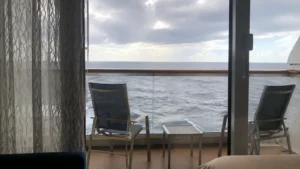
Category PT provides two porthole windows rather than a broad picture window. Portholes bring in daylight, but they are a deliberately limited view and sit in forward locations.
Motion may be more noticeable toward the bow, especially higher up or in rough conditions. Arrival operations may also bring occasional mechanical sounds, though no responsible guide can promise when or how strongly they will be heard.
Avoid PT if you picture a conventional ocean-view window or have a strong history of motion sickness. Choose it when natural light matters and the price is closer to an interior.
Connecting cabins you did not request
Carnival marks connecting rooms with a diamond-shaped symbol and describes them as ideal for families and groups. If your party reserves both sides, the interior door can be one of the most useful features on the ship.
With unrelated neighbors, the extra door may provide less acoustic separation than a solid wall. That is a possibility, not a guarantee that you will hear ordinary conversation.
Light sleepers can simply choose a similar nonconnecting room. Families should verify the exact linked pair rather than assuming that consecutive numbers connect.
Accessible cabins should match an actual need
Carnival’s plan identifies Fully Accessible Cabins, Fully Accessible Cabins with Single Side Approach, and Ambulatory Accessible Cabins. Its official accessibility information explains that each configuration serves different mobility needs.
Please do not reserve one merely for extra floor space. If you need the features, contact Guest Access Services early and confirm the doorway, bathroom, turning radius, side of bed, thresholds, and route to the elevators.
Carnival’s safety guidance says mobility devices must be stored in the cabin, not in corridors, and must fit through a standard 22-inch doorway unless a fully accessible cabin is reserved. Measure the device and let Carnival match the room to the need.
How I would pick a quieter Splendor cabin
I would begin midship on Empress Deck 7, remove cabins facing directly into an elevator lobby, and skip connecting doors unless my group wanted one. Then I would check that the bedding symbols and occupancy actually fit the reservation.
For a balcony, I would compare a Deck 7 cabin with Deck 8 rather than assuming higher is better. The short Lido walk upstairs can be convenient, but having another cabin overhead is a lovely little advantage for light sleepers.
Our broader cruise cabin checklist can help you evaluate any room that is still available. Once you book, our complete cruise packing list covers the practical items that make a compact cabin easier to use.
Five questions before final payment
- Is this the current official plan for my departure?
- What exact category and view wording applies to the cabin?
- What occupies the matching position above and below?
- Does the plan show a connection or an accessible configuration?
- Can I fix the concern by moving a few doors or one deck at a similar fare?
Save the plan and category description with your booking confirmation. That gives you a clear record if Carnival later publishes a different plan profile or changes a venue.
The bottom line
The Carnival Splendor cabins most worth checking are Upper Deck rooms over entertainment, Deck 8 rooms below Lido activity, forward Panorama rooms beneath spa facilities, and the explicitly obstructed 4J and 6S categories. They are conditional compromises, not universally bad rooms.
Start with the official structural fact and ask whether its possible effect would bother you. A traveler who loves Lido convenience or spa access may happily choose the same cabin that a light sleeper skips.