Cruise Suite Comparison: Space, Perks, and Total Value
The best cruise suite is not always the biggest room. A smart upgrade gives you the space, privacy, dining, priority access, or family layout you will actually use, while a weak one charges a luxury premium for square footage and a few nicer toiletries.
What Counts as a Cruise Suite?
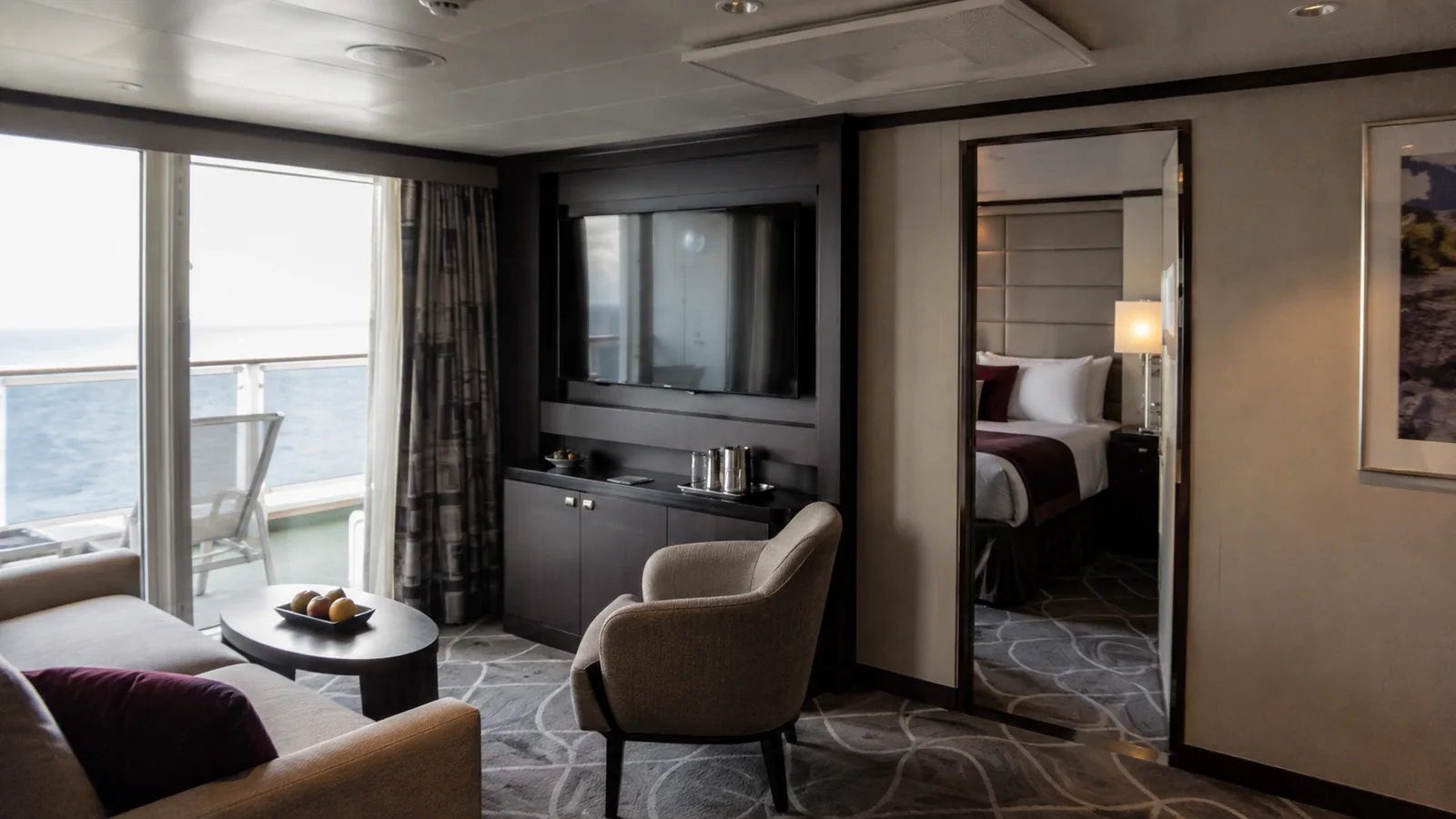
“Suite” is a cruise-line category, not a universal design standard. It can describe a slightly larger one-room cabin, a true apartment with separate rooms, or an enclave accommodation that unlocks private dining and deck space.
- Best budget step up: A mini-suite or junior suite when space matters more than privileges
- Best mainstream luxury: A suite tied to a private lounge, restaurant, and sun deck
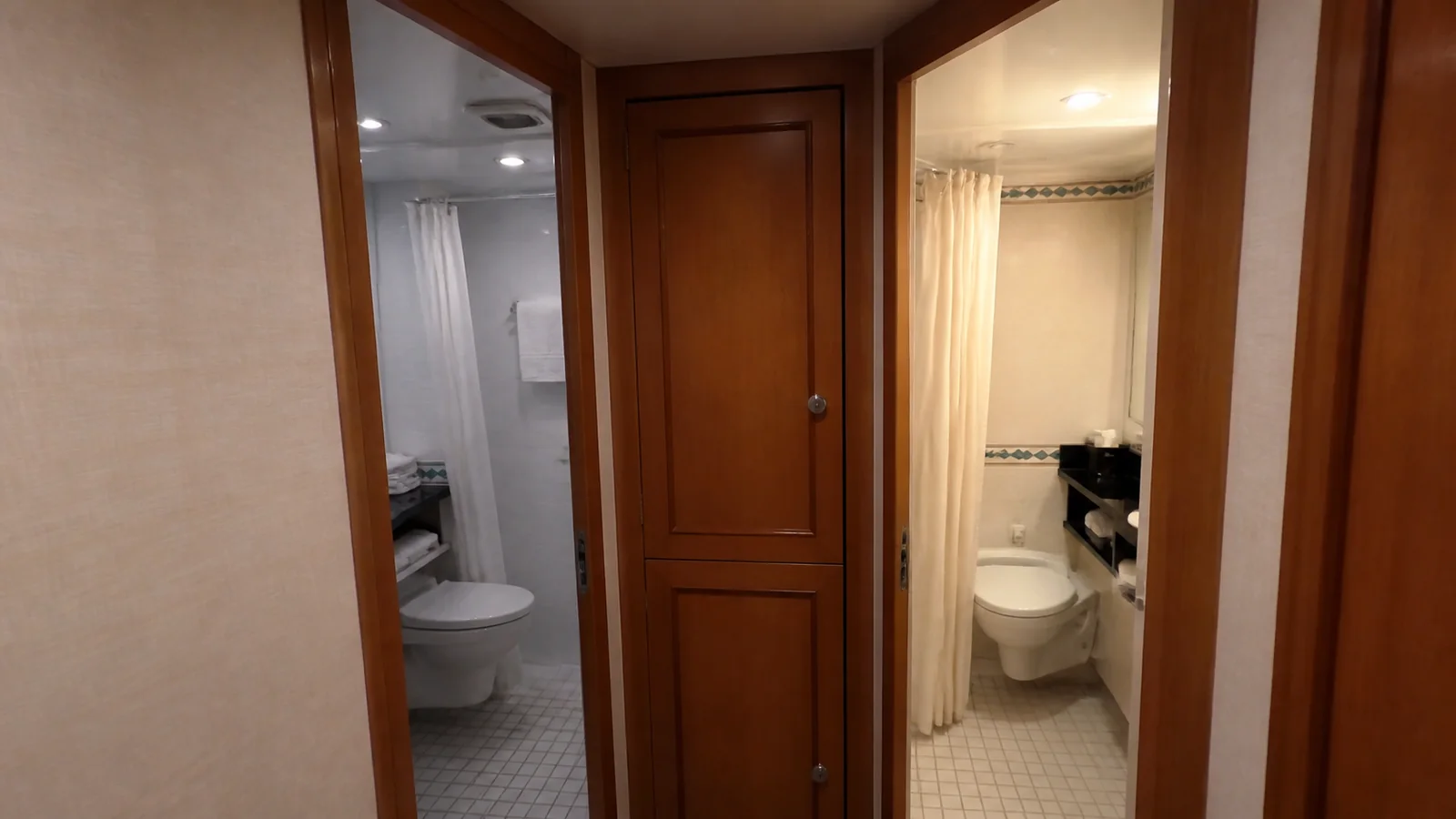
- Best for families: A two-bedroom layout with at least two bathrooms
- Best for entertaining: An owner’s, penthouse, or top suite with a real dining and living area
- Best for simplicity: An all-suite luxury ship whose base fare already includes much of the experience
- Biggest mistake: Assuming every suite on a line receives the same perks
First Decide What the Upgrade Must Fix
A suite should solve a specific problem. That might be one bathroom for four people, no quiet place to work, nowhere to eat privately, limited storage, or a desire to escape crowded pool and buffet spaces.
If your only complaint is a small balcony, compare a large-balcony cabin before jumping several price levels. If your real goal is private dining and a calmer sun deck, a bigger room without enclave access will not deliver it.
The best answer also changes with trip length. Space and laundry matter more on the month-long cruises than on a three-night getaway, while priority embarkation has the same value only once.
The Main Suite Types
Mini-suites and junior suites
These usually offer more floor space, a larger sitting area, an upgraded bathroom, or a better balcony. They may provide limited priority treatment, but the name does not guarantee a concierge, private restaurant, beverage package, or lounge.
This category is best for travelers who want physical comfort at the lowest suite-like price. Compare it with the best standard balcony cabin because a well-located balcony can be more satisfying than a junior suite under a noisy deck.
One-bedroom suites
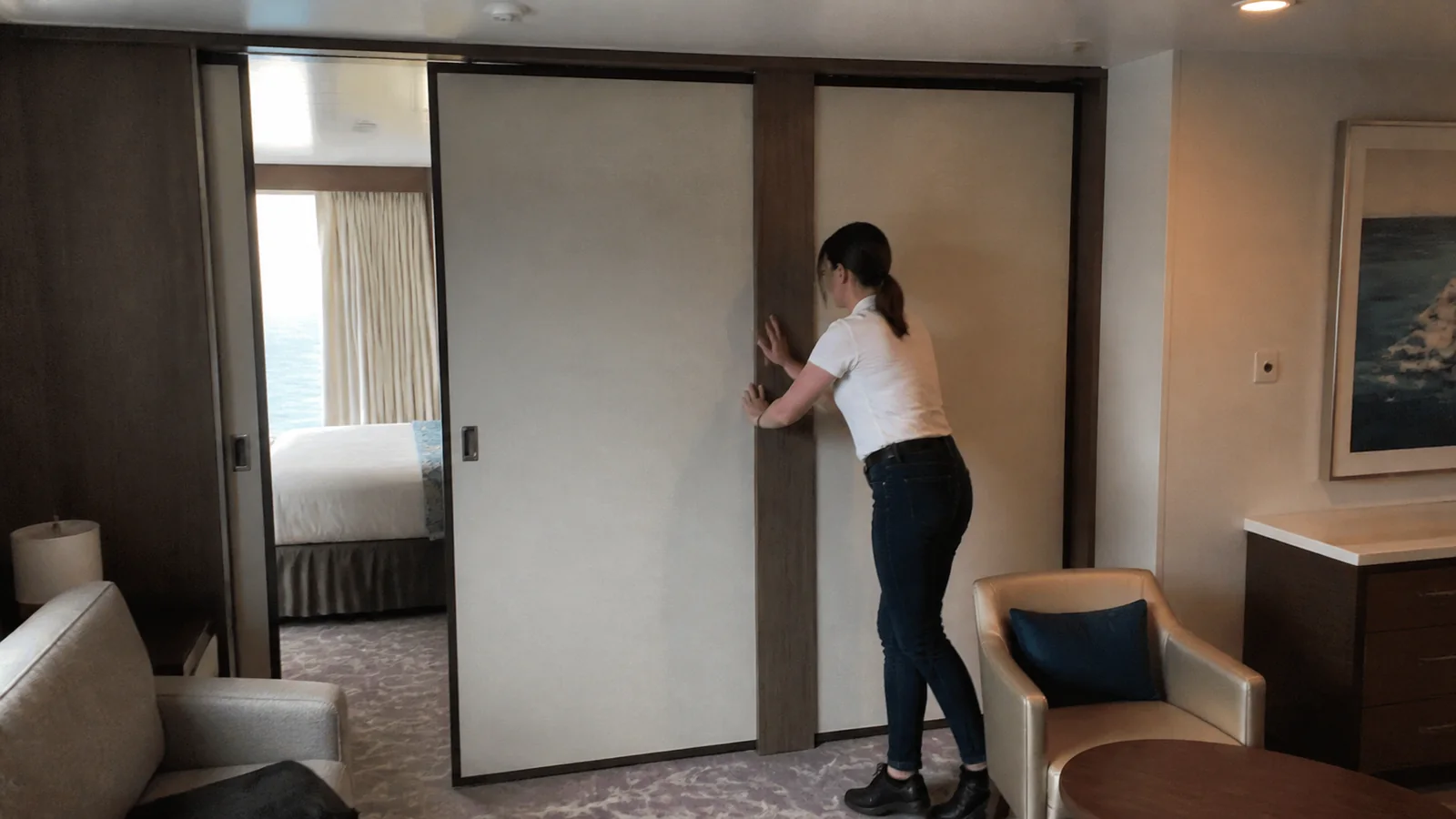
A real door between the bedroom and living room is valuable for early risers, families, and anyone who needs to work. Check whether the bathroom can be reached without walking through the bedroom, especially when someone sleeps on the sofa.
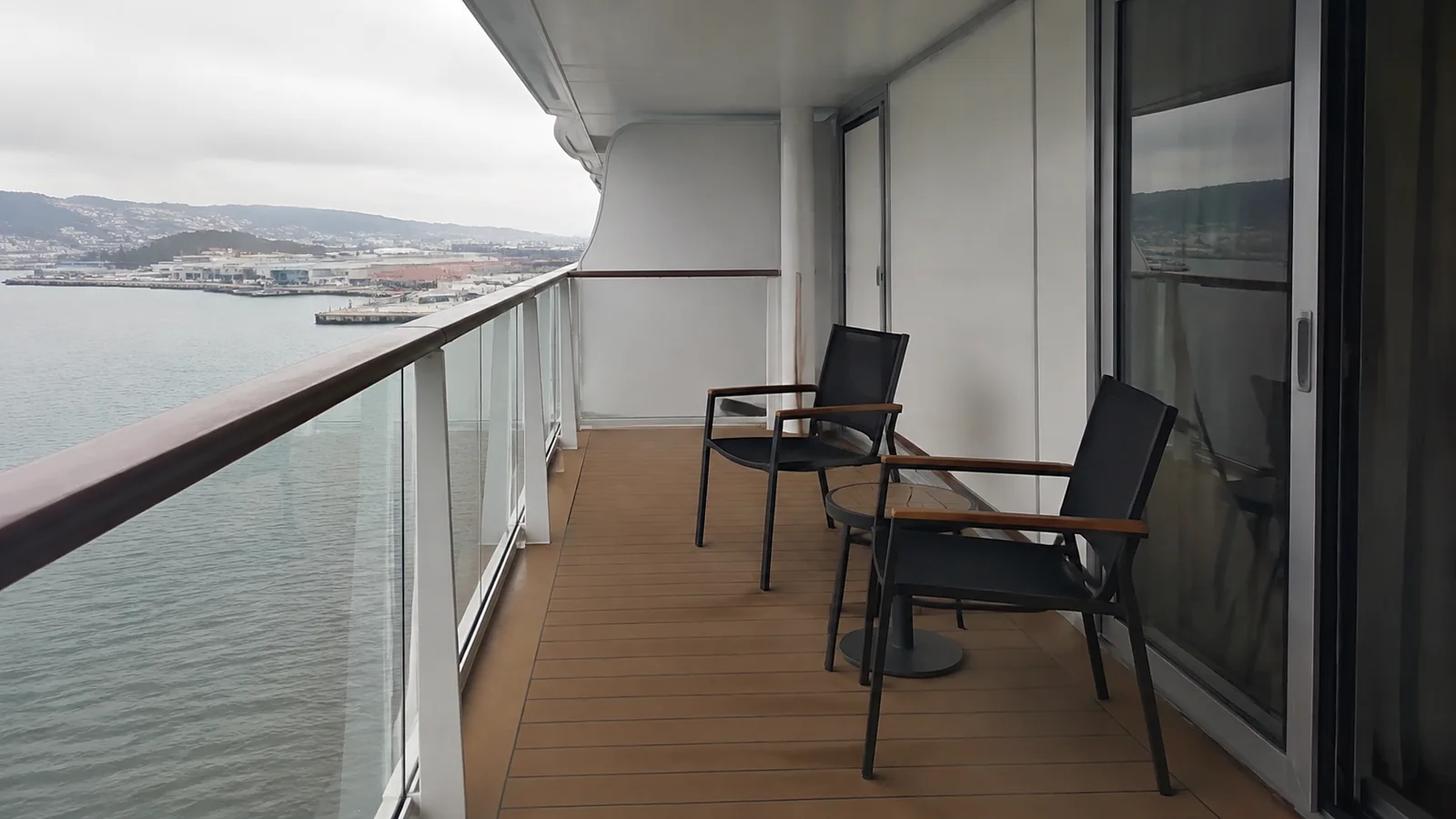
Do not infer privacy from a floor-plan thumbnail. Look for door swings, bathroom access, sofa-bed dimensions, occupancy, storage, and whether the balcony connects to the bedroom, living room, or both.
Two-bedroom and family suites
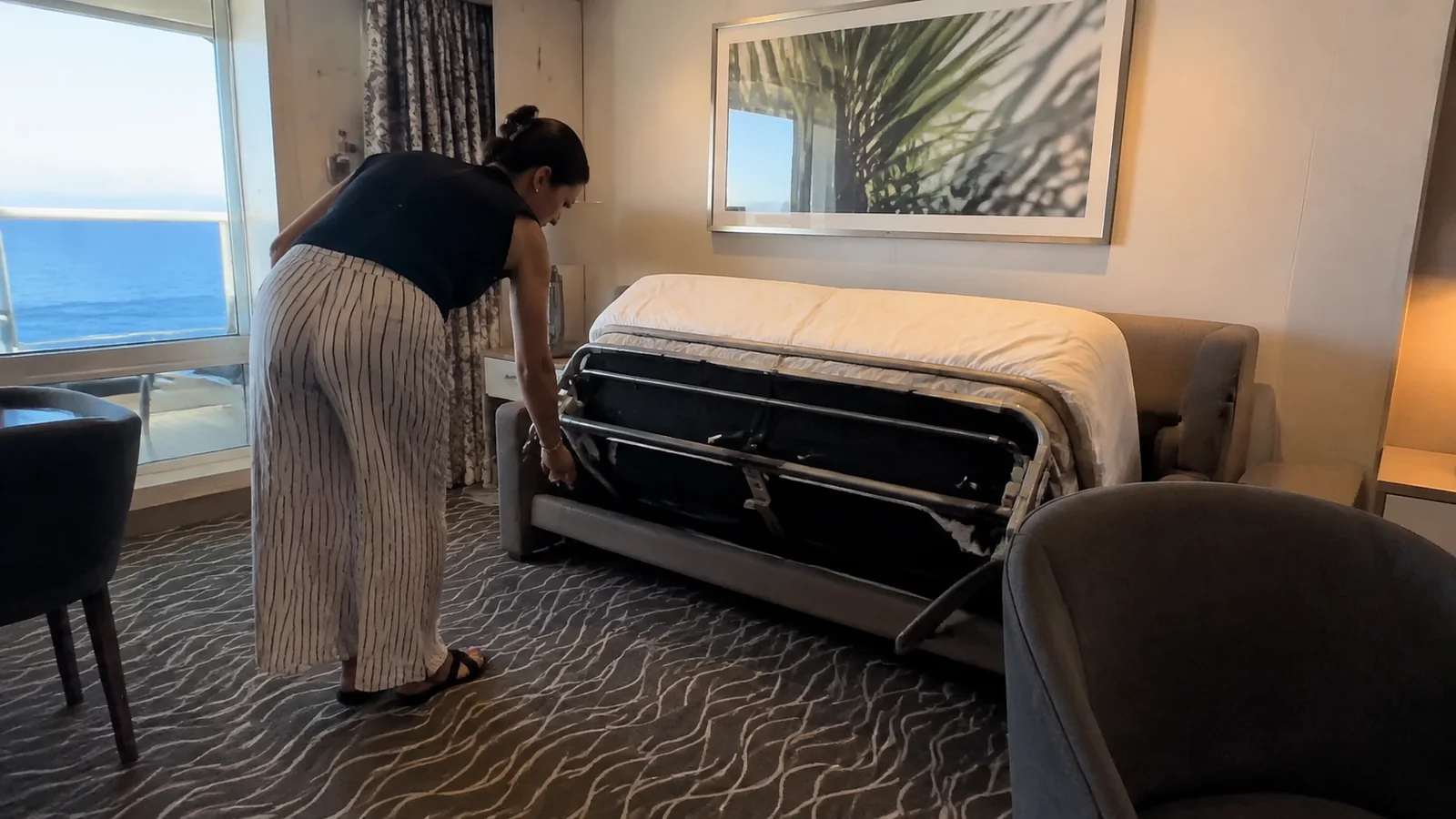
These can replace two cabins while keeping a family together. The strongest layouts include two bathrooms, a bedroom with real privacy, enough dining seats, and beds that remain practical after the sofa opens.
Price the suite against two connecting cabins, not against one balcony. Connecting rooms may provide more bathrooms, more true beds, and better sleeping separation for less money.
Penthouses, owner’s suites, and villas
Top categories may add oversized terraces, dining rooms, multiple bedrooms, hot tubs, wet bars, or dedicated service. Their value is highest for travelers who will spend meaningful time in the room or divide the fare among a larger permitted occupancy.
They can also sit high, forward, aft, or directly under public decks. Study the current plan with the same care used for the Wonder of the Seas cabin locations, because a top price does not erase motion, wind, or overhead activity.
Royal Caribbean: Suite Tiers Matter
Royal Caribbean’s Royal Suite Class uses Sea, Sky, and Star tiers on eligible ships and categories. Its current official benefit list shows why the tier matters more than the word “suite.”
Sea benefits include a dedicated check-in line, priority boarding, and Coastal Kitchen dinner based on availability. Sky adds concierge service, all-day Coastal Kitchen access, internet for eligible categories, priority departure and reservations, and reserved seating in selected entertainment venues.
Star is the most inclusive tier and can add Royal Genie service, specialty dining, beverage and internet benefits, and other privileges under current terms. Royal flags ship, venue, suite, booking-date, and availability exceptions, so never copy a perk list from another vessel.
Best fit: Families and active travelers who want big-ship entertainment with a more protected home base. A junior suite is the space play, while eligible Sky or Star accommodations are the experience play.
Celebrity Cruises: The Retreat
Celebrity packages its suites around The Retreat, with a private restaurant, lounge, concierge team, and butler service. Its current Retreat overview also describes a Retreat Sundeck, but the asterisk matters because that venue is not identical or available on every ship.
Luminae is a meaningful benefit for travelers who value a quieter dedicated dining room. The lounge and outdoor retreat can make a larger ship feel more intimate, though exact pools, bars, shade, and deck design vary by class and refurbishment.
Celebrity’s category pages also flag fare-dependent exclusions. For example, current Sky Suite information says premium Wi-Fi may be excluded from certain special fares or some MoveUp upgrades, which is why an upgrade offer must be checked separately from a direct suite booking.
Best fit: Couples and adults who prioritize dining, service, and a polished retreat over high-energy family attractions. Compare the current fare bundle as carefully as the cabin.
Norwegian Cruise Line: The Haven and Other Suites
The Haven is Norwegian’s ship-within-a-ship product. NCL’s current Haven description includes 24-hour butler and concierge service, priority treatment, and private spaces, with important asterisks around which ships have a Haven lounge, restaurant, pool, or courtyard.
That last point prevents a common mistake: not every suite is in The Haven, and not every Haven complex has the same physical amenities. Some Haven suites may sit outside the central enclave while retaining access, creating a different walk and sense of seclusion.
NCL also sells suites and penthouses outside The Haven on parts of the fleet. Those can deliver space and selected services without the full enclave, so compare the exact category code and ship page.
Best fit: Travelers who want mainstream entertainment and freestyle dining with a private refuge. The premium makes the most sense when you will use the Haven restaurant, courtyard or sun deck, concierge, and priority access repeatedly.
If Norwegian is the front-runner, this balanced NCL fit assessment helps place the suite experience inside the line’s broader dining, entertainment, and fare structure.
MSC Cruises: MSC Yacht Club
MSC Yacht Club combines suites with controlled-access venues and 24-hour butler service on ships that offer it. MSC’s current U.S. site describes private access, service, and exclusive venues, but exact restaurants, pool areas, suite layouts, and inclusions belong to the selected ship and fare.
Yacht Club can be compelling when a large, lively ship appeals to your family but you want a calmer place between activities. It is less compelling if you prefer spending every hour in the main ship and would ignore the enclave.
Best fit: Value-focused suite shoppers who enjoy international big-ship energy and will use private spaces. Confirm drink coverage, internet, restaurant access, embarkation services, and private-island benefits on the exact booking.
All-Suite Luxury Cruises
On an all-suite ship, a suite is the starting point rather than an enclave layered over a mainstream vessel. Regent Seven Seas says every suite has an ocean view and 99 percent include a private balcony, while layouts and amenities rise substantially across categories.
The larger decision is whether the line’s fare includes things you would otherwise buy, such as dining, drinks, Wi-Fi, excursions, gratuities, transfers, or laundry. An all-suite fare can look shocking beside a mainstream cabin until both are priced to the same finished trip.
Best fit: Travelers who value a smaller ship, high space-to-guest ratio, broad inclusions, and destination access more than waterslides or arena-scale shows. Review the exact line and sailing because “all-inclusive” is not standardized.
The broader comparisons among adult-focused cruise lines can help decide whether luxury atmosphere or a mainstream enclave better matches your preferred evenings.
Which Suite Perks Are Actually Valuable?
Private dining
A dedicated restaurant has high value when it serves multiple meals, accepts flexible timing, and fits your tastes. It has little value if you plan to eat in specialty venues every night.
Private pool or sun deck
This can be the deciding perk on a crowded warm-weather sailing. Verify whether the area has a pool, hot tub, bar, shade, age restrictions, and enough loungers, since a “sun deck” can mean very different things.
Butler and concierge service
A concierge can untangle reservations and logistics, while a butler may handle in-suite requests, dining, or daily details according to line policy. Neither role means unlimited authority, instant availability, or permission to bypass safety and capacity rules.
Priority access
Priority boarding, tendering, seating, reservations, and departure save friction, especially on short cruises and port-heavy itineraries. Read the qualifiers because ports, local authorities, safety procedures, and venue capacity can override priority.
Drinks, Wi-Fi, dining, and gratuities
These are easy to value because you can compare their separate prices with the suite premium. Check guest limits, daily caps, service charges, device counts, restaurant exclusions, and whether an upgrade bid keeps the same benefits as a direct fare.
When a Suite Is Worth the Money
- Your party needs a second bathroom or separate bedroom.
- You will spend sea days in the room or on the balcony.
- Private dining and deck space solve crowd sensitivity.
- The included packages replace purchases you would make anyway.
- A larger permitted occupancy beats booking two comparable cabins.
- Mobility needs make location and adapted space essential.
- A special occasion matters enough that the room is part of the event.
When to Keep the Balcony Cabin
Skip the upgrade when port days dominate, you rarely use your room, or the suite’s perks duplicate loyalty benefits and packages you already hold. A balcony plus selected specialty meals can cost far less while delivering the parts you care about.
Also keep the standard cabin when the suite’s location creates a worse fit. More square footage high and forward may be poor value for a motion-sensitive traveler who sleeps better lower and midship.
Calculate Suite Value Per Person, Per Day
Subtract the price of two cabins if the suite replaces them, then add the value of packages and services you would honestly purchase. Divide the remaining premium by guests and cruise nights.
A $4,000 premium for two people over seven nights is about $286 per person per day. That is only good value if the space and privileges feel more important than what else $4,000 could buy ashore.
Do not assign full retail value to a drink package you would never buy or a concierge you may not use. Suite math becomes persuasive very quickly when imaginary savings enter the calculation.
Questions to Ask Before Booking
- Is this category a true suite, mini-suite, or suite in name only?
- Which program tier applies to this exact ship and cabin code?
- Which dining room, lounge, pool, and sun deck can I access?
- Are drinks, Wi-Fi, gratuities, room service, and specialty dining included?
- Do upgrade bids or special fares remove any benefits?
- Can non-suite friends visit private venues or the cabin?
- How many real beds and bathrooms does the layout provide?
- What public space sits above, below, and beside the suite?
Save the answers and the benefit page that applied when you booked. Programs evolve, and a screenshot is more useful than remembering a sales summary differently six months later.
The Bottom Line
Choose a cruise suite by the problem it solves, not by the prestige of the name. Junior suites sell space, one- and two-bedroom suites sell function, enclaves sell privacy and service, and all-suite ships sell a broader luxury environment.
My favorite value test is brutally simple: would you still pay the premium if the room were called “larger accommodation” instead of “suite”? If the layout, dining, private venues, inclusions, and service still justify it, you have found the right upgrade.