Brighton Dog Beaches: Exact Summer Zones and Local Rules
Brighton is genuinely workable with a dog, but the legal beach changes by season and sometimes by one groyne. From October through April every city beach opens to dogs, while May through September requires you to use one of eight signed dog-friendly sections and leash your dog on the promenade.
The rule in one minute
- October 1 to April 30: Dogs are permitted on all Brighton and Hove beaches.
- May 1 to September 30: Dogs are permitted only in designated dog-friendly beach zones.
- Upper and lower promenades: Keep dogs on a leash throughout the year.
- Dog-friendly beach: Off-leash exercise is possible under effective control unless a sign imposes a tighter rule.
- At every entrance: Read the current sign because beach works and enforcement boundaries can affect access.
The council’s live dog-friendly beach map is the final check before a summer visit. Save a screenshot, but still compare it with the sign at your chosen beach entrance.
Best Brighton dog beach by situation
- Closest to central Brighton: Use the signed stretch from the Volks Railway Aquarium station east to Brighton Marina’s west wall.
- Longest-feeling city walk: Start east of the marina and follow permitted undercliff and Rottingdean sections without crossing signed exclusions.
- Quieter Hove option: Choose the zone west of King Alfred car park toward Sackville Gardens.
- Easy landmark boundary: The Hove Lagoon zone uses beach huts and the lagoon as practical markers.
- Nervous or older dog: Visit early on a weekday and keep the leash attached until you see how busy the shingle and waterline are.
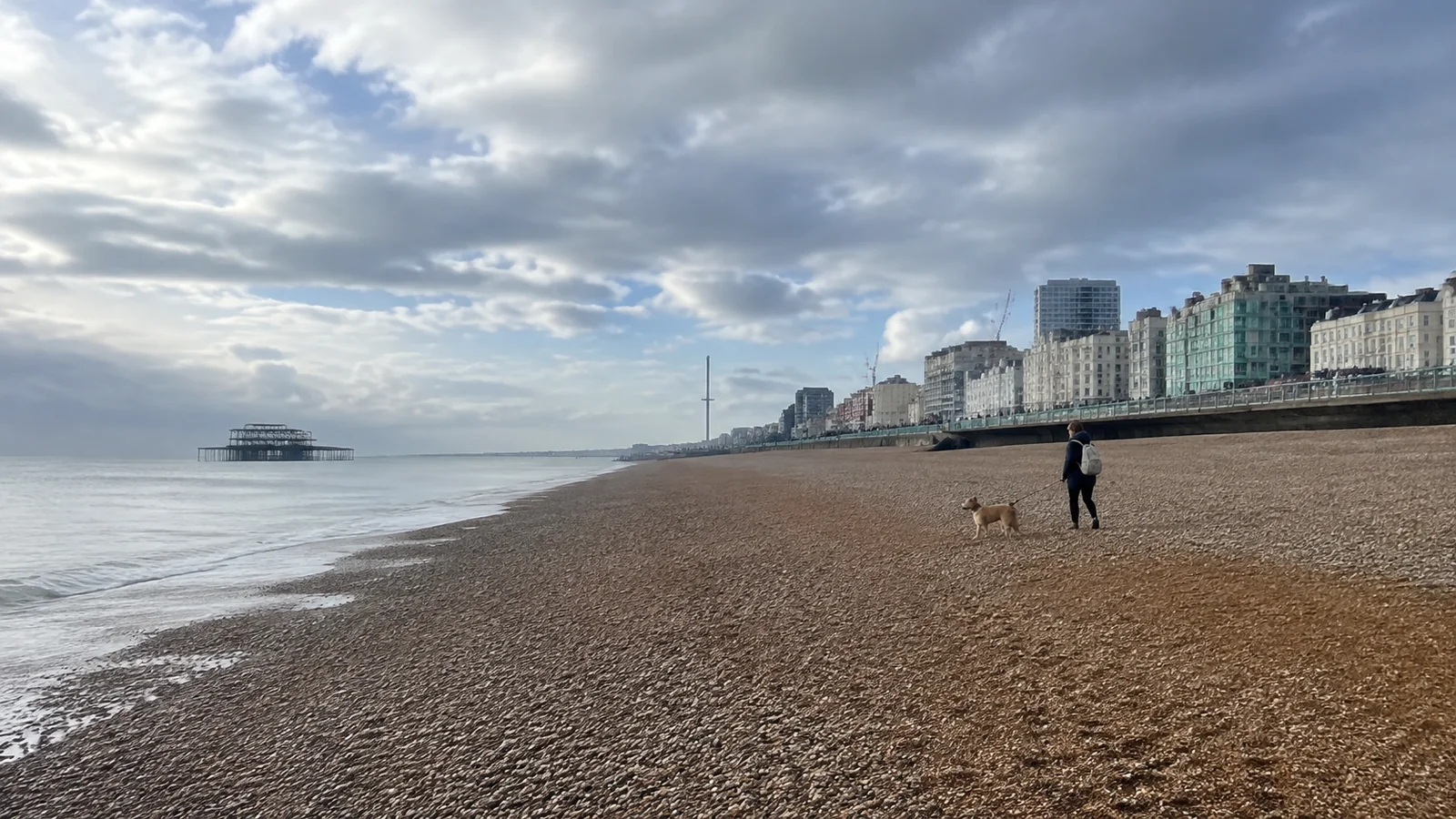
These beaches are mostly shingle rather than broad soft sand, with wet sand appearing as the tide drops. A dog that dislikes loose stones may prefer a shorter paddle and a longer promenade walk on leash.
The eight summer dog-friendly beach zones
1. Longridge Avenue to the city boundary
At the far eastern end, dogs may use the beach between Longridge Avenue and the East Sussex boundary during the summer restriction season. The beach directly in front of Saltdean subway and the first beach east of it are excluded, so do not assume every stretch around the subway is legal.
This is the best choice for someone staying in Saltdean who wants a quieter local walk rather than central Brighton activity. Check the access sign because the permitted zone resumes beyond a small but important gap.
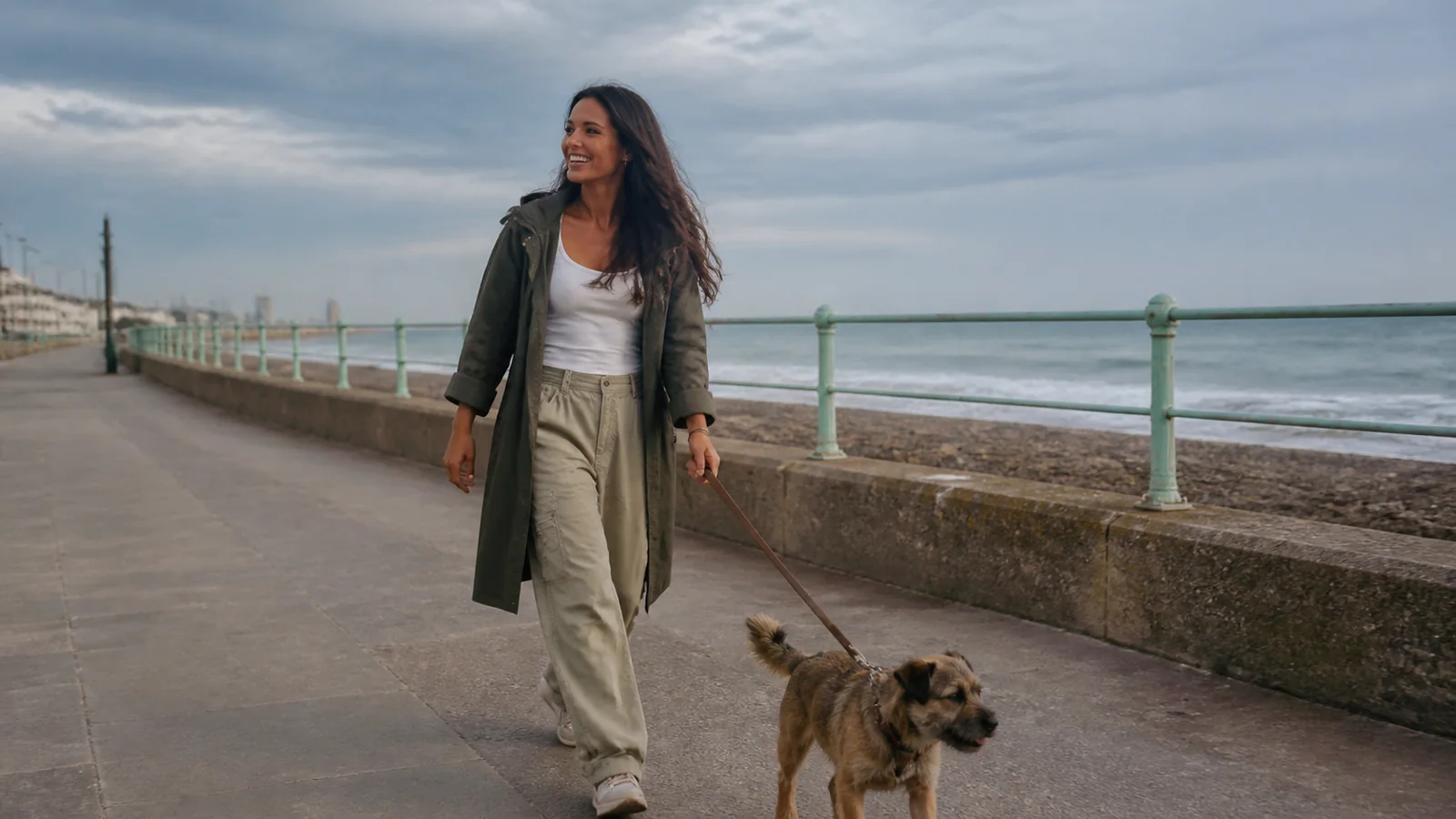
2. Chailey Avenue to Arundel Drive West
This signed Rottingdean section runs between Chailey Avenue and Arundel Drive West. The beach in front of Rottingdean slope and the first beach immediately east are excluded from the dog-friendly zone.
Use street names and the seafront sign together instead of dropping a map pin labeled “Rottingdean Beach.” That label covers both allowed and restricted ground in summer.
3. Brighton Marina east wall to Rottingdean slope
The beaches from the marina’s east side toward Rottingdean slope create a useful eastern corridor. The undercliff route makes access feel continuous, but individual bathing beaches and signed gaps still matter.
Keep the dog leashed on the walkway, then enter only at a beach access displaying the dog-friendly sign. Chalk cliffs can shed rock without warning, so stay away from the cliff base even when shade looks appealing.
4. Volks Railway Aquarium station to Brighton Marina west wall
This is the most practical summer dog beach for visitors based near the pier, Kemptown, or central Brighton. It extends east from the Volks Railway Aquarium station toward the marina’s west wall.
The zone does not make the busy promenade off-leash, and it does not include central bathing beaches west of the station. Put the leash back on before climbing the beach steps or joining the walkway.
5. Meeting Place Cafe to Norfolk Groyne
In Hove, one dog-friendly section begins in front of and east of the Meeting Place Cafe and continues to the large groyne with a life ring. Local descriptions identify that structure as Norfolk Groyne, opposite the seafront hotel area.
This is a compact urban zone, not permission to continue through every neighboring beach. If the café or hotel name has changed, trust the groyne, entrance sign, and council map rather than an old business reference.
6. Holland Road to east of Hove Lawns Cafe
This Hove section begins opposite Holland Road and continues east of the Lawns Cafe near the bottom of St John’s Road. It is convenient for a dog-and-coffee stop, but outdoor seating permission is separate from beach access.
Keep enough distance from picnics, volleyball, cyclists, and runners on the seafront. A technically legal off-leash dog still needs to return immediately when called.
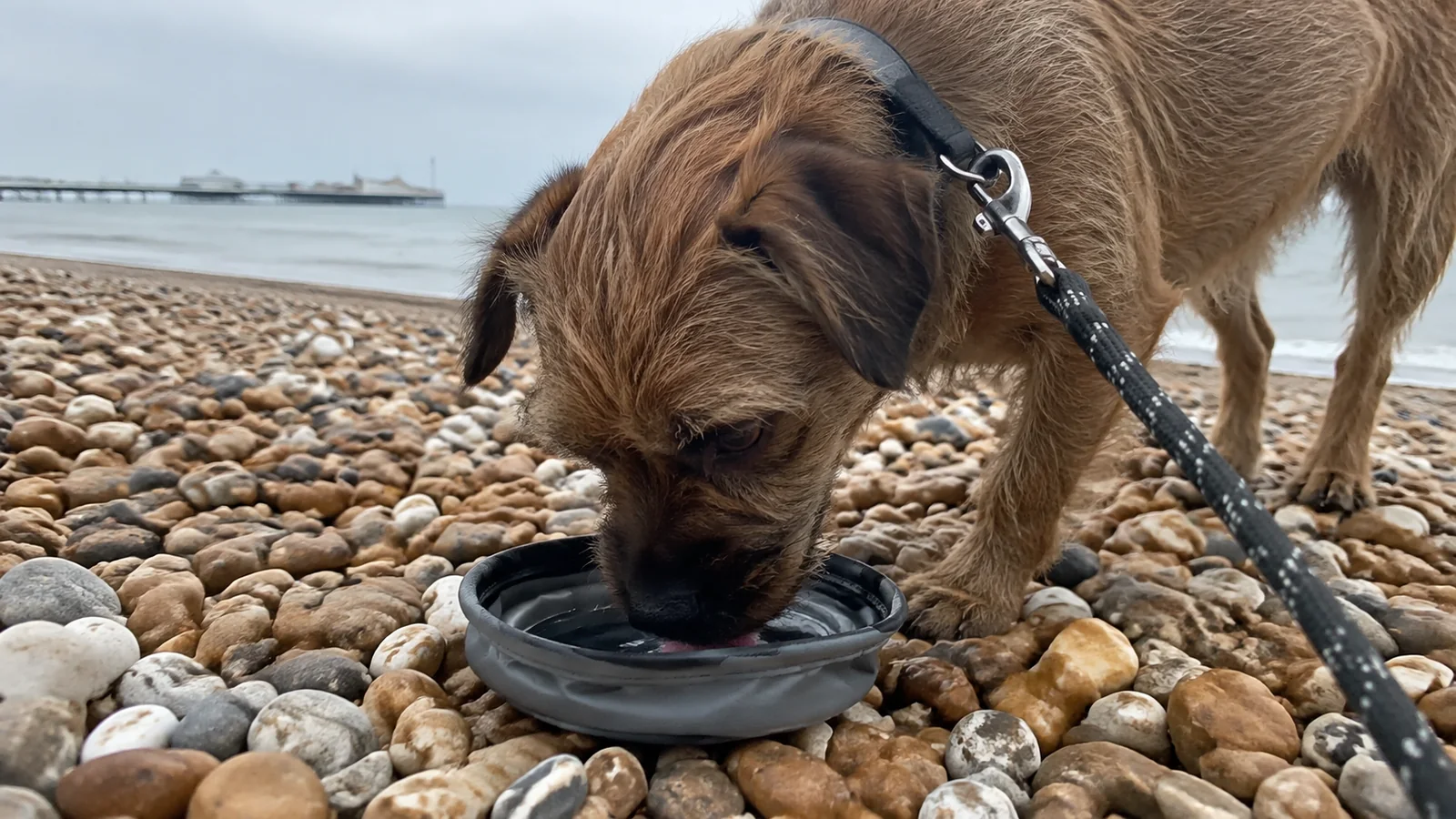
7. King Alfred car park to Sackville Gardens
The beach west of King Alfred car park through to Sackville Gardens is one of Hove’s clearer summer choices. It works well for owners who want to avoid the densest central Brighton crowds.
Use the marked beach rather than the leisure-center grounds or car park as the off-leash area. The approach remains on-leash, and parking availability does not change the beach boundary.
8. Berriedale and Welbeck Avenues to Hove Lagoon
The western zone runs from the beach opposite Berriedale and Welbeck Avenues toward the end of Hove Lagoon. Some current wayfinding also uses beach-hut numbers, which are useful when street sightlines disappear behind seafront development.
Hove Lagoon itself contains busy recreation areas, paths, and family facilities, so transition to a leash before leaving the signed beach. Do not let the dog enter a play area or interrupt water-sports launching.
What is not a summer dog beach
Central Brighton between the main visitor beaches is not a general dog zone from May 1 through September 30. The fact that a dog can walk beside it on the promenade does not create beach permission.
Palace Pier, designated bathing areas, children’s play spaces, and other signed exclusions have their own restrictions. Assistance-dog exemptions can apply under law, but pet-dog owners should never use that as a reason to ignore a sign.
The council’s enforcement framework identifies seasonal beach exclusions and public-space dog controls. If a boundary looks ambiguous, move to the nearest entrance explicitly marked dog friendly.
Can dogs be off leash on Brighton beaches?
The citywide lead requirement applies to the upper and lower promenades, while designated dog-friendly beach sections allow exercise without that blanket lead rule. Your dog must still be under effective control, and an authorized officer can require a leash when behavior creates a concern.
Off leash is a poor choice for a dog that chases gulls, approaches strangers, guards toys, ignores recall, or runs toward the promenade. A long line can provide more freedom, but it must not trip beach users or become tangled around other dogs.
For pet-trip planning beyond a single walk, Ellie’s pet-friendly holiday checklist covers accommodation questions, rest stops, routines, and emergency preparation. A beach permit does not mean a nearby hotel, restaurant, or attraction accepts pets.
Sea and tide safety with a dog
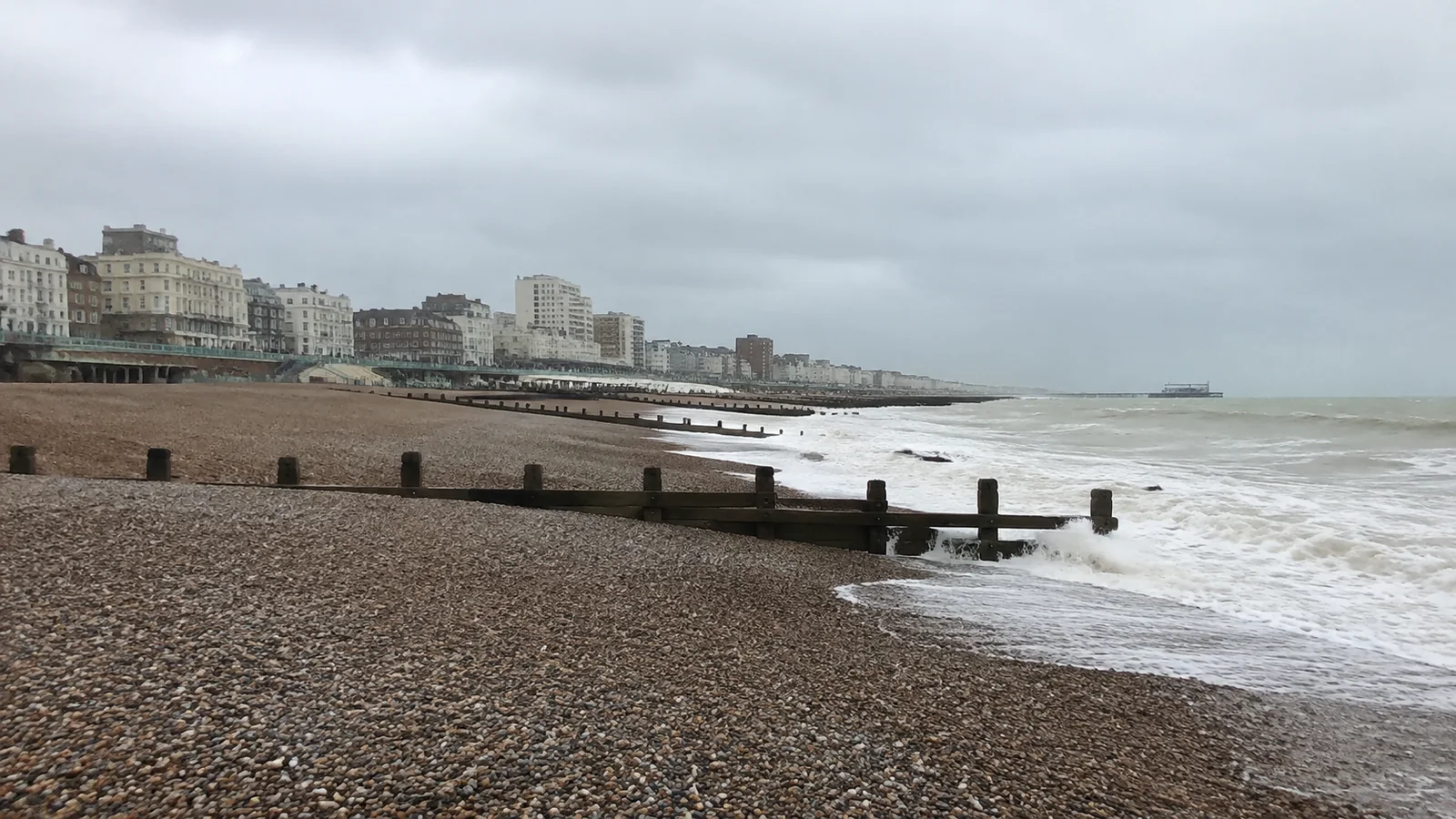
Brighton’s steep shingle, shore break, groynes, and changing current can overwhelm a dog quickly. Check tide and weather, avoid rough water, remove the leash before swimming to prevent snagging, and carry fresh water so the dog does not drink seawater.
If a dog is swept out, do not enter the sea after it. The RNLI dog-walking safety advice says to call 999 and ask for the Coastguard, since owners who attempt a rescue can become casualties themselves.
Rinse salt and shingle grit from paws, check between pads, and dry ears after the water. Stop the outing if the dog coughs, vomits, staggers, becomes unusually tired, or swallows a large amount of seawater.
Heat, shade, and crowded summer days
Shingle stores heat, and the exposed seafront offers little dependable shade. Walk early or late, test the surface with your hand, bring more water than expected, and choose a shorter visit for flat-faced, elderly, young, or thick-coated dogs.
Never leave a dog in a parked car while checking the beach. The RSPCA’s hot-weather warning explains how quickly a vehicle can become dangerous even when the day does not feel extreme.
Getting there without creating a parking problem
For central and eastern zones, rail plus an on-leash seafront walk can be easier than hunting for beachfront parking. Check the train operator’s current pet policy, avoid packed commuter services, and bring a towel so a wet dog does not spread grit through the carriage.
If driving, choose the legal parking area before choosing the beach entrance. A 10-minute on-leash walk to a clear dog zone is better than unloading beside an ambiguous or restricted section.
Dog-beach etiquette that matters here
- Carry more waste bags than you expect to need and bin every one.
- Leash before leaving the shingle for any promenade, stair, ramp, café queue, or car park.
- Keep dogs away from anglers, fishing line, water-sports equipment, towels, and food.
- Interrupt bird chasing immediately and give resting wildlife a wide berth.
- Move away when another owner leashes their dog instead of allowing a greeting.
- Do not assume an empty winter beach removes the need for recall and supervision.
Owners comparing destinations can also look at Ellie’s Sydney dog-beach breakdown or Sunshine Coast dog-beach guide. Those councils use different clocks, zones, and wildlife rules, so Brighton’s dates do not travel with you.
My recommendation
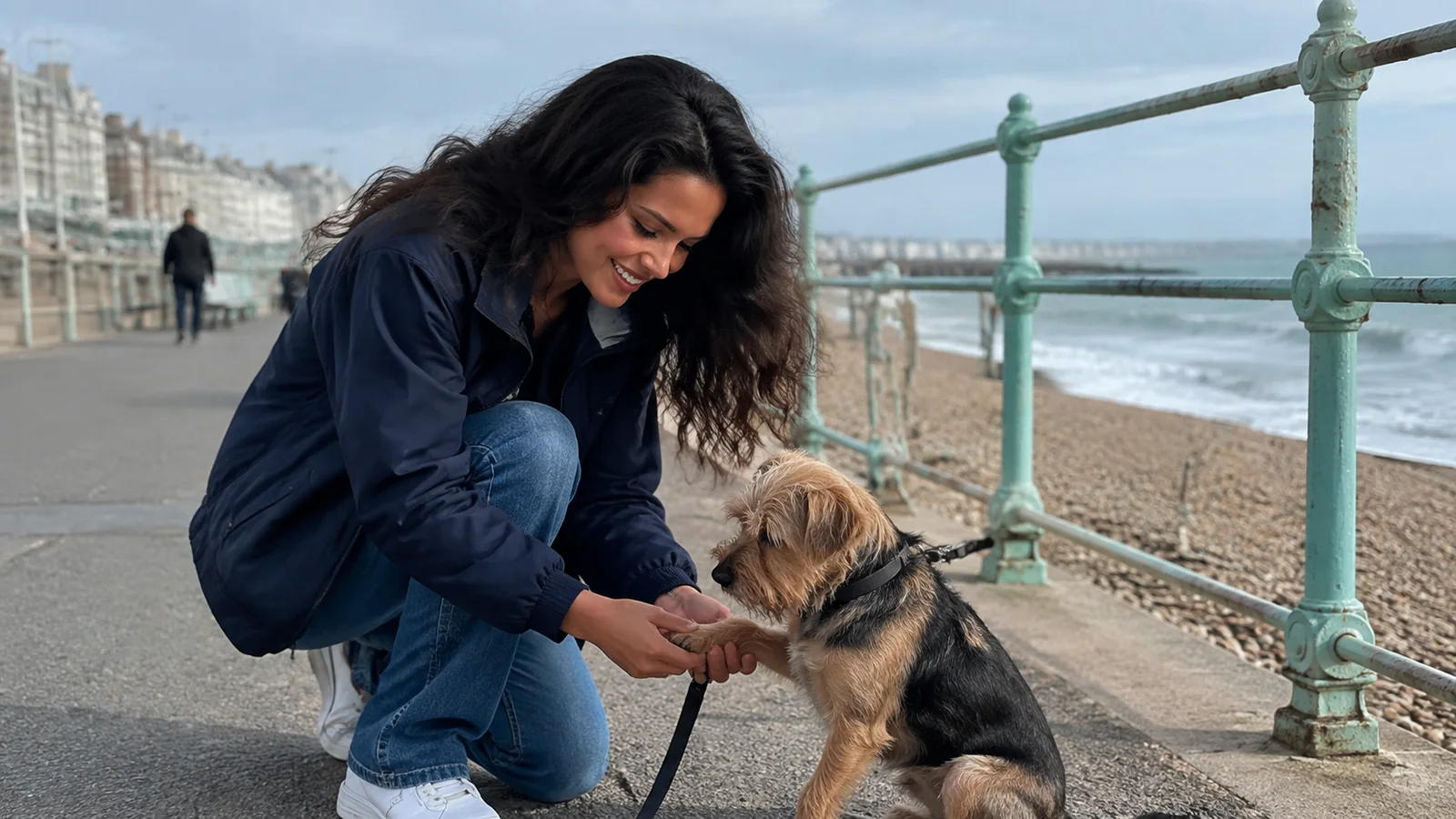
For a summer visit near central Brighton, use the signed Aquarium station-to-marina zone early in the morning and keep the leash on until your feet reach the permitted shingle. For a quieter dog, choose Hove west of King Alfred and avoid weekend peak time.
From October 1 to April 30, enjoy the flexibility of the full city beach but still check weather, tide, and temporary signs. The simplest legal habit is to enter only where the current council sign confirms the rule you intend to use.