What Is New Zealand Famous For? 18 Things to Know
New Zealand is famous for scenery so polished it sometimes looks computer-generated, but that is only the opening scene. Aotearoa is also known for living Māori culture, fearless outdoor fun, remarkable birds, brilliant filmmaking, excellent wine, and a talent for turning an ordinary coffee stop into a serious conversation about the flat white.
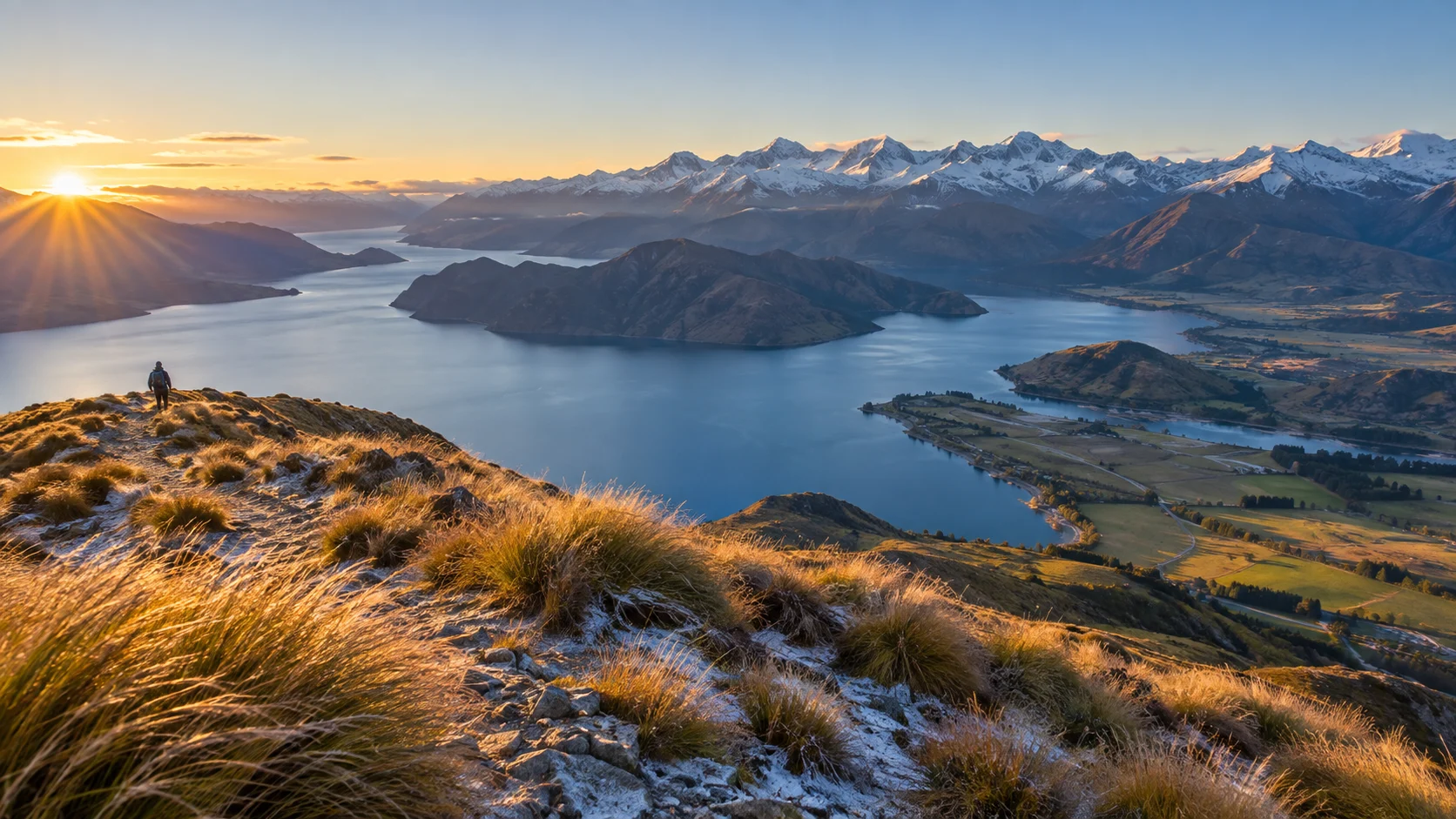
New Zealand is famous for spectacular landscapes
Few countries fit glaciers, volcanoes, subtropical coves, alpine lakes, rain forest, rolling farmland, and fjords into such a travel-friendly shape. The changes arrive quickly enough that a road trip can feel like several countries stitched together.
The North Island leans toward volcanic plateaus, geothermal areas, surf beaches, and softer green hills. The South Island delivers the sharpest alpine drama, braided rivers, fiords, glaciers, and high-country basins.
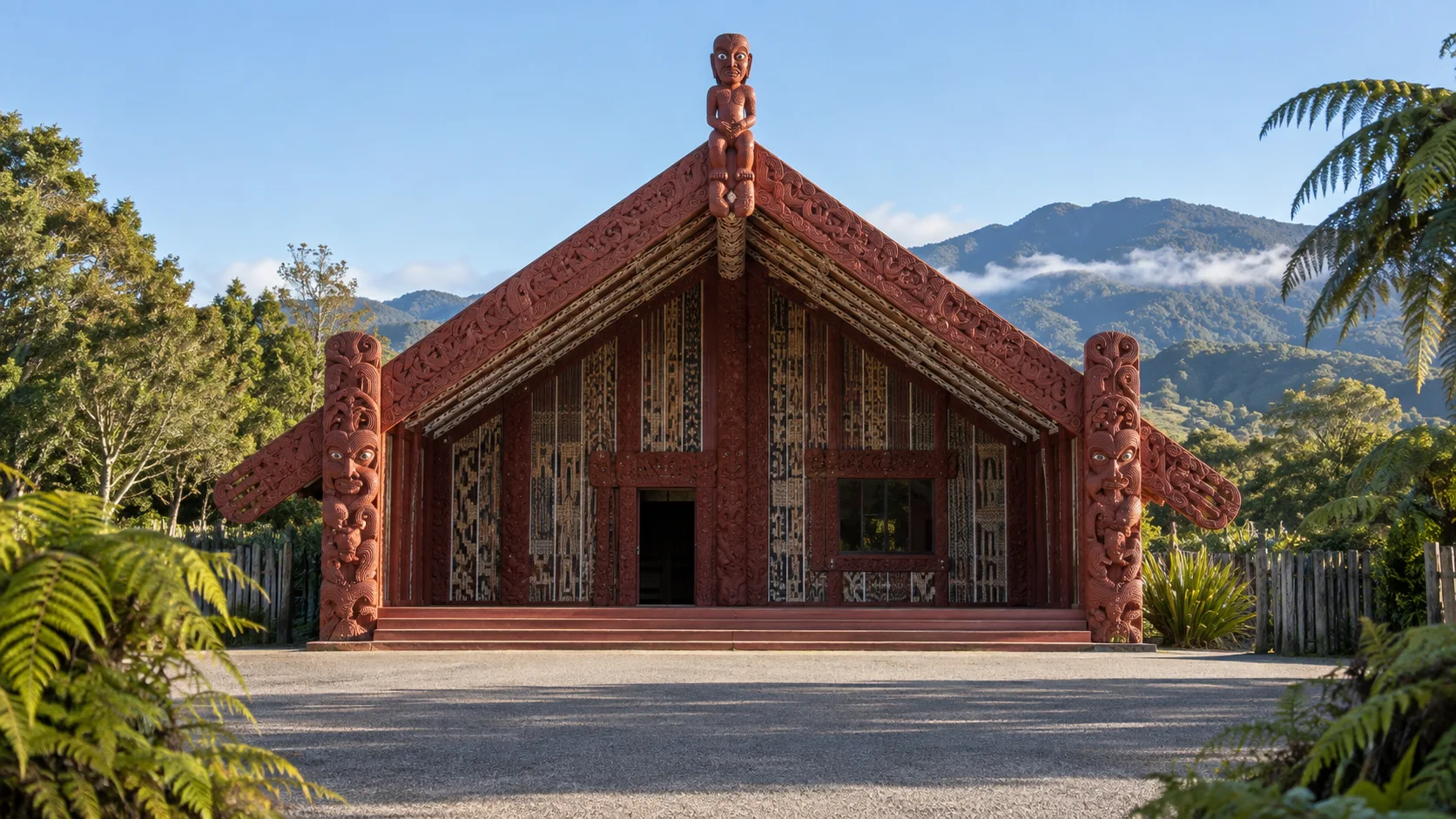
Aotearoa and Māori culture
Māori are tangata whenua, the Indigenous people of the land, and Māori culture is fundamental to New Zealand identity. Te reo Māori is an official language, and visitors will encounter Māori names, values, art, food, performance, and history throughout the country.
Aotearoa is widely used as a Māori name for New Zealand. Pronouncing names thoughtfully and learning simple words such as kia ora, a flexible greeting and expression of thanks, is a small but meaningful start.
A haka is not merely a sports warmup or tourist dance. Different haka carry different purposes, histories, words, and protocols, so watch with attention and avoid treating a powerful cultural form as a party trick.
Choose experiences led by Māori hosts and listen to how they describe their own place and community. The Waitangi Treaty Grounds offers an important starting point for understanding the Treaty of Waitangi, its signatories, and its continuing significance.
Mountains, volcanoes, and glaciers
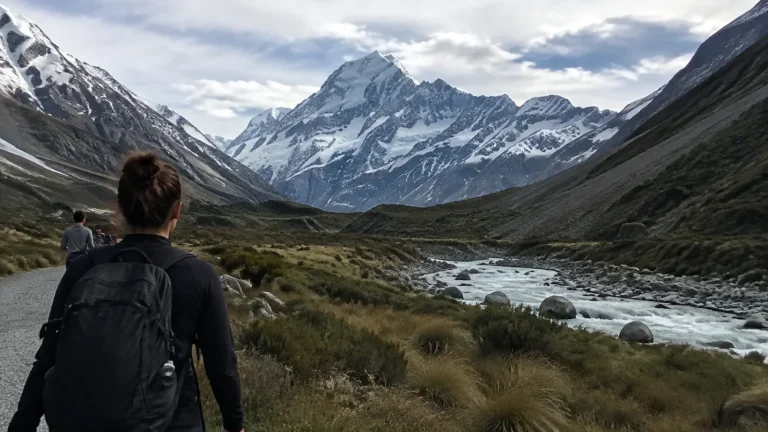
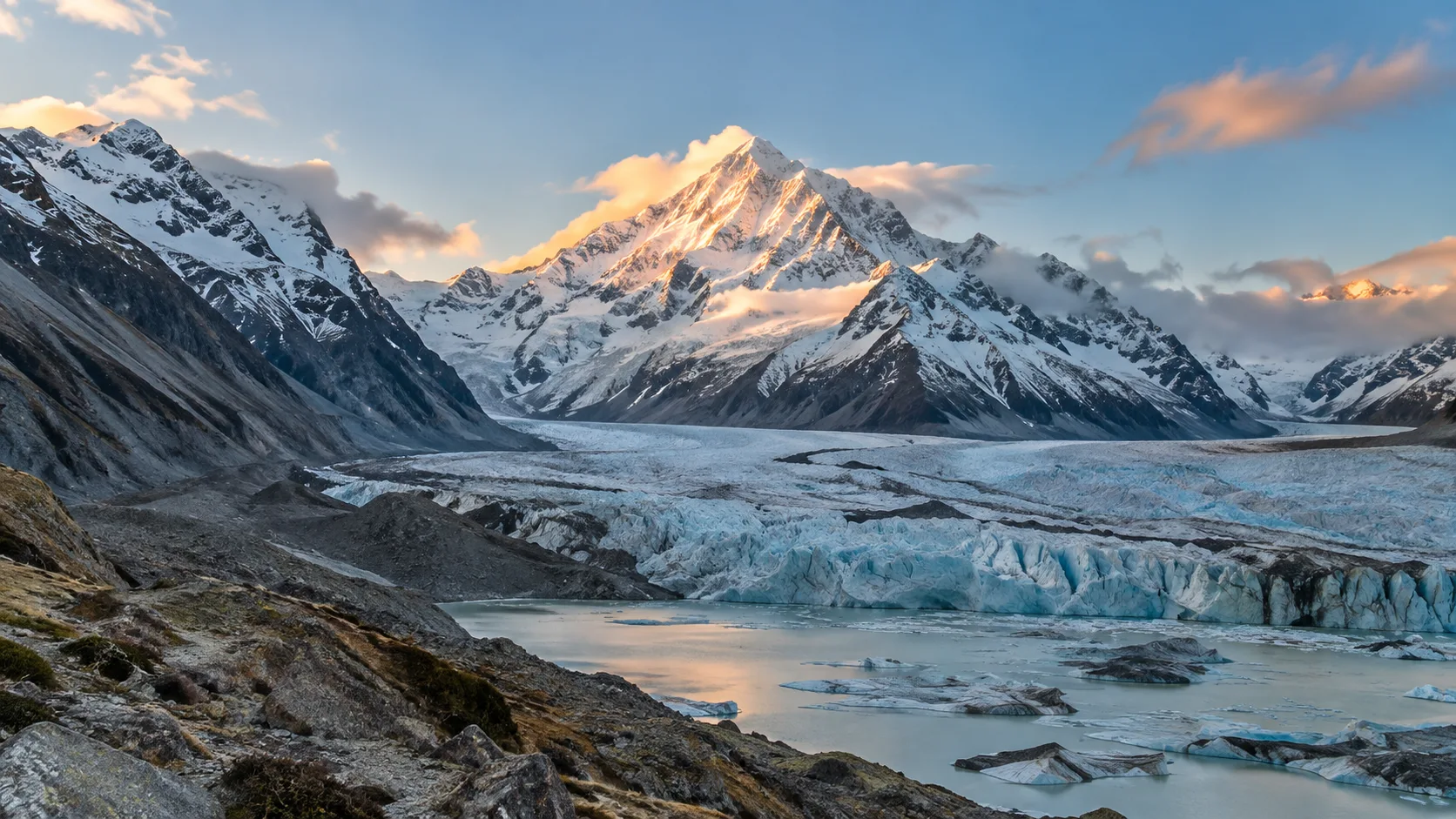
Aoraki/Mount Cook is the country’s highest mountain and the center of its most recognizable alpine skyline. Tongariro, Ngāuruhoe, Ruapehu, and Taranaki Maunga give the North Island a distinct volcanic silhouette.
Many famous mountains are culturally significant ancestors, not just adventure props. Use the accepted dual or Māori name, stay on legal tracks, and follow requests from the iwi connected to the maunga.
These New Zealand mountain ideas sort approachable viewpoints from serious alpine routes. The best view does not always require standing on the summit.
Fiords that everyone calls sounds
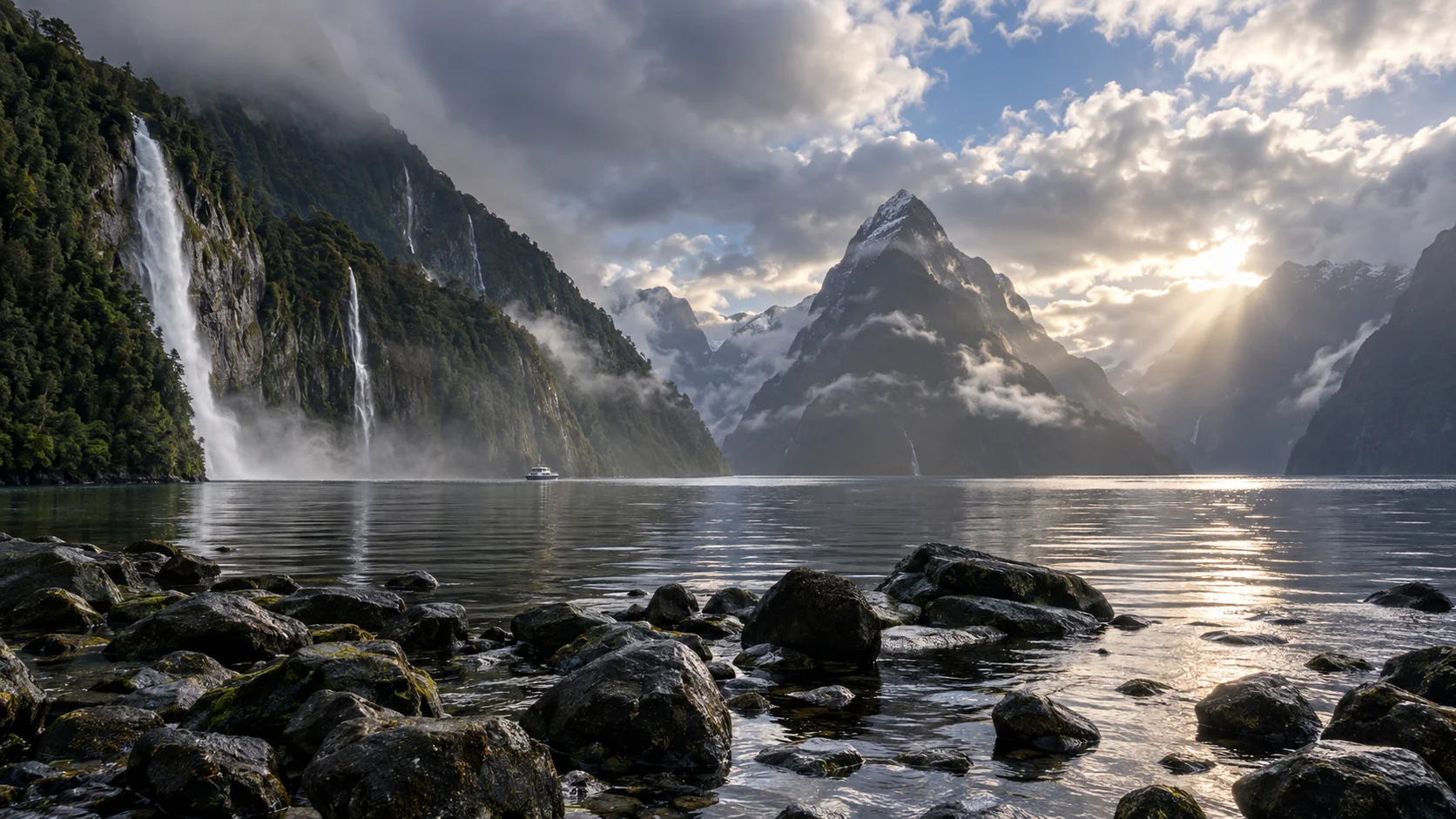
Milford Sound and Doubtful Sound are technically fiords carved by glaciers, despite their familiar English names. Sheer walls, deep dark water, rain forest, and waterfalls make Fiordland one of New Zealand’s defining landscapes.
Rain is not necessarily bad news here because it creates temporary waterfalls by the hundreds. Heavy weather can still disrupt roads, boats, flights, and tracks, so a flexible plan matters more than chasing a perfect blue forecast.
Milford is more accessible and busier, while Doubtful usually requires a longer arranged journey across Lake Manapouri and Wilmot Pass. Neither should be squeezed thoughtlessly between Queenstown activities.
The kiwi and other birds found nowhere else
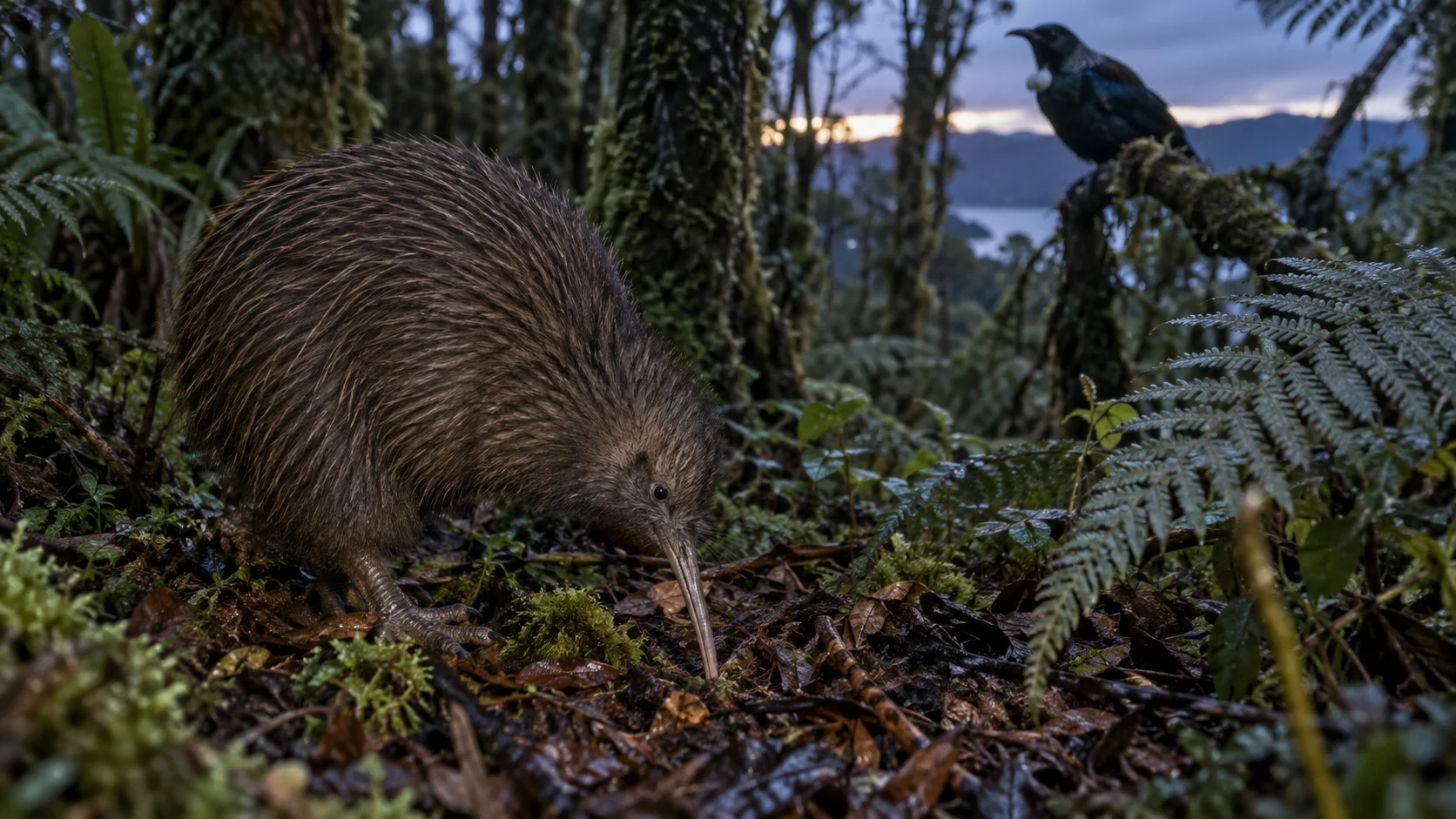
The flightless kiwi is a national symbol and the source of the friendly nickname “Kiwi” for a New Zealander. It is nocturnal and threatened, which means spotting one in the wild takes far more care than buying a kiwi keychain.
New Zealand evolved without native terrestrial mammals apart from bats, allowing unusual bird life to fill ecological roles found elsewhere. Introduced predators later devastated many species, and conservation remains an urgent national project.
Kākāpō are heavy, nocturnal, flightless parrots managed through intensive conservation, while cheeky alpine kea are famously curious. Takahē, tūī, kererū, fantails, and little blue penguins add even more personality.
The Department of Conservation’s official kiwi information explains species, threats, and conservation work. At wildlife sites, use red light only when instructed, stay quiet, never feed birds, and follow the guide’s rules.
Middle-earth and world-class filmmaking
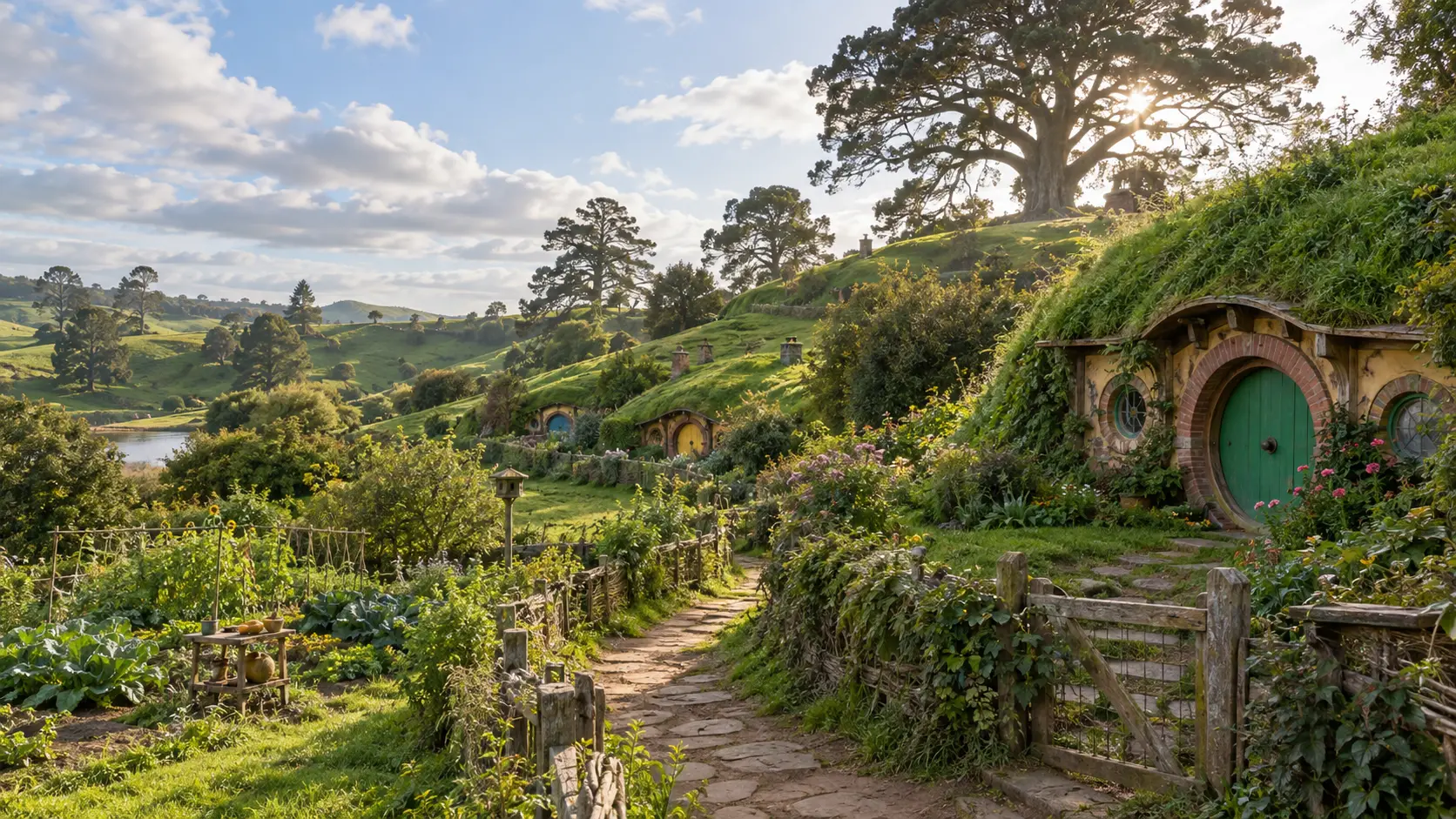
Peter Jackson’s The Lord of the Rings and The Hobbit films made New Zealand visually inseparable from Middle-earth for millions of viewers. Hobbiton remains the most polished screen-tourism experience, while many other locations are natural landscapes without permanent sets.
Wellington’s filmmakers, effects artists, craftspeople, and studios matter as much as the mountains in front of the camera. New Zealand cinema also includes stories by Māori and Pacific filmmakers that have nothing to do with hobbits.
The New Zealand Film Commission is a useful doorway into local films and the country’s screen industry. Watch a New Zealand-made movie before arrival and the place becomes richer than one trilogy.
Rugby and the All Blacks
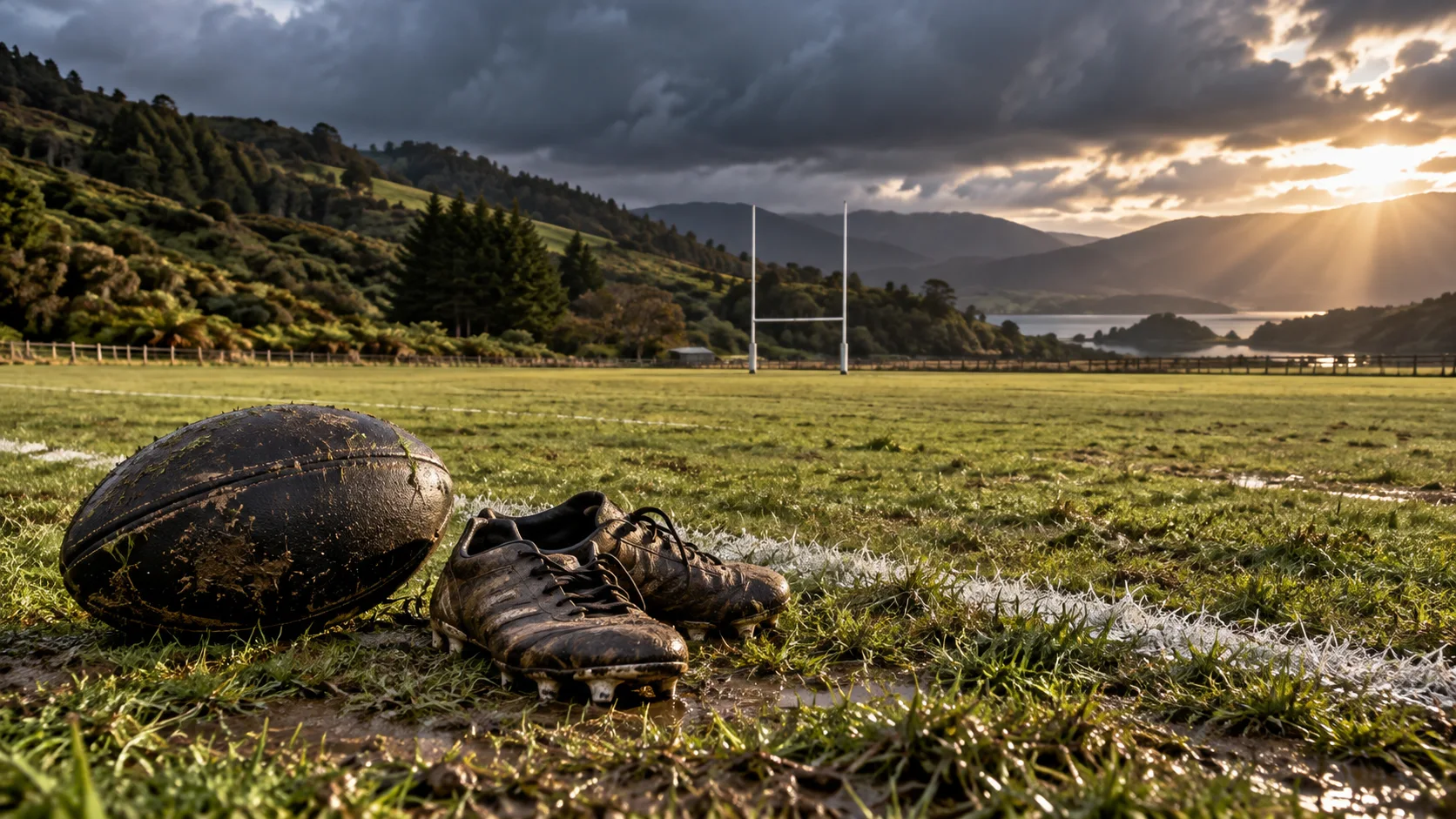
Rugby union occupies an enormous place in New Zealand’s sporting identity, and the men’s national team, the All Blacks, is recognized around the world. The Black Ferns have built an equally compelling legacy in women’s rugby.
Adventure sports with a safety briefing
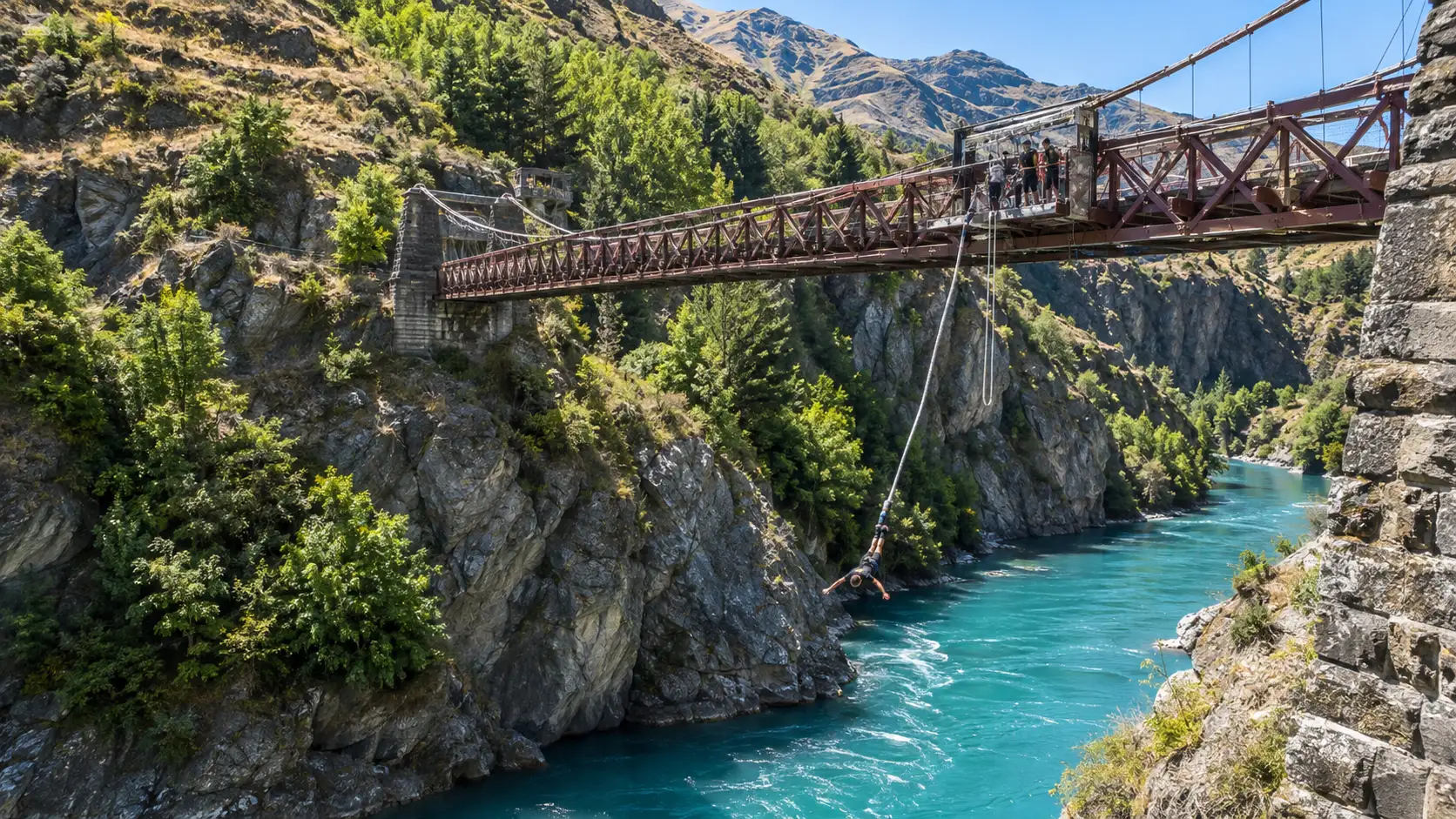
New Zealand is famous for bungy jumping, jet boating, skydiving, rafting, canyon swings, skiing, mountain biking, caving, and long-distance hiking. Queenstown wears the adventure-capital label most loudly, but activities operate around both islands.
Excitement and safety belong in the same booking decision. Check operator credentials, weight and age limits, medical restrictions, weather policies, insurance exclusions, and exactly what the activity involves.
Great Walks and the hiking culture
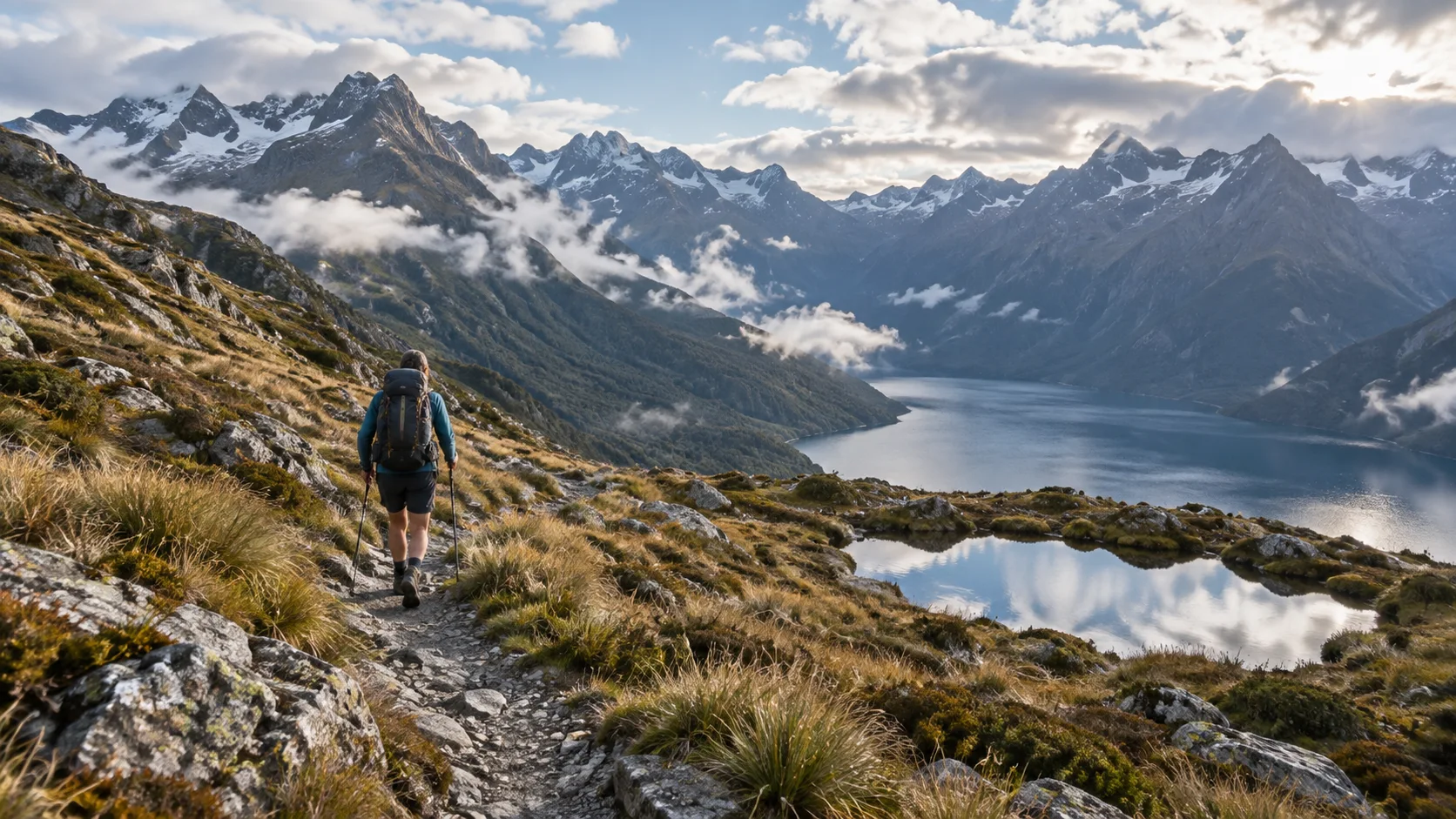
New Zealand’s Great Walks are a managed collection of premier multi-day tracks, not a claim that every other trail is second rate. Milford, Routeburn, Kepler, Abel Tasman, Tongariro Northern Circuit, and their companions cover very different terrain.
Popular huts and campsites can book out, and seasonal conditions change the required skill. “Great Walk” does not mean room service, guaranteed sunshine, or a rescue button around every corner.
Short walks are part of the culture too. Waterfalls, coastal headlands, geothermal paths, forest loops, and alpine valleys let travelers enjoy the outdoors without carrying three days of food.
The clean, green image and its complications
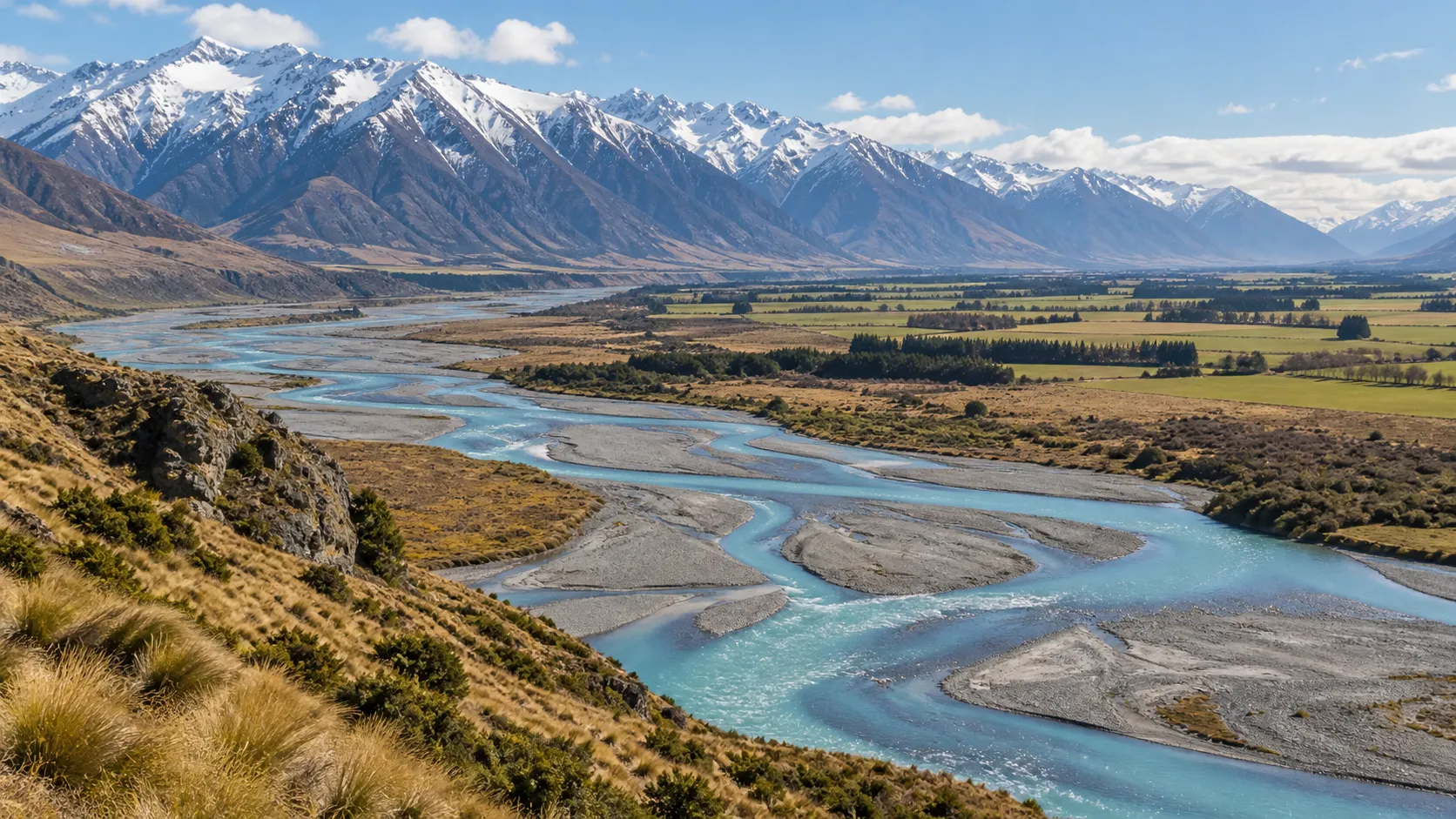
New Zealand is marketed through clear lakes, wild coasts, and green mountains, and those landscapes are genuinely central to its appeal. They are not evidence that the country has solved every environmental problem.
Native habitat loss, invasive predators, water quality, tourism pressure, and climate change all complicate the postcard. Travelers can help by cleaning hiking gear, following biosecurity rules, using marked facilities, packing out waste, and supporting conservation-led experiences.
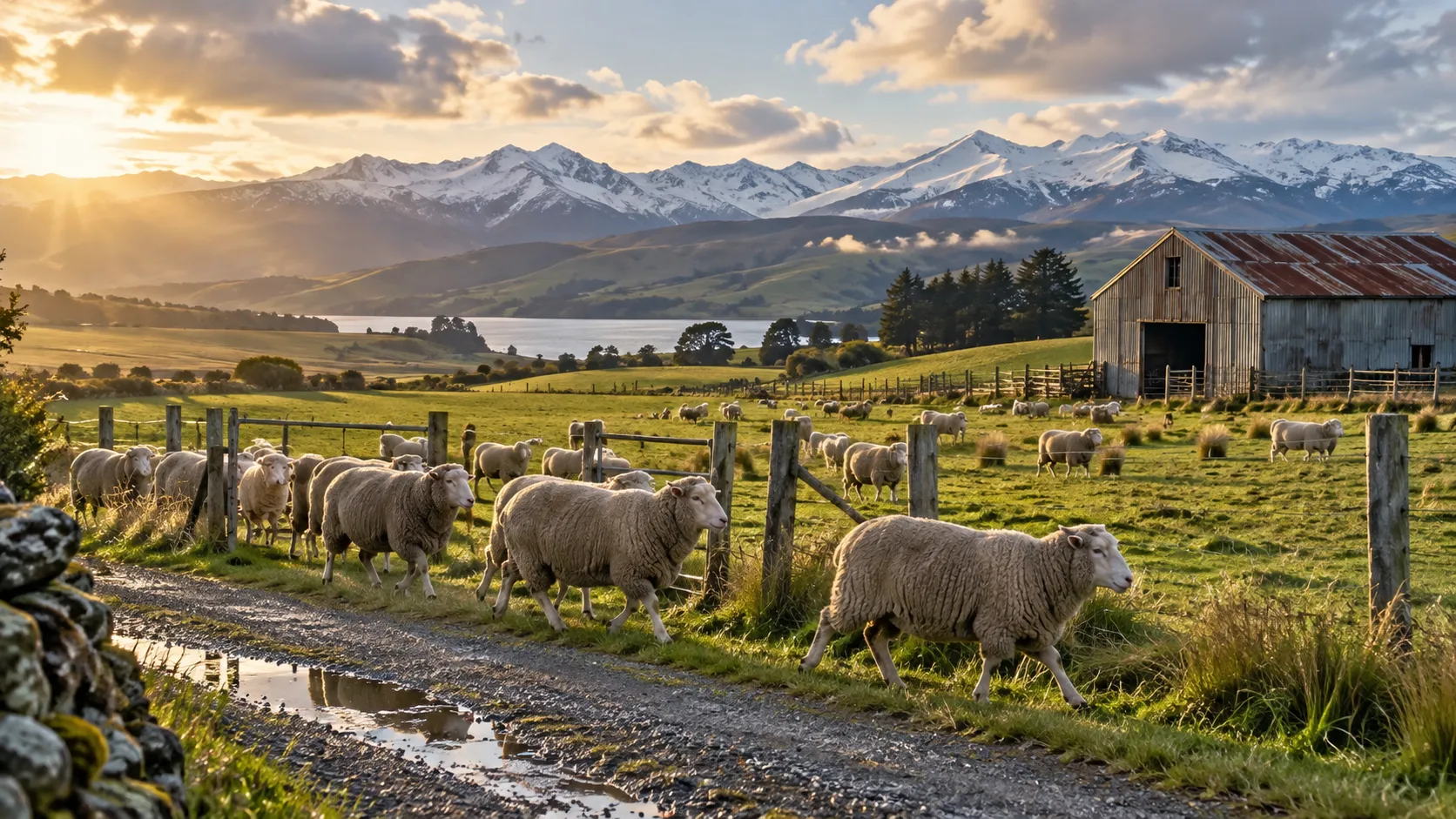
Sheep, farms, and rural landscapes
Sheep remain an enduring New Zealand image, although the old joke about sheep vastly outnumbering people belongs to a changing agricultural story. Dairy farming, orchards, vineyards, forestry, and other rural industries are also major parts of the landscape.
Farm roads are working places, not scenic pullouts. Park only where legal, close gates exactly as instructed, and never enter a paddock for a photograph without permission.
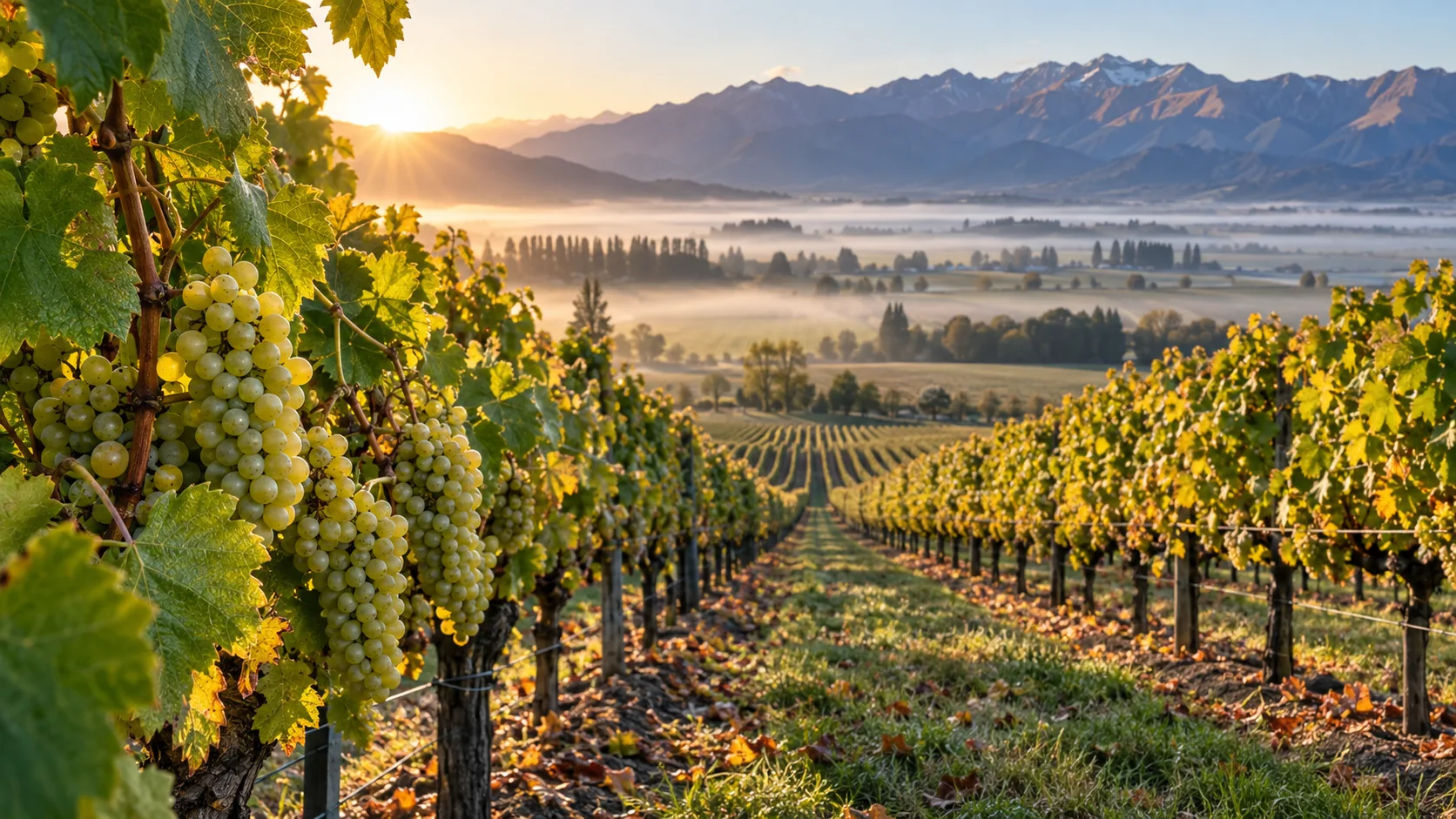
Sauvignon blanc and much more wine
Marlborough sauvignon blanc gave New Zealand wine a huge international profile with its bright, aromatic style. Central Otago pinot noir, Hawke’s Bay reds, Martinborough pinot noir, and wines from North Canterbury, Nelson, and Gisborne broaden the story.
A cellar door may require reservations, offer limited food, or close on quieter weekdays. Choose a designated driver, a bike tour suited to the route, or organized transportation before the first tasting.
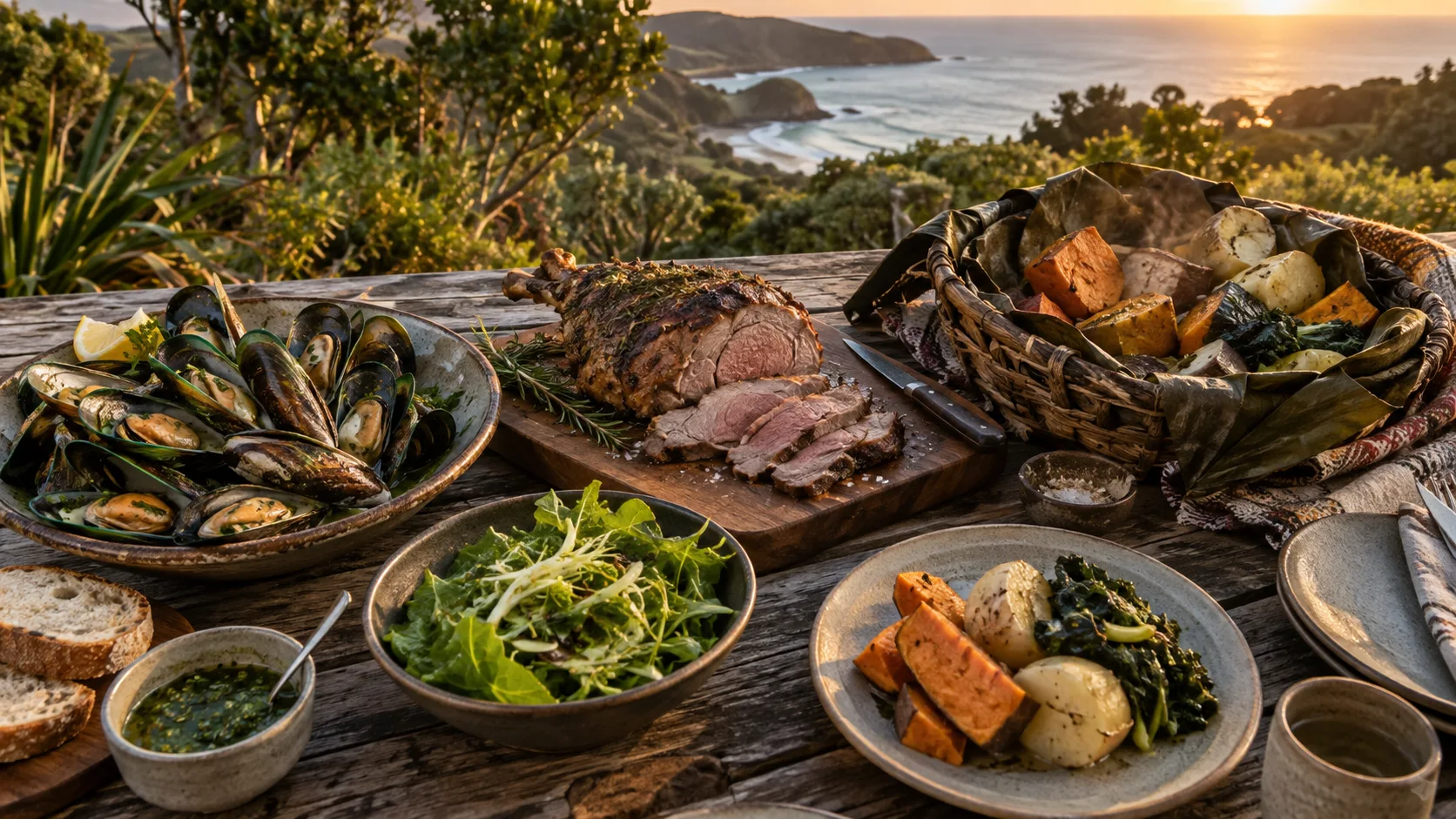
Seafood, lamb, hāngī, and excellent everyday food
Green-lipped mussels, oysters, crayfish, whitebait, fish and chips, and fresh catch connect meals to a long coastline. Availability is seasonal, harvesting rules matter, and not every seafood item is equally sustainable.
A hāngī traditionally cooks food using heated stones in an earth oven and is best understood through Māori hosts who provide cultural context. It should not be described as simply a themed buffet.
New Zealand lamb and beef remain well known, but modern restaurant menus also show Pacific and Asian influences, local produce, and strong vegetarian cooking. Farmers markets are an easy way to see what a region actually grows.
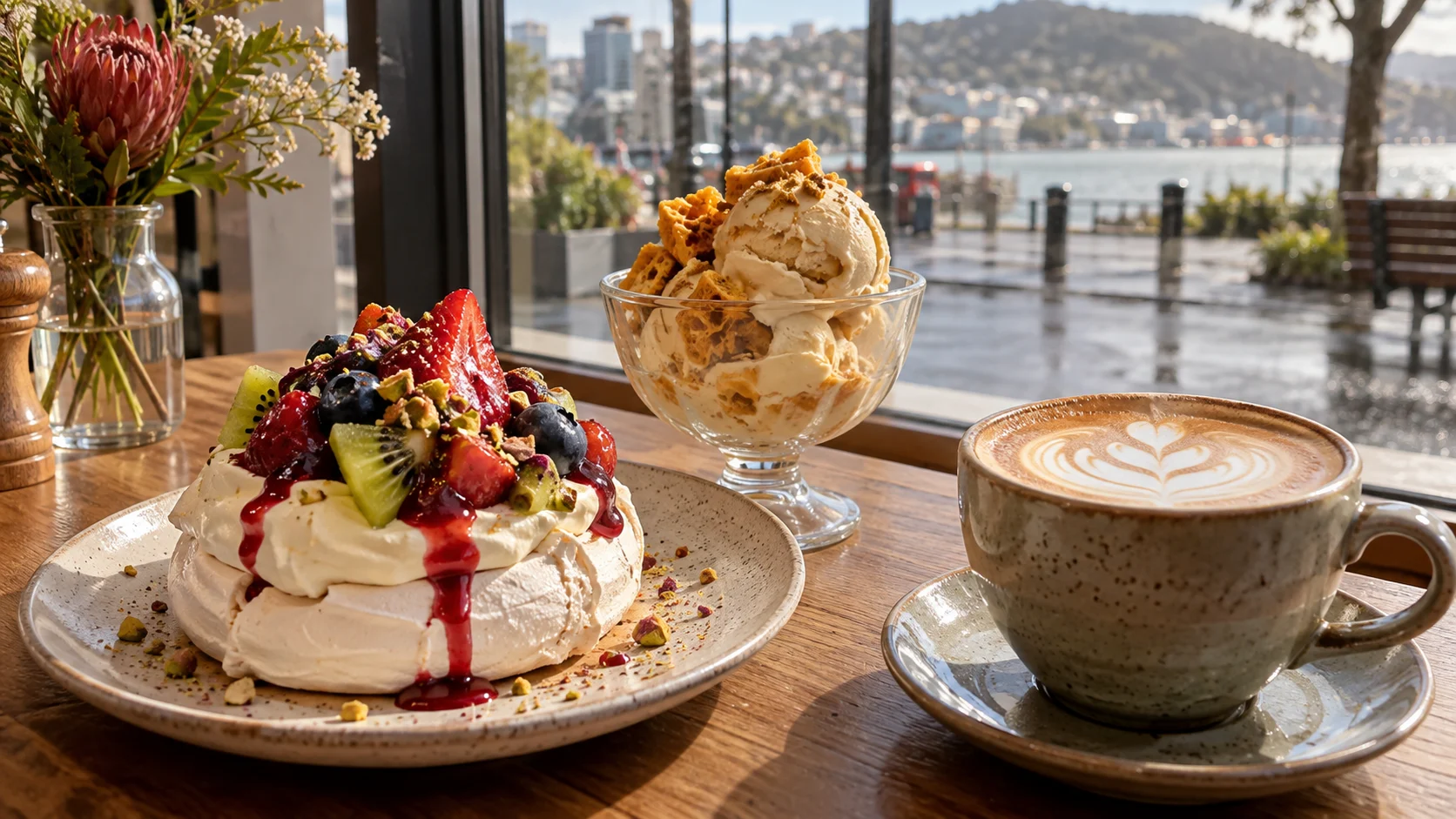
Pavlova, hokey pokey, and the flat-white debate
New Zealanders claim pavlova with great confidence, while Australians make a competing claim, and the argument may be more durable than the dessert. Try the crisp meringue, soft center, cream, and fruit without demanding a diplomatic ruling.
Hokey pokey ice cream folds small pieces of honeycomb toffee into vanilla ice cream. It is cheerful, uncomplicated, and an excellent use of a roadside stop.
New Zealand is also known for a serious cafe culture and a strong claim to the flat white, another origin story shared with Australia. Order one in Wellington, Auckland, or a small-town cafe and focus on whether it tastes good.
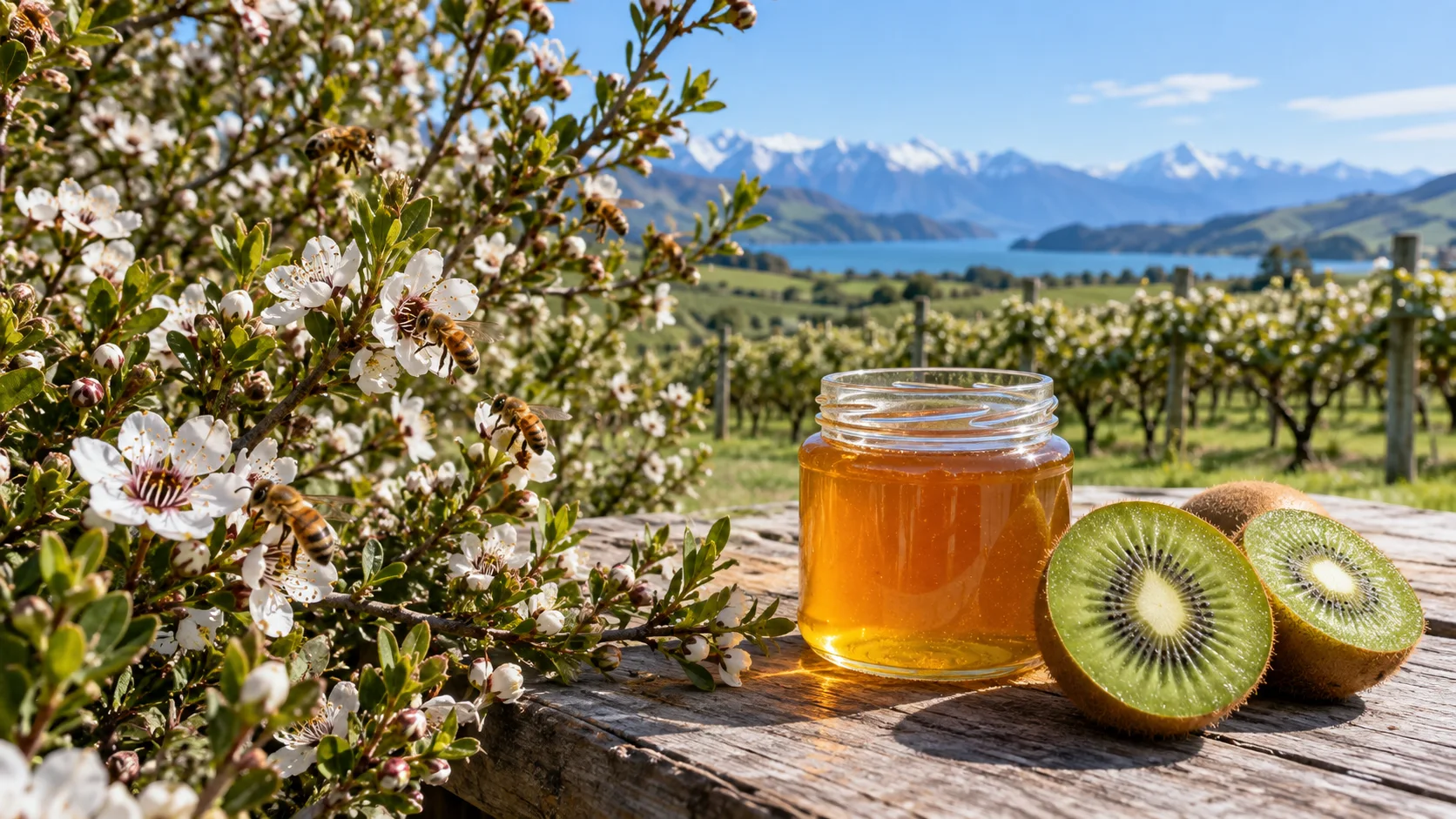
Manuka honey and the kiwifruit naming surprise
Manuka honey comes from nectar gathered from the mānuka plant and is sold using grading systems that deserve careful reading. Premium labels attract imitation, so buy sealed products from a reputable source and check import rules at home.
Kiwifruit is strongly associated with New Zealand, but the fruit originated in China. New Zealand growers developed and marketed cultivars internationally, and the kiwi name helped create the connection shoppers recognize today.
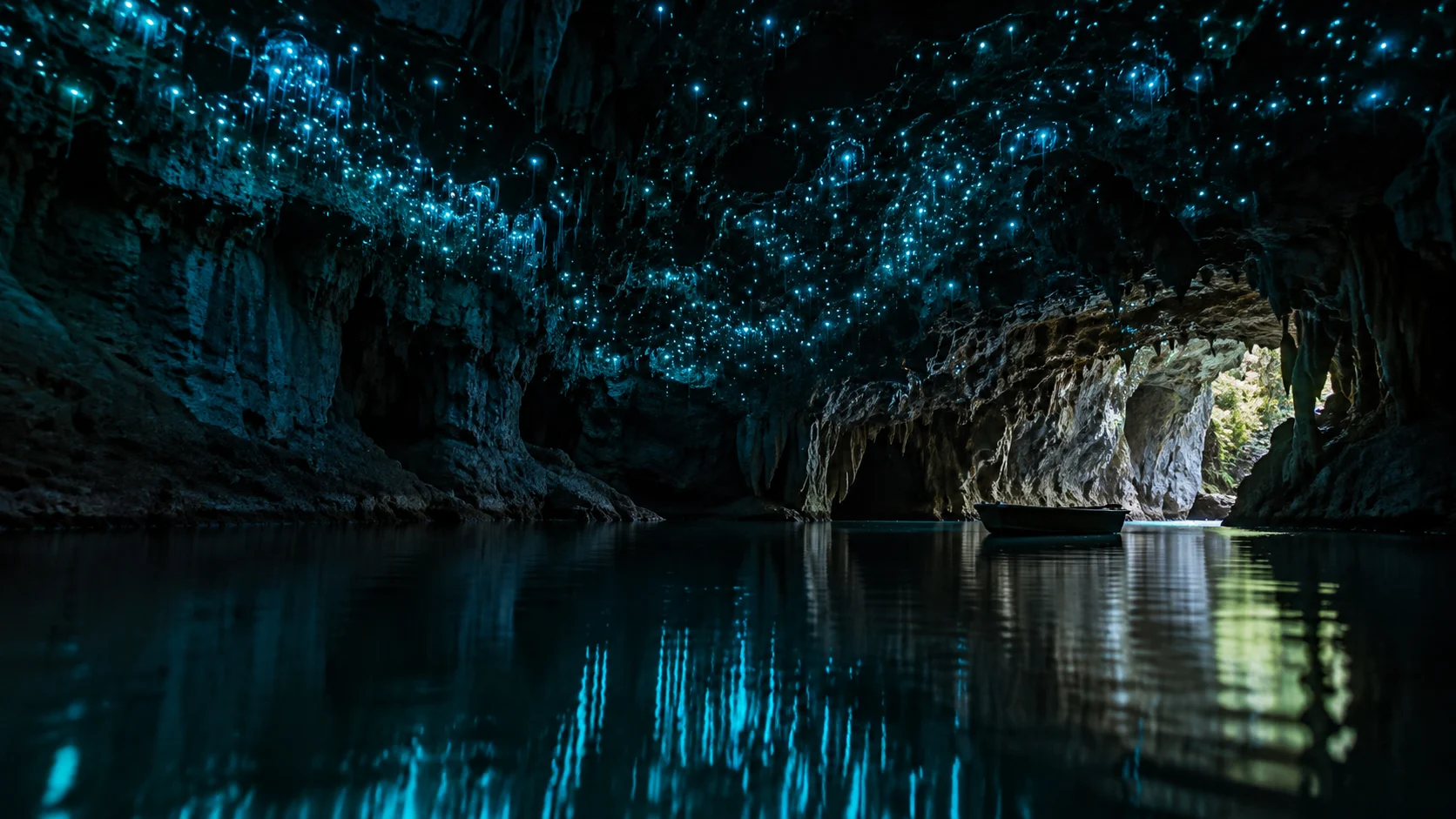
Glowworms and dark caves
Waitomo is famous for boat rides beneath the blue-green light of glowworm larvae. Other caves, forest walks, and canyon experiences offer different ways to see the same natural phenomenon.
Photography, lights, noise, and touching are controlled to protect the cave environment. Follow the operator’s rules and remember that a dark, damp ecosystem is doing the work, not a theme-park lighting rig.
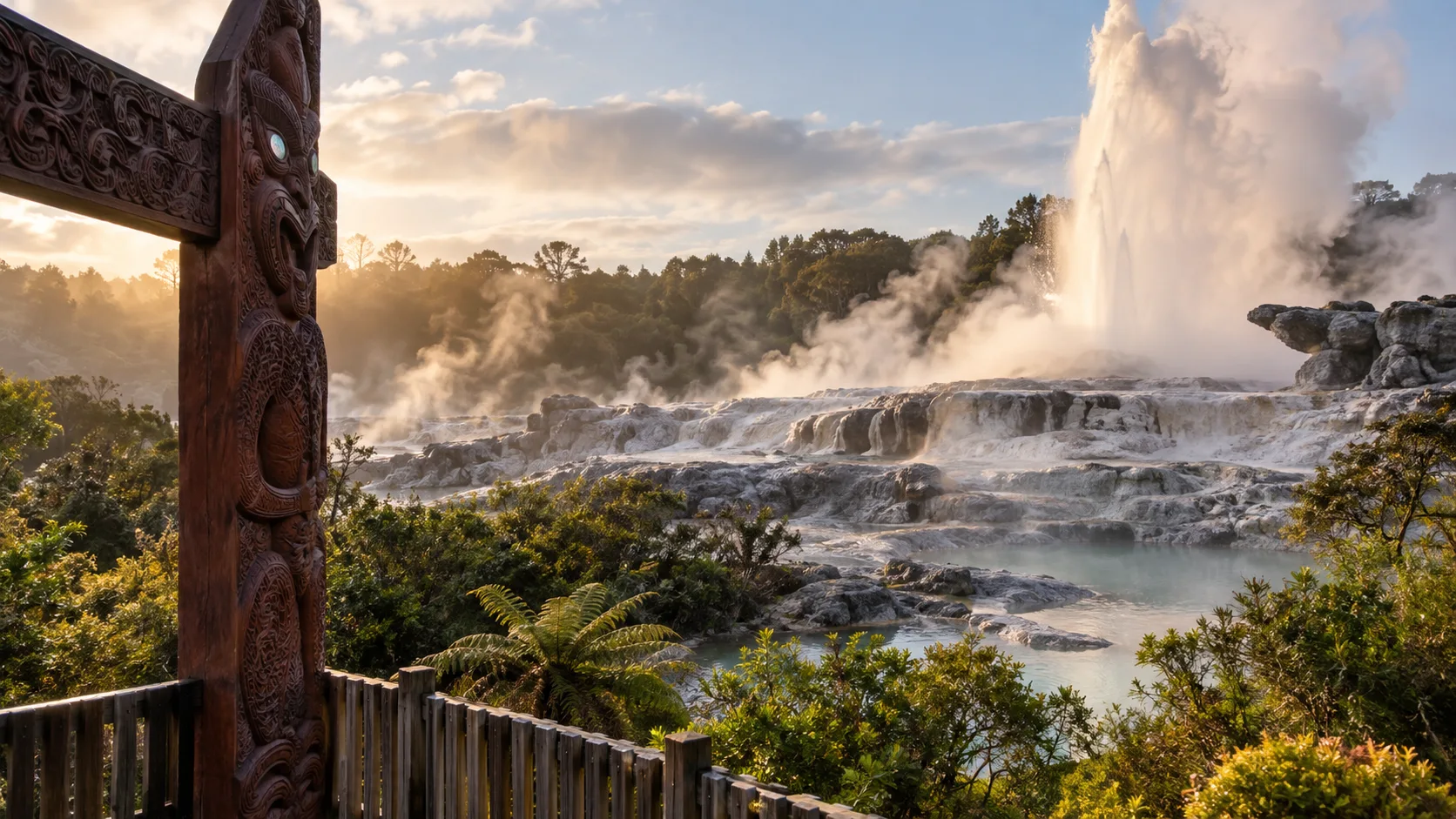
Geothermal pools and Māori-owned experiences
Rotorua is famous for steam vents, bubbling mud, hot pools, geysers, and a distinct sulfur smell. It is also a center of Māori culture and community, not merely a geothermal stop between Auckland and Taupō.
Stay on formed paths because geothermal crust can be thin and dangerously hot. Choose community-led cultural experiences and listen more than you photograph.
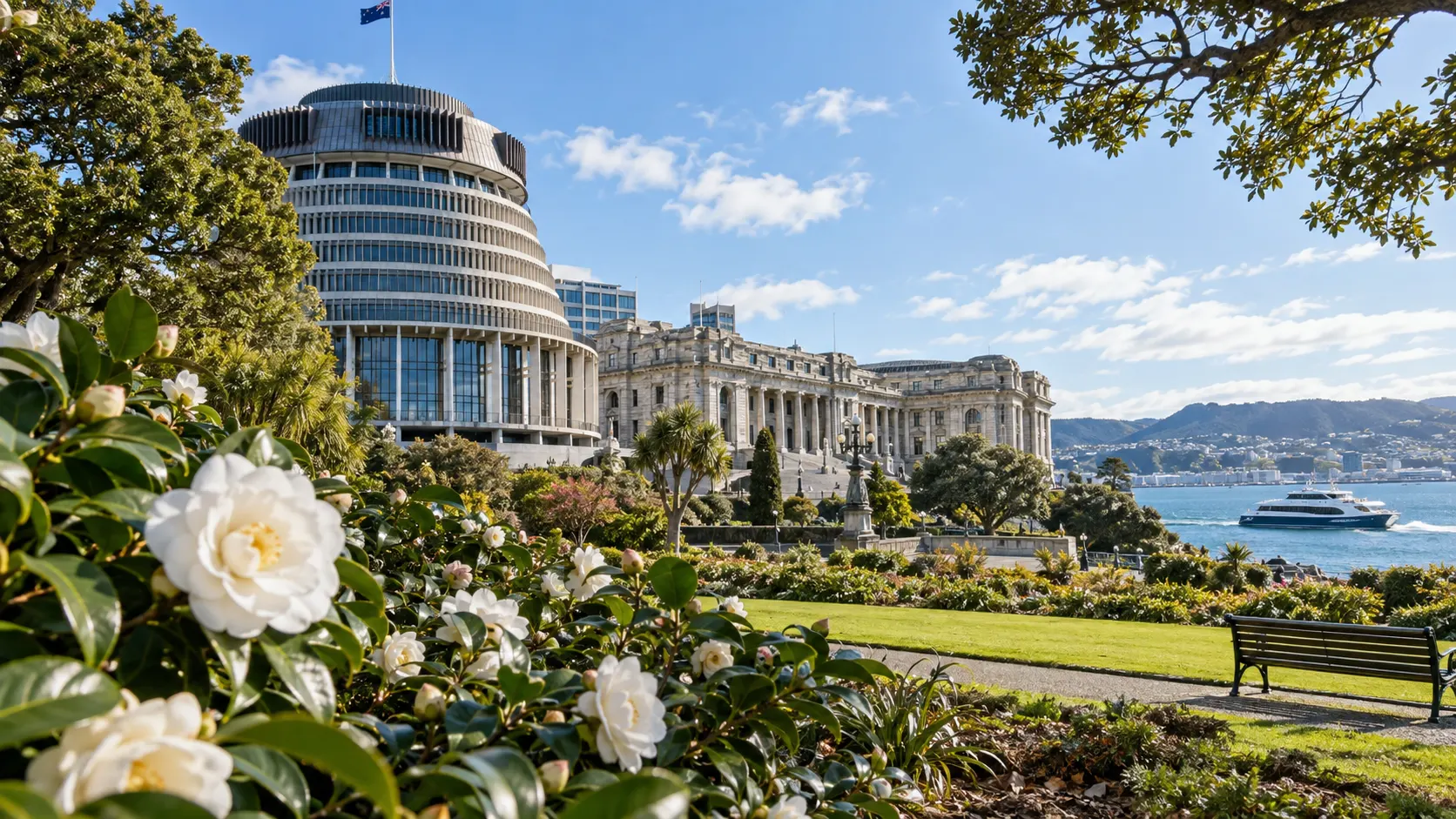
Women’s suffrage and a streak of innovation
In 1893, New Zealand became the first self-governing country where women won the right to vote in parliamentary elections. The official New Zealand History account of suffrage also makes clear that the victory followed organized campaigning, not spontaneous generosity.
New Zealand is proud of figures such as mountaineer and humanitarian Sir Edmund Hillary, physicist Ernest Rutherford, and aviator Jean Batten. Their stories are worth exploring without turning national history into a tidy list of “firsts.”
How to plan a trip around what New Zealand is famous for
Choose three or four themes rather than chasing every icon. A mountain-and-wine South Island trip feels different from a North Island journey built around Māori culture, geothermal landscapes, caves, and beaches.
The official Tourism New Zealand site helps compare regions and travel styles, but always confirm live access with the operator or land manager. Seasonal opening, weather, road repairs, conservation work, and cultural events can change a plan.
These beautiful island destinations put New Zealand’s geography in a wider context. For a neighboring road-trip contrast, explore Australia’s east coast, where distances and climate demand a very different rhythm.
What New Zealand is famous for FAQs
What is New Zealand most famous for?
Internationally, New Zealand is best known for dramatic landscapes, Māori culture, the All Blacks, native birds, outdoor adventure, and The Lord of the Rings films. Wine, food, conservation, and a strong screen industry add much more depth.
Why are New Zealanders called Kiwis?
The nickname comes from the kiwi, a flightless native bird and national symbol. Kiwi can describe a New Zealander, but the fruit is generally called kiwifruit.
Is New Zealand just for outdoor travelers?
No. Cities offer museums, restaurants, film culture, sports, music, and galleries, while wineries and cultural centers require no mountain boots at all.
Final thoughts
New Zealand deserves its fame for extraordinary scenery, but the country becomes far more interesting when culture, conservation, food, and history join the landscape. Middle-earth may start the daydream, yet Aotearoa provides the real story.
Leave enough time to hear that story from the people who live there. The best souvenir may be a favorite trail or bottle of wine, but it may also be finally pronouncing a place name with care.