South Korea Travel Tips: What to Know Before You Go
South Korea is wonderfully easy to move around once you learn its systems, but the first day can feel like a wall of station exits, payment rules, and unfamiliar apps. These practical tips cover entry, trains, money, food, etiquette, and route planning so you can spend less time troubleshooting and more time enjoying the trip.
South Korea Travel Tips at a Glance
- Best first trip: Seoul plus Busan or Gyeongju
- Ideal length: 7 days for two bases, 10 to 14 days for three regions
- Currency: South Korean won, written KRW or ₩
- Transit essential: Rechargeable transportation card
- Navigation essential: A Korea-focused map app with addresses saved in Korean
- Biggest mistake: Treating every Seoul neighborhood as a quick walk from every other one
Check Entry Rules for Your Passport
U.S. passport holders can generally visit South Korea for tourism or business for up to 90 days without a visa, but other activities and longer stays require the correct status. A passport must be valid for entry, and airline or onward-destination rules may add requirements.
South Korea’s temporary K-ETA exemption for U.S. passport holders runs through December 31, 2026. The official K-ETA portal is the only sensible place to check eligibility because the exemption list and requirements can change after that date.
Do not confuse K-ETA with the arrival declaration. Travelers who must submit an arrival card can use the free official e-Arrival Card within three days before arrival, while some travelers with a K-ETA or qualifying status may be exempt.
Use only the government’s go.kr site because imitation services may charge for a free declaration. Confirm your exact requirement in the portal’s eligibility navigator instead of copying another traveler’s answer.
Choose a Route That Fits Korea’s Shape
For one week, spend four or five nights in Seoul and two or three in Busan or Gyeongju. For 10 days, Seoul, Gyeongju, and Busan form a logical rail route, while Jeju works better as a deliberate flight segment than a casual extra.
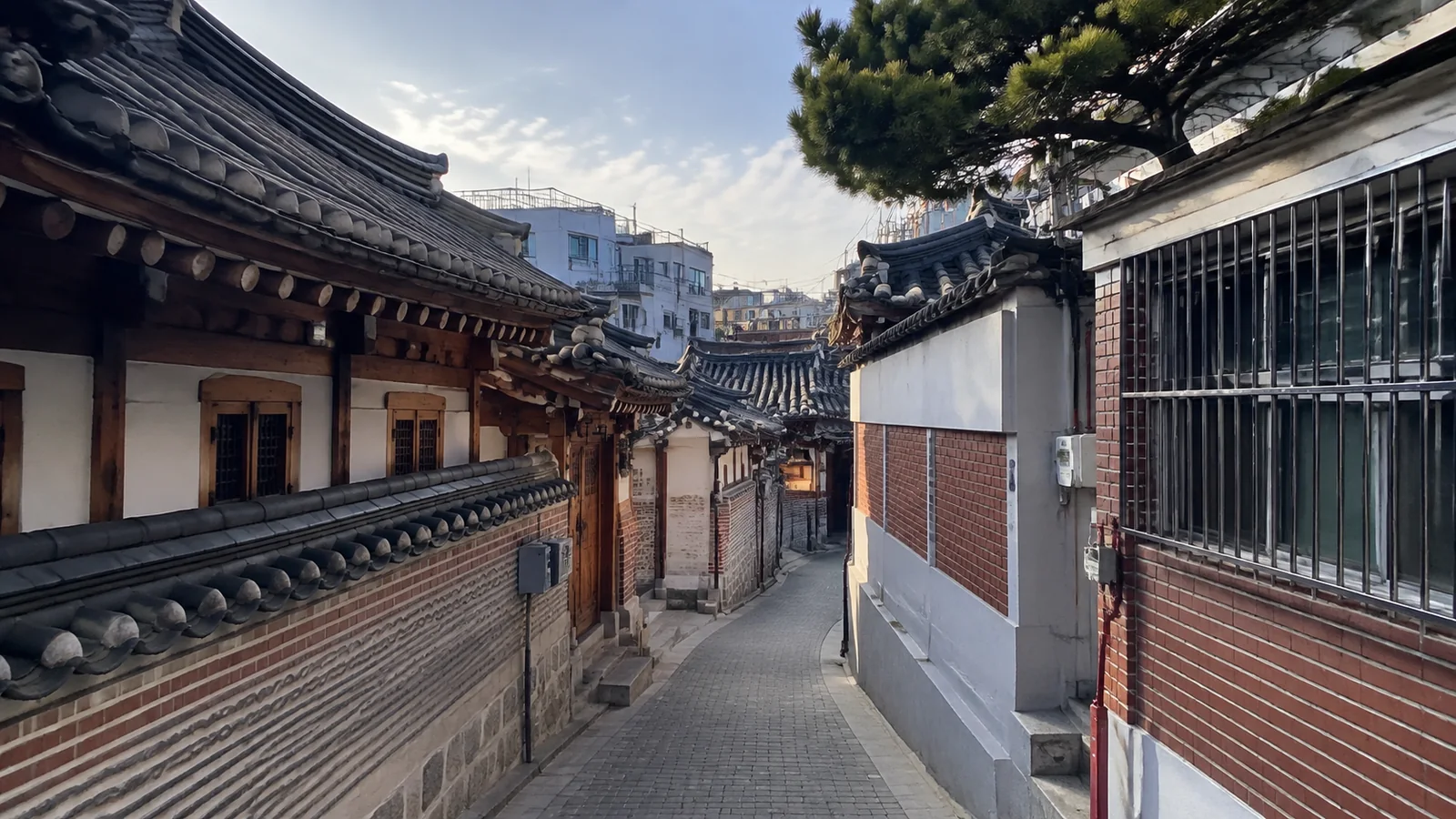
Seoul is enormous, so plan days by neighborhood: palaces and Bukchon together, Hongdae and Yeonnam together, or Gangnam and nearby southern sights together. Crossing the city repeatedly burns time even when the subway is excellent.
Which Second Base Should You Pick?
- Busan: Best for beaches, seafood, markets, coastal walks, and a second big-city energy
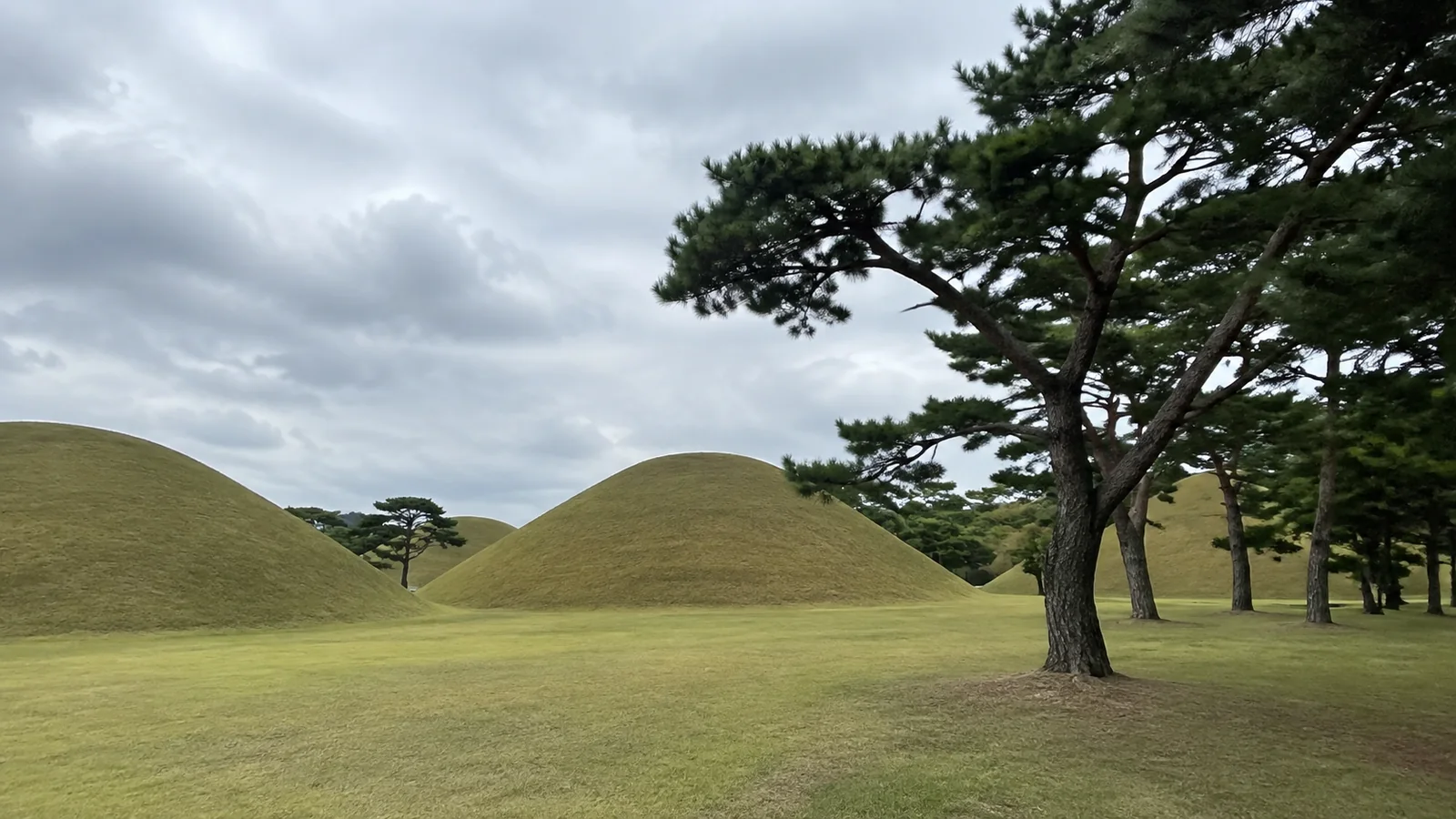
- Gyeongju: Best for Silla-era history, tombs, temples, and a slower pace
- Jeonju: Best for food, hanok atmosphere, and an easy cultural break
- Jeju: Best for volcanic landscapes, coastal scenery, and travelers willing to solve island transport
- Sokcho or Gangneung: Best for an east-coast change and access to mountain or beach scenery
Do not choose Jeju solely because it appears on every highlight list. Airport time, weather, and slower island buses mean it deserves at least three nights, and a rental car may be the practical choice outside major hubs.

Get from Incheon Airport into Seoul
The Airport Railroad offers express and all-stop services, airport limousine buses serve many hotel districts, and taxis provide door-to-door convenience. The best option depends on your arrival time, luggage, group size, and how close your hotel is to a station or bus stop.
VisitKorea’s official airport transportation guide lists current modes and payment rules for Incheon, Gimpo, Busan, Jeju, and other airports. Recheck late-night options because many regular services end before the airport does.
Save your hotel’s Korean name, address, phone number, and nearest exit before landing. Those details help a driver or information desk far more than an English brand name alone.
Use a Transportation Card for Daily Transit
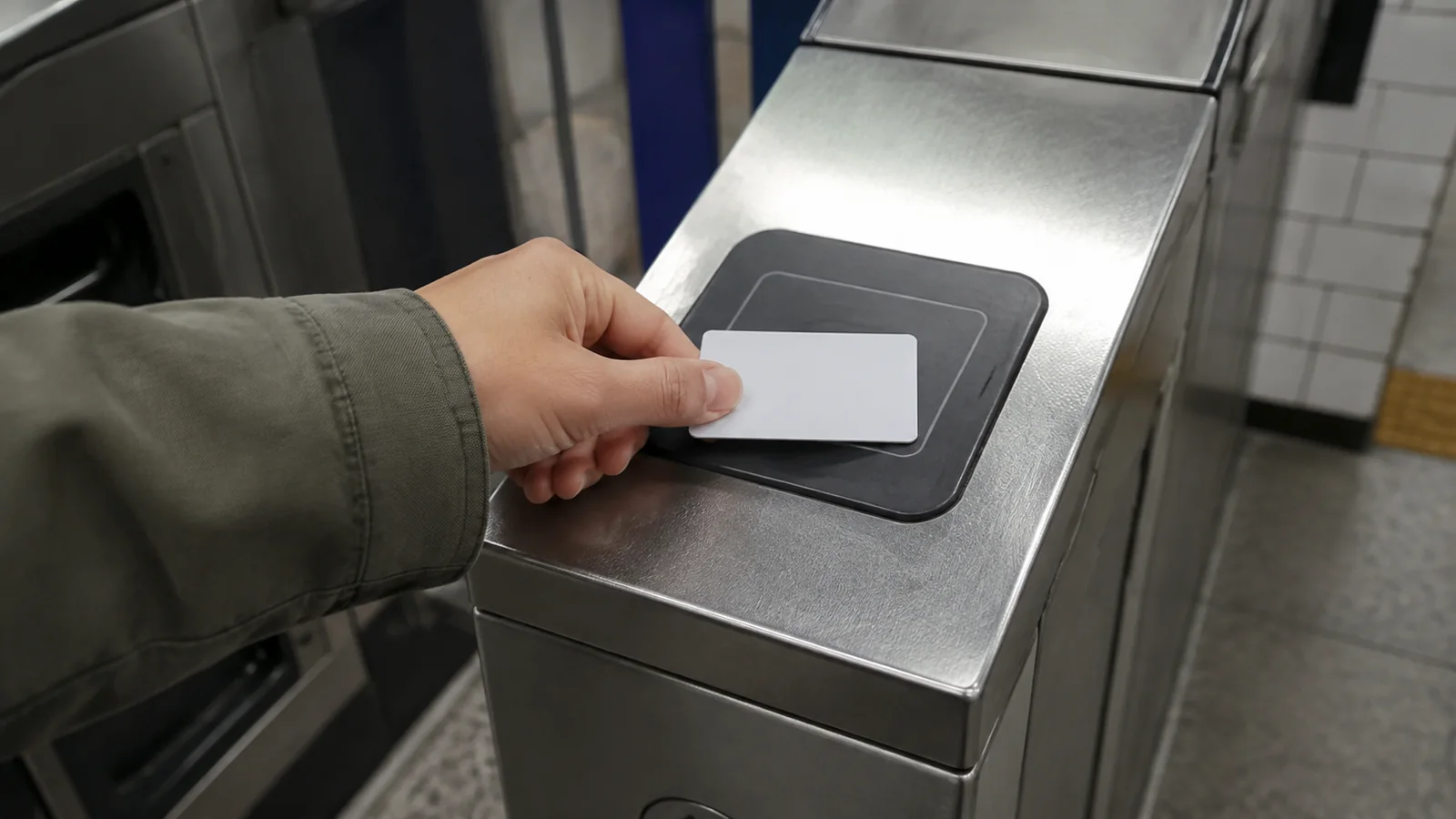
Tmoney and similar prepaid cards simplify subway and bus fares in major cities and enable transfer discounts where applicable. Tap when entering and leaving, including on buses, so the system can calculate the correct fare.
Card purchase and top-up rules can involve Korean won cash at some machines or convenience stores, even when foreign cards work elsewhere. Keep a little cash and ask staff to help if a machine rejects your card.
Tourist passes can be worthwhile for an unusually transit-heavy Seoul itinerary, but compare the included network, ride limits, validity clock, and purchase method. The official VisitKorea transportation-card page explains current card types instead of pretending one product fits every trip.
Learn the Subway Before Your First Rush Hour
Station numbers, color-coded lines, English signs, and platform directions make urban rail approachable. The harder part is choosing the correct exit because large stations can place you several blocks from your goal.
Save the line number, direction, transfer station, and exit number before entering. Elevators may be at a different exit than the shortest stairs, so travelers with luggage or mobility needs should plan the accessible route separately.
Stand clear of doors, let passengers exit, keep bags compact, and use priority seating thoughtfully. Avoid rush hour with suitcases whenever you can because a technically possible ride may still be deeply unpleasant.
Book Intercity Trains with the Exact Station in Mind
KTX high-speed trains connect Seoul with major cities such as Busan, Daegu, Daejeon, and Gyeongju Station (formerly Singyeongju), the rail gateway outside the historic center. Some destinations use a newer station outside the historic center, so “arrived in Gyeongju” can still mean a local bus or taxi.
Reserve popular Friday, Sunday, holiday, and festival trains early through official Korail channels. A Korail Pass can help on several expensive travel days, but individual tickets often cost less on a simple route.
Check whether your train departs Seoul Station, Yongsan, Cheongnyangni, or another terminal. Seoul’s stations are not interchangeable, and fixing the wrong assumption during rush hour is no fun.
Use Korea-Friendly Navigation and Taxi Apps
Google Maps can display places, but Korea-focused services such as Naver Map and KakaoMap generally provide stronger walking, transit, and local-address navigation. Download one before arrival and test basic searches while you still have patience.
Kakao T is widely used for taxis, while visitor-focused alternatives can reduce account or payment friction. If an app will not accept a foreign card, choose direct payment and keep a transportation card or cash backup.
Carry Cash Even in a High-Tech Country
Credit cards are common in hotels, restaurants, cafés, and shops, but foreign cards can fail at kiosks, ticket sites, small businesses, or transit top-ups. Carry Korean won for markets, street food, small admissions, and payment-system surprises.
Use bank ATMs marked for international cards, decline unnecessary conversion into U.S. dollars, and notify your bank if required. Keep two cards in separate places so one lost wallet does not become a financial emergency.
Tipping is generally not expected in ordinary restaurants or taxis. Pay the listed amount unless a business clearly offers a formal service-charge or tipping system.
Korea can fit several budgets, but constant café stops, beauty shopping, nightlife, and cross-city taxis add up. The saving framework in my travel fund guide works well for separating daily spending from the big flight and hotel costs.
Order Food with a Little Context
Many restaurants specialize in one dish, and some barbecue, hot pot, or set-menu places require a minimum order for two people. Solo travelers should look for noodle shops, rice dishes, market stalls, food halls, kimbap, or restaurants clearly offering single portions.
Side dishes are shared and may be refillable, but follow the restaurant’s cues rather than assuming. Water and utensils may be self-service, and a call button on the table is an invitation to request help.
Vegetarian does not always mean free of fish sauce, anchovy broth, meat stock, or shrimp paste. Save a Korean explanation of allergies and dietary restrictions, then confirm specific ingredients rather than asking only for a label.
Market food is fun, but compare displayed prices and ask before ordering seafood sold by weight. Choose busy stalls, watch food handling, and keep tissues or sanitizer handy.
Know the Everyday Etiquette
Use two hands when giving or receiving a card, cash, or important item, especially with an older person. A small bow and a few Korean phrases go a long way without requiring perfect pronunciation.
Remove shoes where indicated in homes, some traditional stays, temples, and restaurants. Wear socks you are comfortable displaying, and do not step onto a raised floor in outdoor shoes.
Keep voices and phone audio low on public transportation. Eating norms vary by service, but a full meal on a city subway is a bad plan even when station food looks tempting.
Ask before photographing people, religious activity, or military facilities. Palace rental clothing is popular, but respectful behavior still matters at memorials, temples, and historic sites.
Pack for Korea’s Real Seasons
Winters can be cold and dry, summers hot and humid, and the rainy season brings heavy downpours. Spring and fall are popular for good reason, though temperature swings, fine dust, crowds, and holiday demand still require planning.
Bring comfortable walking shoes, layers, a compact rain shell, sun protection, and a Type C or F plug adapter. Check that electronics accept South Korea’s 220-volt supply before plugging them in.
Public bathrooms are common, but a small tissue pack, hand sanitizer, and portable battery solve everyday annoyances. My travel essentials checklist covers a compact day bag without turning it into a second suitcase.
Medication Rules Deserve Advance Attention
Some medications that are routine in the United States are controlled or prohibited in South Korea, including certain stimulants, narcotics, and opioids. Contact the Korean Ministry of Food and Drug Safety well ahead of travel if your prescription may require approval.
Carry medication in original labeled packaging with your prescription and supporting letter. Do not rely on a pharmacy label alone as proof that a controlled medicine is legal to import.
Stay Safe and Understand Alerts
South Korea is manageable for most travelers, but use normal precautions around nightlife, crowded districts, traffic, drinks, and unattended belongings. Political demonstrations can disrupt central Seoul, so avoid crowds and follow local instructions.
Emergency alerts may arrive loudly on your phone and sometimes only in Korean. Use a translation tool, check official local guidance, and do not disable alerts simply because they are inconvenient.
Call 112 for police and 119 for fire or ambulance; ask for an English interpreter if needed. VisitKorea’s international visitor safety page also recommends using nearby buildings or phone GPS to communicate your location.
Review the current U.S. State Department South Korea advisory before departure and enroll in STEP if useful. Keep travel insurance details and your accommodation address available offline.
Common South Korea Travel Mistakes
- Using an unofficial K-ETA or arrival-card website
- Booking a hotel without checking its station exit and elevator access
- Expecting every foreign card to work at every kiosk
- Planning attractions on opposite sides of Seoul in one afternoon
- Boarding an intercity train from the wrong Seoul terminal
- Adding Jeju for only one full day
- Carrying prescription medication without checking import rules
- Depending on one navigation or payment app
Advice for Students and Longer Stays
Study, work, and stays over 90 days follow different visa and registration rules from tourism. Get instructions from the Korean embassy and your institution before buying a nonrefundable flight, and wait for the correct authorization.
Longer stays also change the practical setup for phones, banking, housing deposits, health coverage, and residence cards. If the idea began as a dream rather than a plan, these study abroad reflections offer motivation, but the embassy and university should drive the paperwork.

My Bottom Line
For a first South Korea trip, give Seoul at least four full days and add one region that changes the pace. Busan brings coast and city life, Gyeongju brings history, and Jeju brings nature plus the most transportation homework.
Verify the K-ETA exemption near departure, submit only the official arrival form if required, carry both a transit card and payment backup, and group Seoul days by neighborhood. Once those systems are handled, South Korea becomes far less intimidating and much more fun.