Papakōlea Green Sand Beach: Access, Trespass and Safer Alternatives
Do not treat Papakōlea Green Sand Beach as a normal public beach stop. Hawaiʻi’s official visitor guidance lists Papakōlea as a sensitive destination it does not promote because access requires crossing private property, with safety and trespass concerns that an old trail post cannot solve.
The access problem at Papakōlea
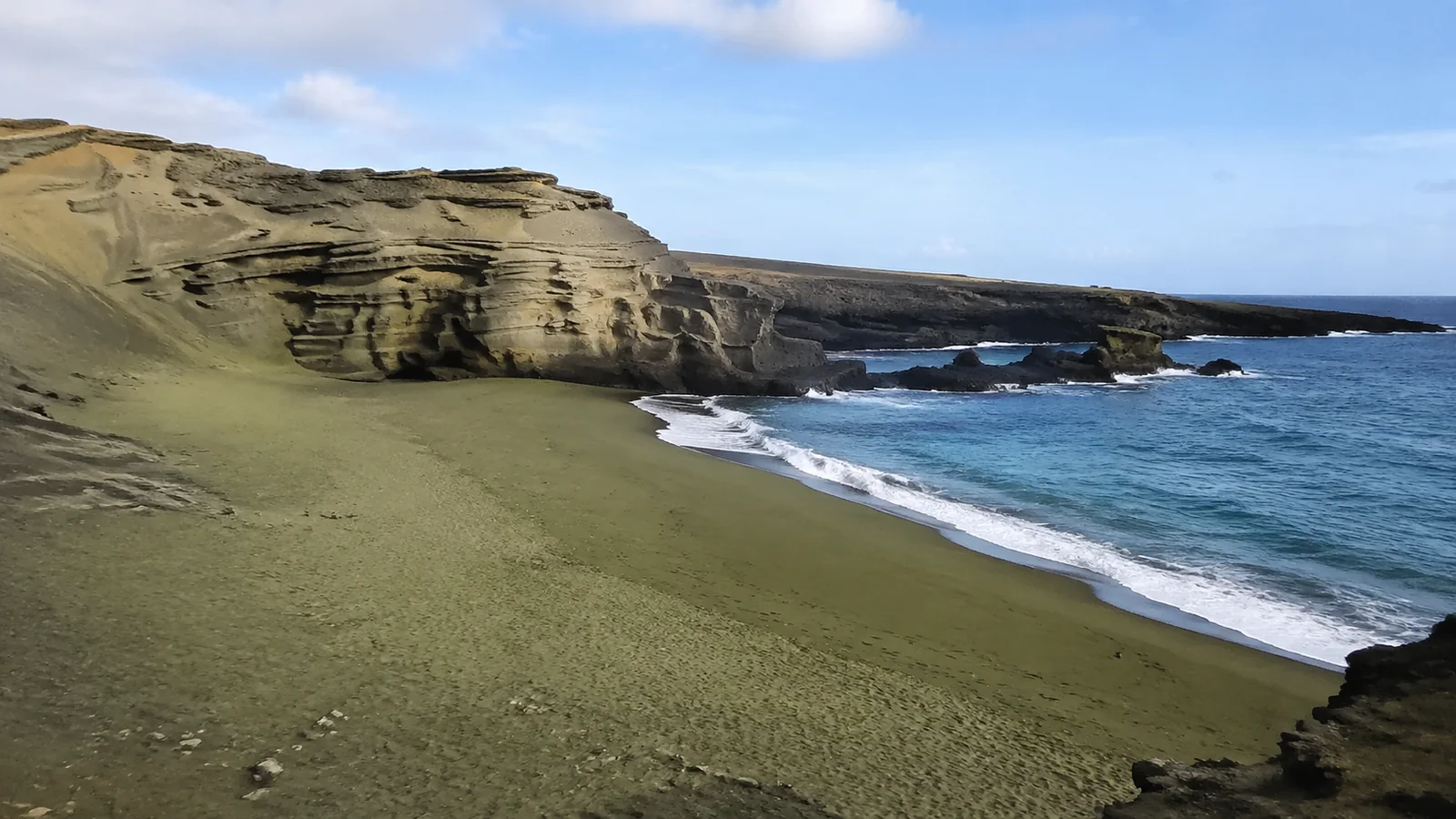
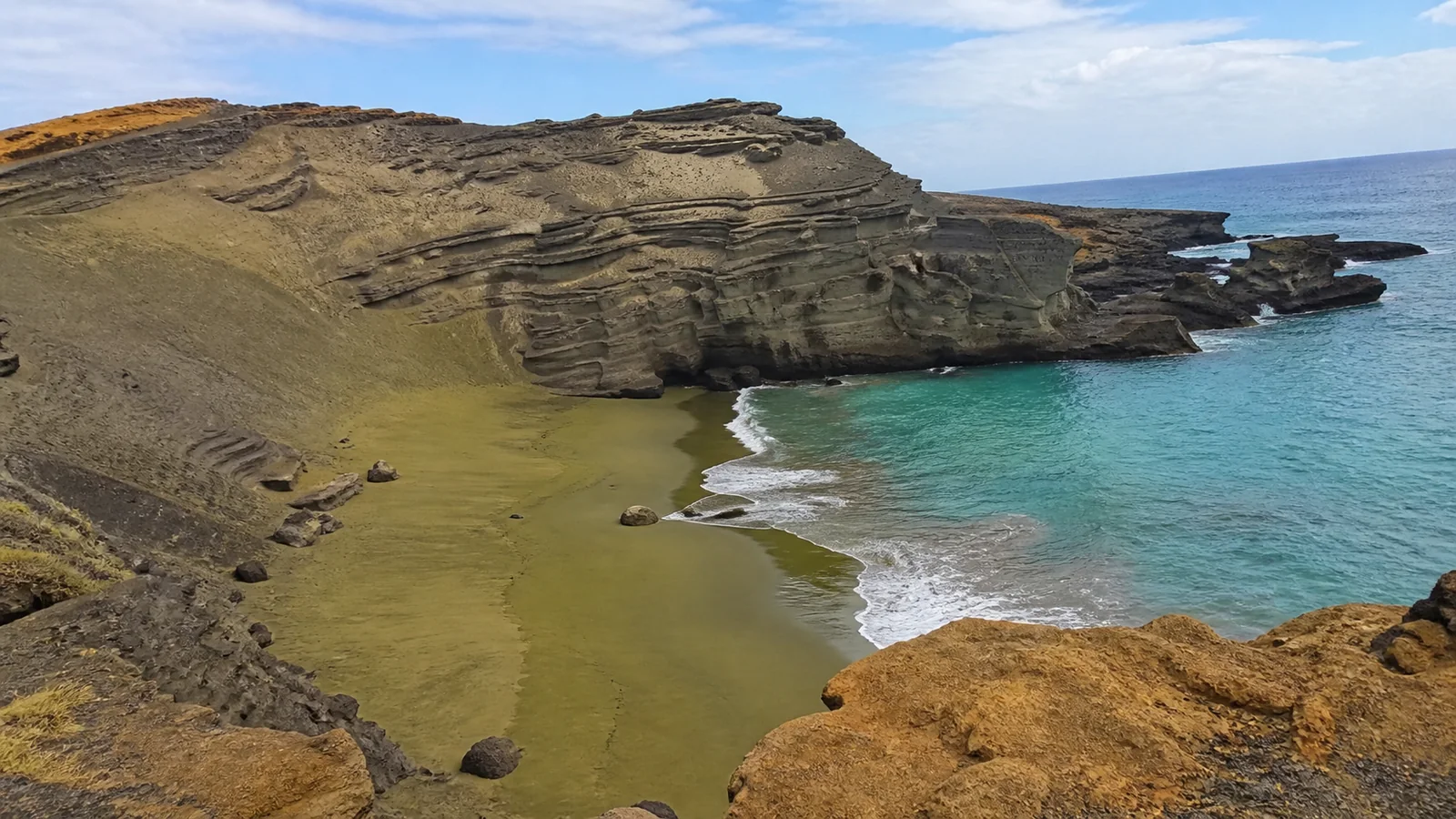
Papakōlea, also called Green Sand Beach or Mahana Beach, is a remarkable coastal feature near South Point on the island of Hawaiʻi. Its fame does not create a lawful public route.
The Island of Hawaiʻi Visitors Bureau includes Papakōlea among sensitive destinations it does not promote. Its current Papakōlea guidance says access requires crossing private property, discourages hiking and driving for safety and erosion, and gives a direct “no swimming” instruction.
Why the green sand is genuinely special
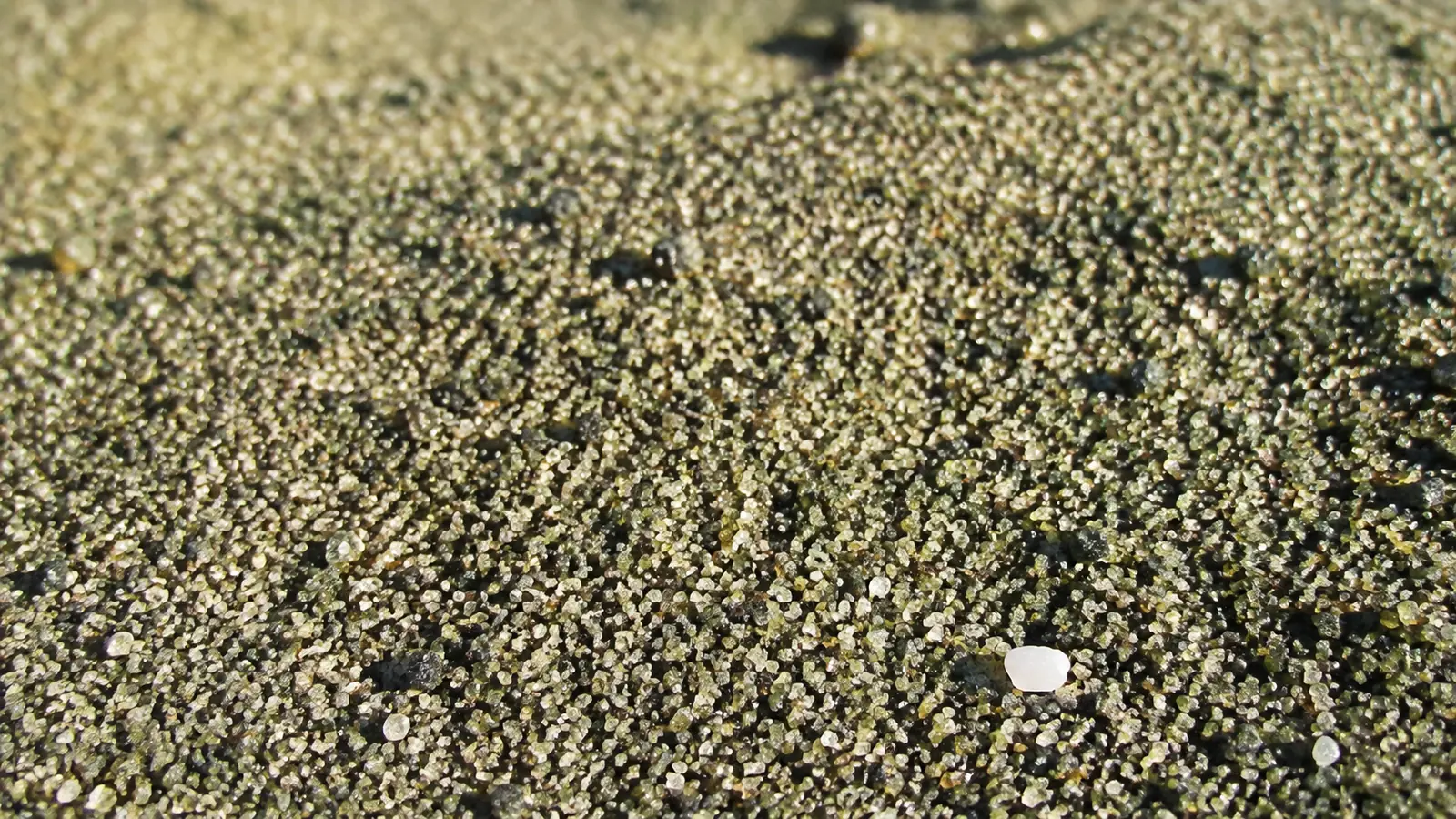
Papakōlea sits at Puʻu o Mahana, an eroded volcanic cone rich in olivine. Olivine is a green magnesium-iron silicate mineral found in volcanic rock, and its grains become concentrated as the coast erodes and waves sort the sediment.
The sand is often olive or golden-green rather than neon. Moisture, sun angle, surrounding rock, camera processing, and the mix of grains all change the color a photograph records.
You may see a claim that Papakōlea is one of only four green-sand beaches on Earth. That tidy number depends on how someone defines both “green” and “beach,” and it is not needed to explain the site’s geological value.
The more interesting lesson is happening in real time: a volcanic landform is breaking down, denser crystals are concentrating, and ocean energy is reshaping the cove. You can appreciate that story through geology exhibits and other open volcanic landscapes around the island.
South Point is not a substitute beach day
Nearby Kalae, commonly called South Point, is also a rugged and exposed landscape rather than a serviced swimming beach. The same official visitor guidance warns that its road is rough and narrow and may fall outside rental-car coverage.
Cliff jumping near boat hoists is dangerous because of height and unpredictable ocean conditions. Do not copy a jump because other people are waiting in line, and do not assume a ladder makes the ocean controlled.
If you visit an authorized South Point area, confirm the public route and parking, stay within barriers, keep clear of cultural and working sites, and leave well before driving fatigue takes over. Cell service, shade, water, restrooms, and rescue response may not resemble a developed park.
Choose the Big Island experience you actually want
Most Papakōlea searches begin with one of six goals: unusual sand, a swimmable beach, snorkeling, volcanic hiking, dramatic scenery, or a meaningful cultural stop. Hawaiʻi Island has a lawful alternative for each goal.
If you are still deciding whether this island fits the wider vacation, compare the driving, beaches, volcanoes, and city time in this Big Island versus Oʻahu guide. Hawaiʻi Island rewards fewer bases and longer days, not a race through every saved pin.

Punaluʻu for unusual volcanic sand
Punaluʻu Black Sand Beach is the clearest substitute when sand color sparked your interest. Official island guidance describes it as a good picnic and photography stop, with possible turtle sightings, but not a strong swimming beach.
No turtle sighting is guaranteed. If a honu rests on the sand, give it generous space, never touch or feed it, keep a clear path to the water, and use a zoom rather than closing the gap for a photo.
Black sand also stays at the beach. Bring water and sun protection, pack out everything you brought, and treat posted signs as the minimum rather than an invitation to test how close you can get.
Hāpuna for a managed beach day
Hāpuna Beach State Recreation Area is the better match when your actual goal is white sand, facilities, and swimming during suitable conditions. The state currently lists daily operating hours, nonresident admission and parking charges, and card-only payment on its official Hāpuna page.
A developed state recreation area still faces shore break, currents, heat, and changing surf. Check signs and lifeguard direction, keep children within reach, and stay out when closures or conditions say no.
Hāpuna sits far north of Papakōlea, so it is not a quick swap after driving to South Point. Build it into a Kohala day and use the saved drive time for a slower lunch or sunset.
Kahaluʻu for a snorkeling plan
Kahaluʻu Beach Park near Kona is a more practical snorkeling candidate because visitors can use a managed site and seek current local guidance. Choose it only on a day when the park is open, ocean conditions fit your ability, and staffed safety or reef-education services are operating.
Enter through designated areas, avoid standing on coral, and use reef-conscious sun protection where required. A flotation device cannot replace swimming ability or local condition checks.
If marine wildlife is the reason for the trip, a vetted guided experience may suit you better than a beach gamble. These Kona manta-night planning questions help separate snorkeling and diving options without promising a sighting.
Kīlauea Iki for the volcanic hike
Kīlauea Iki Trail provides a legitimate volcanic hike within Hawaiʻi Volcanoes National Park. It descends through rainforest and crosses a solidified lava lake, giving walkers the contrast of lush crater rim and stark volcanic floor.
Kīlauea remains active, and the park has experienced episodic eruptions, gas, falling material, closures, construction, and parking pressure in 2026. Check the park’s current closures and delays immediately before driving, and never enter a closed area for eruption viewing.
Pack water, rain protection, sun protection, and shoes with dependable grip. Anyone with respiratory or heart concerns should review volcanic-air guidance and make a conservative decision during poor air conditions.
Chain of Craters Road for less walking
Chain of Craters Road is the better volcanic choice for travelers who cannot or do not want to complete a crater hike. Overlooks and short walks can reveal lava flows, craters, coastal cliffs, and the scale of the park without pretending the route is barrier-free everywhere.
Fuel up, carry water and food, and check road status before leaving the summit area. The descent changes elevation and weather, while the drive back takes longer than the map’s straight line suggests.
Puʻuhonua o Hōnaunau for history and place
Puʻuhonua o Hōnaunau National Historical Park deserves time as a cultural destination, not a scenic add-on. The Royal Grounds and puʻuhonua preserve stories of sacred law, refuge, chiefly life, ceremony, and a living Hawaiian cultural landscape.
The National Park Service recommends a half-mile self-guided walk and audio tour through the core area. Move respectfully, remain on permitted paths, do not climb or touch structures, and follow staff guidance around ceremonies or demonstrations.
This is also a useful choice for a mixed-ability group because people can discuss current surfaces, shade, seating, and accessibility with the park instead of committing to an unauthorized exposed trek. If Hawaiʻi is part of a voyage, these Hawaiian cruise itinerary tradeoffs help reveal how little time a port day actually provides.
A better Kaʻū day without Papakōlea
From Kona, make Punaluʻu the unusual-sand anchor and pair it with one food stop and either the national park or a short approved coastal stop. Do not add Hāpuna, South Point, Punaluʻu, and Kīlauea into one frantic circuit.
From Volcano or Hilo, begin with current eruption and weather checks, explore open national park areas, then continue to Punaluʻu only if daylight and energy remain. A black-sand picnic and a slow return beat arriving at a closed gate after dark.
For a west-coast history day, combine Puʻuhonua o Hōnaunau with a responsibly chosen Kona stop. Keep snorkeling conditional because surf and water quality do not care that the activity was prepaid.
A Kona-to-Kaʻū day I would be happy to follow
Start early from Kona with water, a packed lunch, and a full fuel tank, following Highway 11 south toward Nā‘ālehu. I would allow roughly two hours to the Punaluʻu area before sightseeing, with more time for traffic and stops, instead of treating this as a quick beach errand.
Use Nā‘ālehu for a short food and restroom break, then spend 45 to 60 minutes at Punaluʻu for black-sand views and a picnic. Look at the contrast between dark grains, white surf, and nearby vegetation, keeping any resting turtles well outside your personal space.
For an easier day, turn back toward Kona after lunch and add Puʻuhonua o Hōnaunau only if you have enough daylight and energy. Allow 60 to 90 minutes there for the core half-mile cultural walk, reading the interpretation rather than rushing between photographs.
For the hiking version, continue from Punaluʻu to Hawaiʻi Volcanoes National Park and stay overnight in the Volcano area if possible. I would avoid combining the full crater hike with a tired late-night drive back to Kona, especially after an early start.
The Kīlauea Iki route choice
When the complete route is open, the NPS Kīlauea Iki plan starts at Kīlauea Iki Overlook and follows a 3.3-mile loop, normally requiring two to three hours. It descends from the forested rim to the solidified lava lake and then climbs back out, with roughly 400 feet of elevation change and uneven footing.
I would wear closed-toe walking shoes and carry both rain and sun protection, because the wooded descent and open crater floor feel very different. Look for the small plants establishing themselves in cracks and the textures of the cooled surface, staying on the marked route.
Parking at the overlook is limited, and a full lot is a reason to change the sequence rather than leave a car beside an unsafe road edge. The longer visitor-center approach adds mileage, so do not accidentally turn the short loop into a larger walk simply because a navigation app suggests another start.
Hawaiʻi Volcanoes National Park can have construction, eruption-related interruptions, and changing trail access. Check the park’s live closures page before departure and ask a ranger whether the full route you want is open that day.
If the hike is closed, air quality is poor, or a steep climb does not suit the group, use an open Kīlauea Iki rim viewpoint for a 15-to-20-minute look instead. For a broader scenic outing with less walking, select a few open Chain of Craters Road overlooks and reserve two to three hours for the drive and pauses, without promising access to any particular eruption view.
The useful choice is between a beach-and-history day and a volcano day with time to rest. I would make that decision before leaving Kona, so a change in trail access still leaves a satisfying trip rather than a long drive with no clear destination.
Choosing an alternative

What is the best alternative?
Choose Punaluʻu for unusual volcanic sand, Hāpuna for a managed beach day, Kīlauea Iki for volcanic hiking, or Puʻuhonua o Hōnaunau for cultural history. The strongest alternative is the one that matches what you hoped Papakōlea would provide.
Responsible travel sometimes means admiring a place without reaching it. Papakōlea’s geology remains extraordinary, and respecting current access is part of respecting the place itself.