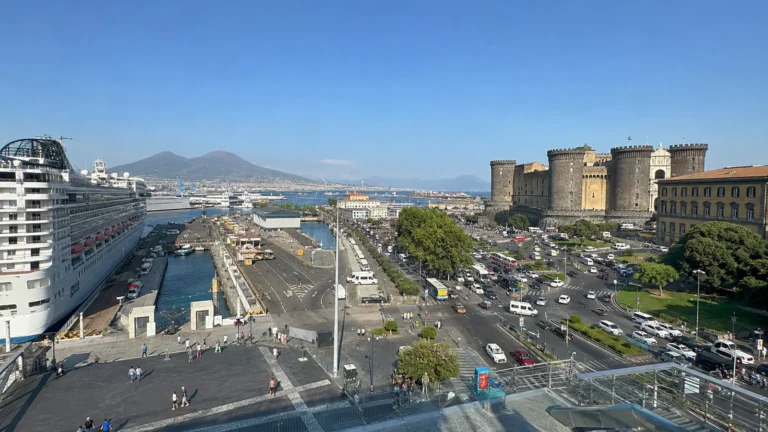
Bermuda Cruise Ports Guide: Dockyard, Hamilton and St. George’s
Bermuda has three wonderfully different cruise-port areas, and choosing a beach or ferry before checking your berth is a classic way to make the day harder than necessary. Most large ships use Royal Naval Dockyard, while smaller callers may berth in Hamilton or St. George’s, putting you in a completely different part of the island.
Bermuda cruise ports at a glance
Royal Naval Dockyard has two separate large-ship berths: King’s Wharf and Heritage Wharf. Hamilton uses the #5/6 Passenger Terminal on the city’s Front Street waterfront, while St. George’s uses Penno’s Wharf for ships that can enter through Town Cut.
The Bermuda Tourism Authority’s current cruise-port overview identifies all three areas and describes King’s Wharf and Heritage Wharf as the popular large-ship choice. It identifies Hamilton #5/6 as the city terminal and Penno’s Wharf as the St. George’s facility for small to medium-size ships.
I checked Bermuda’s official 2026 cruise schedule on September 4, 2026. It is dated March 16, 2026, says information is subject to change without notice, and repeatedly lists King’s Wharf, Heritage Wharf, Hamilton 5/6, and Penno’s as distinct berth assignments.
Your cruise documents and onboard notices win if they differ from a website or this guide. Do not simply type “Bermuda cruise port” into a map and trust the first pin.
Royal Naval Dockyard: King’s Wharf and Heritage Wharf
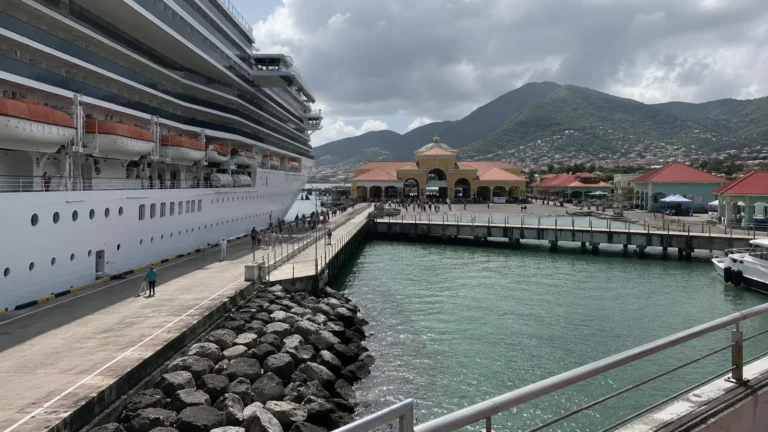
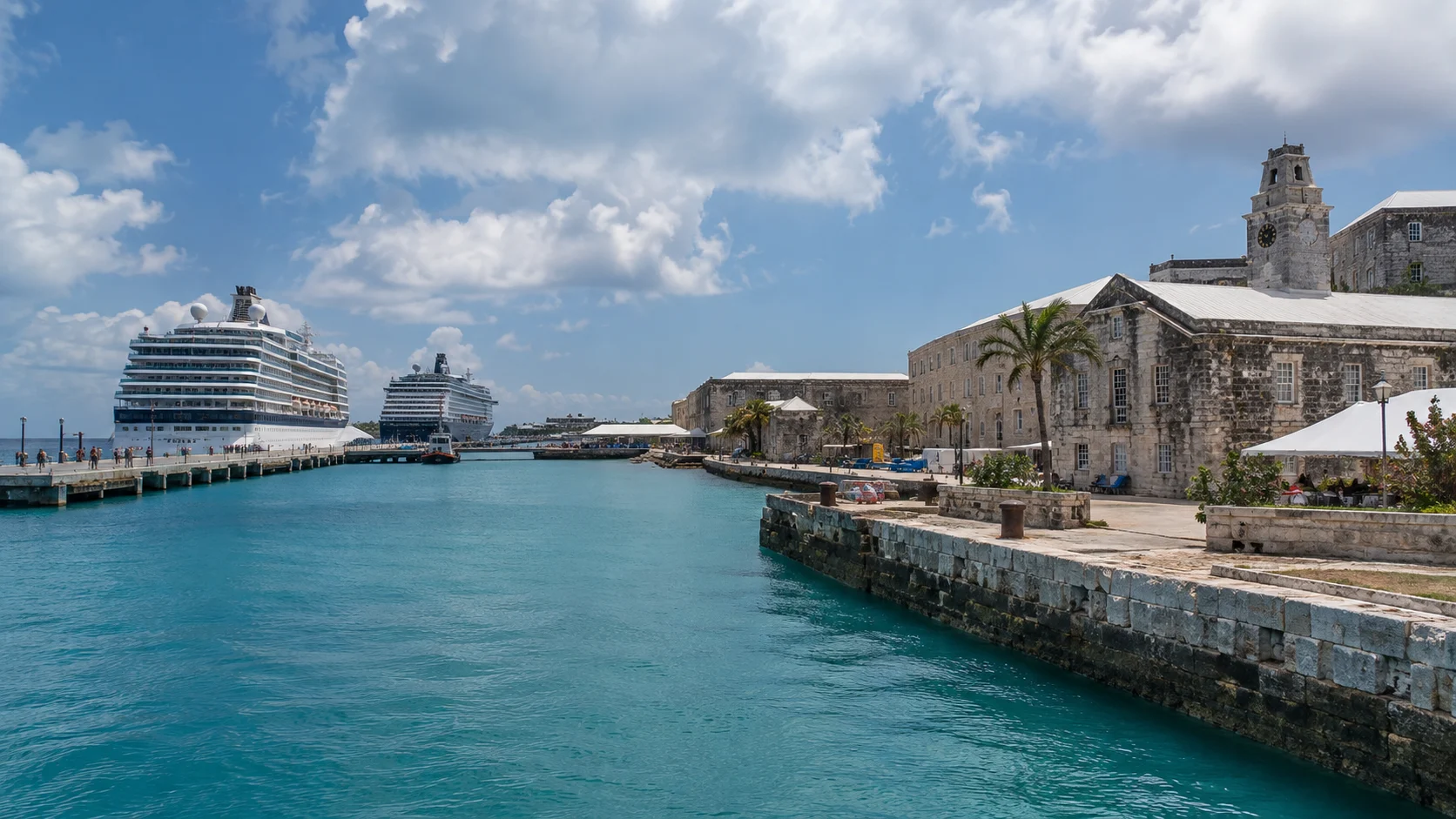
Royal Naval Dockyard sits at Bermuda’s West End and handles most of the island’s regular large cruise ships. King’s Wharf and Heritage Wharf are neighboring berths inside the same Dockyard destination, not two towns on opposite sides of Bermuda.
If your itinerary says King’s Wharf, the ship is scheduled to dock at the King’s Wharf berth. If it says Heritage Wharf, it is scheduled to dock at the other large-ship berth, and you can normally walk ashore from either without a tender.
Dockyard is an attraction hub in its own right, with historic buildings, shops, food, museums, water activities, and transport connections. This makes it the easiest port for a low-stress day when weather or energy levels do not cooperate.
The two berths are close, but the gangway position and exact walking route can still matter for mobility. Ask your cruise line which exit will be used and what assistance is available rather than assuming every gangway has the same slope.
For a deeper look at the immediate area, save my King’s Wharf and Royal Naval Dockyard tips. The planning advice works for Heritage Wharf guests too, but always return to the berth name printed by your own ship.
Hamilton cruise port: #5/6 berth or a ship-specific tender
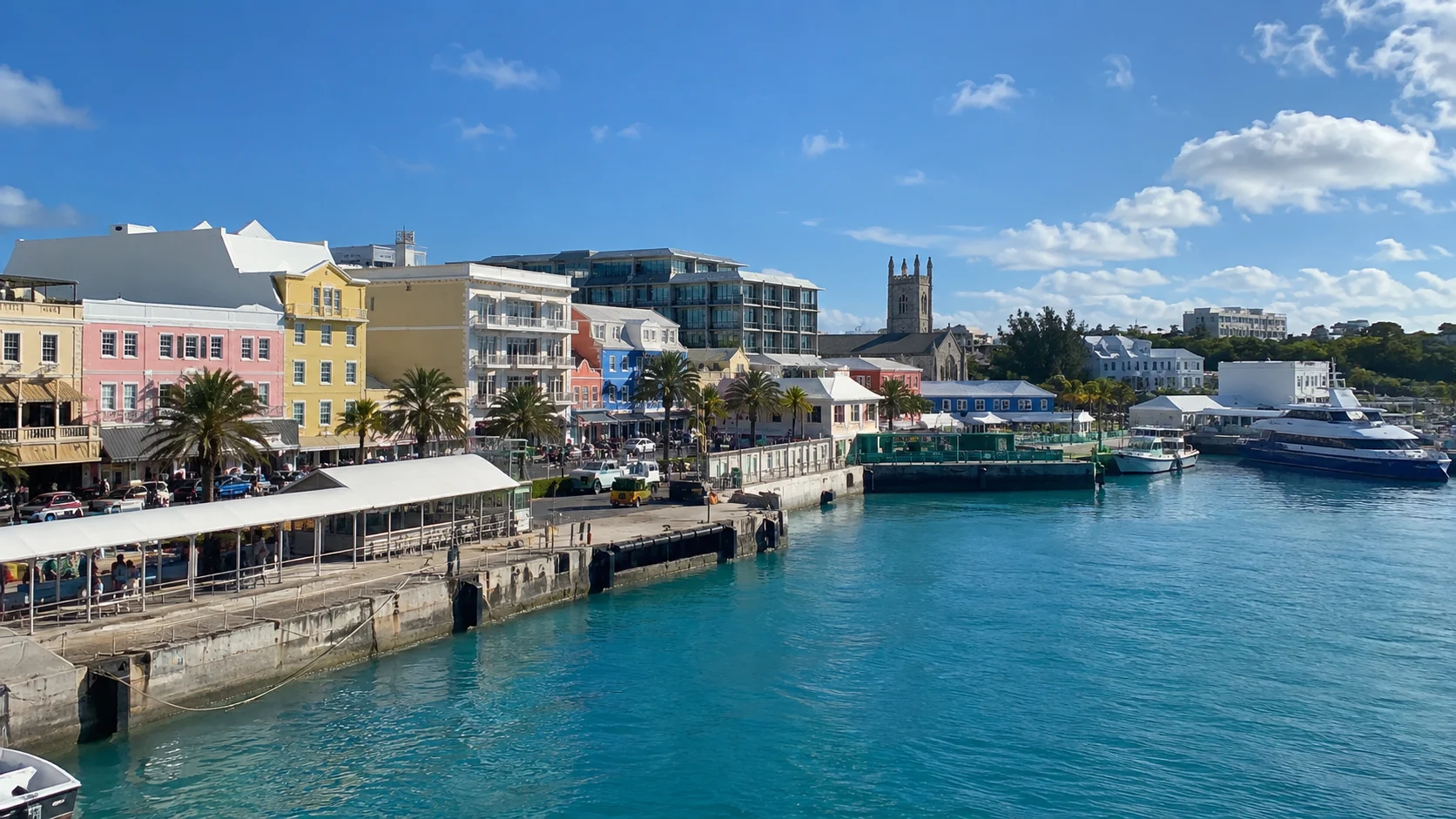
Small cruise ships scheduled for Hamilton can berth at the Hamilton #5/6 Passenger Terminal along Front Street. That puts you right in the capital, with shops, restaurants, city sights, buses, and the main ferry terminal close at hand.
Do not assume every itinerary labeled “Hamilton” means your ship will be tied alongside #5/6. If a vessel is assigned an anchorage or a tender operation, the cruise line will issue boat and landing instructions, and those instructions control the day.
The current 2026 official schedule uses “Hamilton 5/6” in the berth column for its listed Hamilton calls, which indicates an alongside berth rather than a generic city-area label. Some multi-night entries combine Hamilton 5/6 with Penno’s, meaning the ship is scheduled to shift port areas during the same Bermuda visit.
A move between berths is not something passengers should try to predict from last year’s itinerary. Check the daily program every evening because tomorrow’s gangway could be in another town.
If your ship does tender, budget the extra time for tickets, boarding, the boat ride, and the return queue. My tender-port planning guide explains why a short distance on the map can still use a meaningful part of the day.
St. George’s cruise port: Penno’s Wharf and possible tender operations
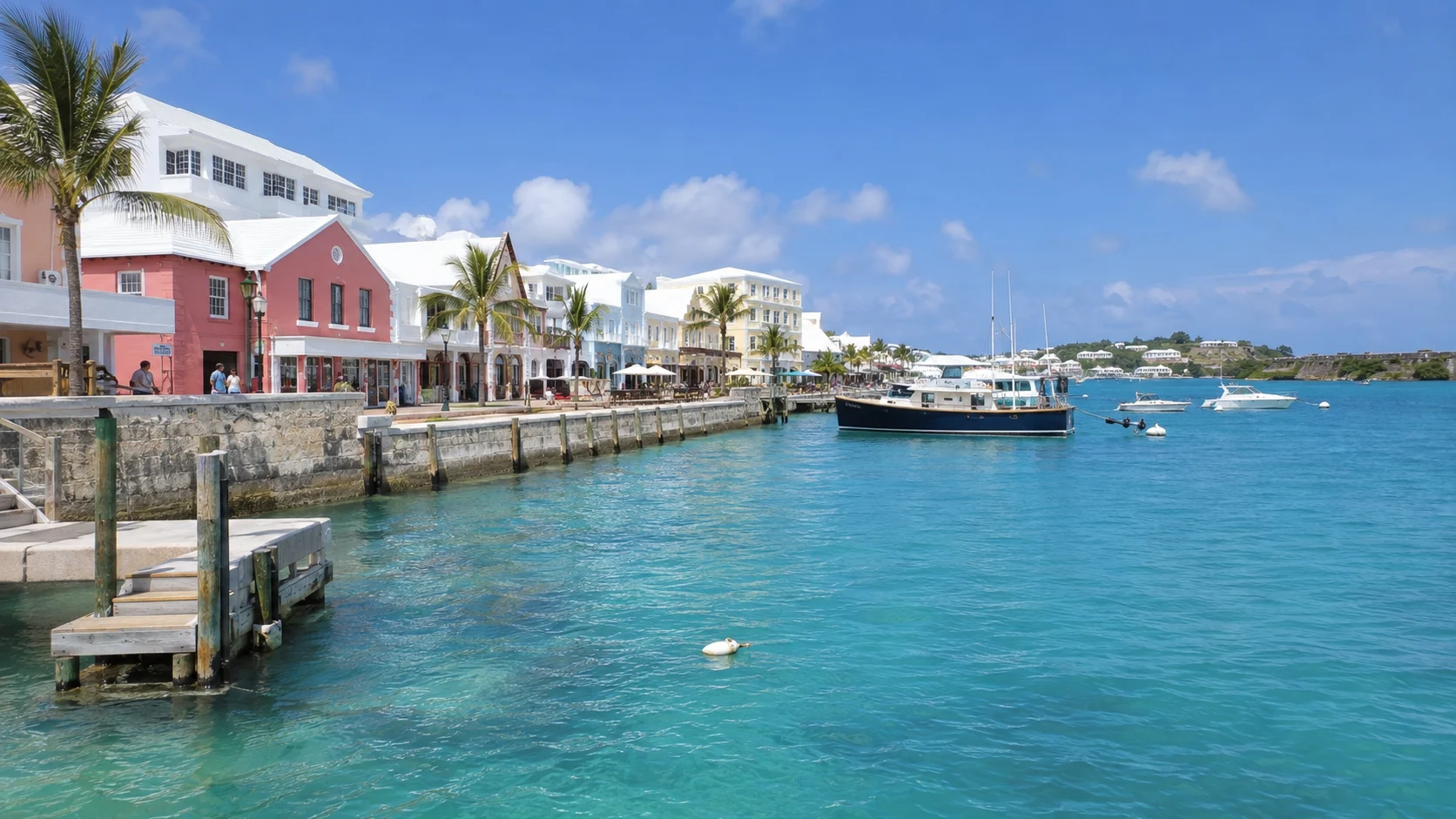
Penno’s Wharf places smaller cruise ships directly beside the UNESCO-listed Town of St. George. This is the dreamiest arrival for travelers who want historic lanes, old forts, shops, and the East End without first crossing the island.
The entrance through Town Cut limits which ships can berth in St. George’s. A larger vessel advertising a St. George’s call may need an offshore anchorage and tender arrangement if the port and weather permit, so never assume a walk-off arrival from the destination name alone.
The 2026 official schedule includes Penno’s in the berth field for selected smaller callers and shows some combined Penno’s/Hamilton 5/6 visits. That is much more precise than a booking page that only says “Bermuda.”
If your ship tenders to St. George’s, its announced landing point, ticket process, and last boat time are the facts that matter. Tendering can be altered or canceled because of wind, swell, visibility, or operational conditions.
How to confirm your exact Bermuda port
Start with the berth name on your cruise-line itinerary, then compare it with the Department of Marine and Ports Services schedule. The official shipping-schedules page links the current annual cruise schedule, weekly shipping notices, and seasonal ferry schedule.
Recheck close to departure and again onboard. The Marine and Ports schedule itself warns that times can change for weather or operational reasons, while occasional callers and canceled calls may be specially marked.
Write down the exact words King’s Wharf, Heritage Wharf, Hamilton 5/6, Penno’s Wharf, or tender. That one line determines which beach route, ferry, bus, and return buffer makes sense.
Bermuda ferries from each cruise port
The ferry is often the prettiest and simplest way to connect Bermuda’s main visitor areas. It is also a public service with seasonal timetables, capacity limits, weather interruptions, and a final departure that may be much earlier than your ship’s all-aboard time.
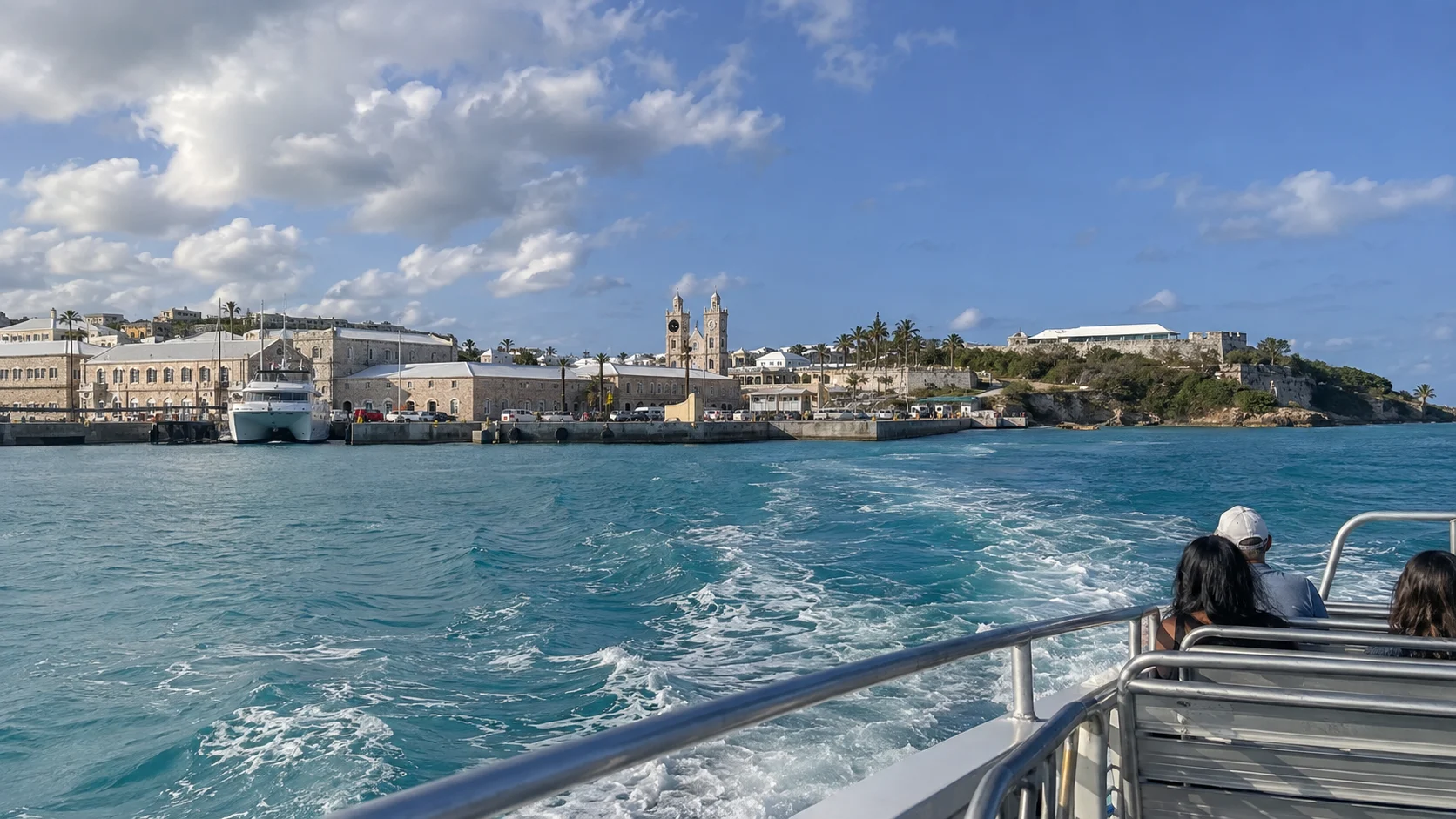
From Royal Naval Dockyard
The Blue Route connects Dockyard and Hamilton, making it the natural first choice for a city day. The Orange Route connects Dockyard and St. George’s seasonally, but it does not operate on every date or at all times of year.
Do not build a St. George’s day around an old screenshot of the Orange Route. Open the current schedule, check the service alert, and identify a bus or taxi backup before leaving Dockyard.
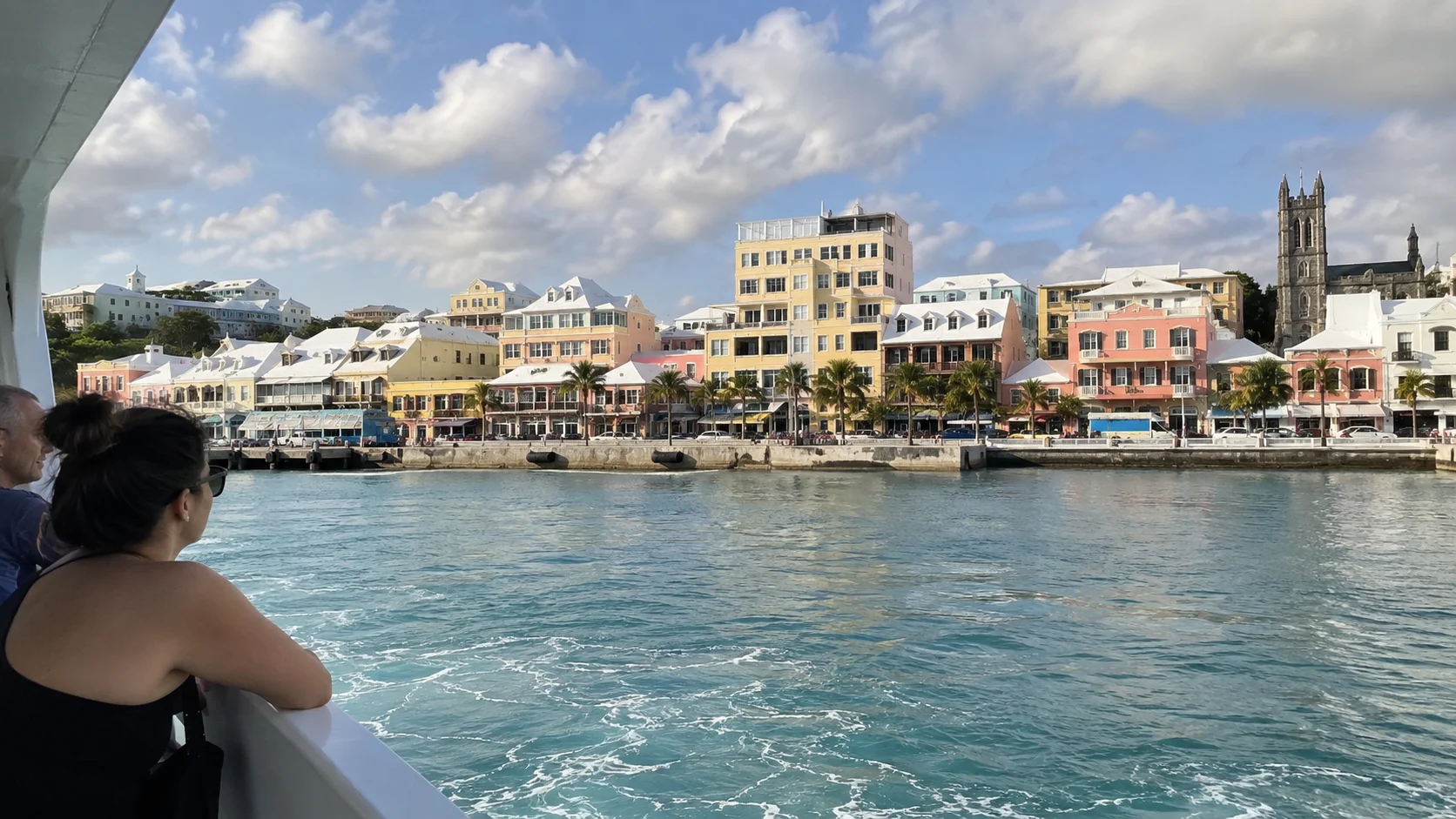
From Hamilton
Hamilton is the network’s main ferry hub, with service toward Dockyard and stops around Hamilton Harbour or the western parishes depending on the active timetable. A Hamilton-berthed guest can explore the city without transport, then use the ferry selectively rather than crossing the island twice.
If your ship later shifts to Penno’s, make sure you understand when guests must be aboard for that move. A public ferry ride and a ship relocation are completely different schedules.
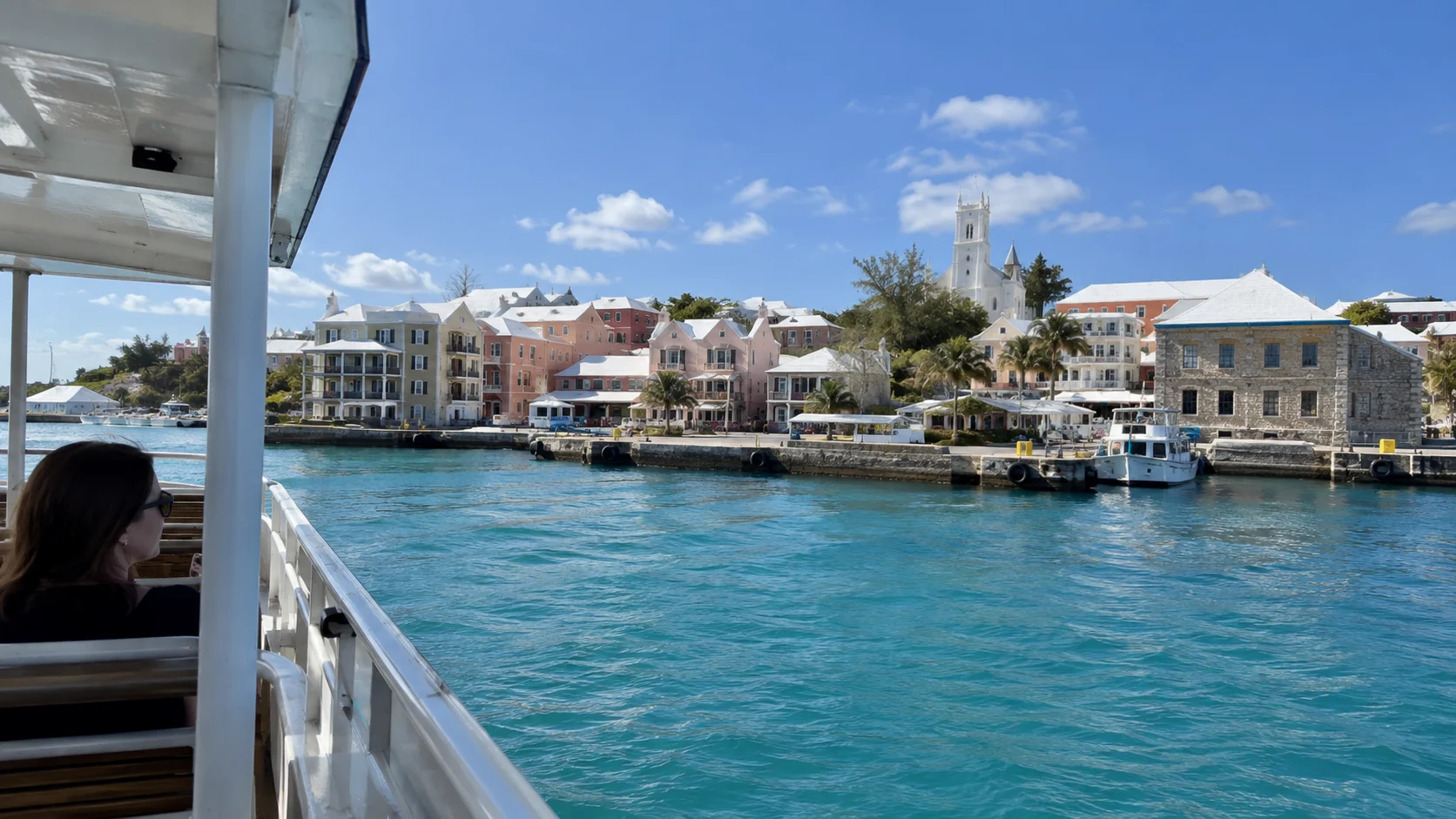
From St. George’s
Seasonal ferry service can link St. George’s and Dockyard, but its frequency and operating days require a live check. Hamilton is often reached more reliably by bus when a direct ferry is not shown.
The current government ferry document states that St. George’s, Hamilton, Dockyard, and Rockaway ferry stops are accessible to people with disabilities, with crew assistance available. That statement does not guarantee every vessel, tide, transfer, or attraction will work for every mobility device.
Bermuda buses without memorizing a brittle timetable
Buses cover much more of the island than ferries and are especially useful for the South Shore beaches. They can also fill the gap when a seasonal ferry is not running.
The Government of Bermuda’s current bus guide lists Routes 7 and 8 between Hamilton and Dockyard. Route 7 serves the South Shore beach corridor and Horseshoe Bay area, while Route 8 follows a different western route.
Hamilton and St. George’s are linked by Routes 1, 3, 10, and 11, with different intermediate stops. Match the route to your attraction instead of jumping on the first bus that has the right town on its sign.
Bermuda’s pink and blue bus-stop poles indicate direction relative to Hamilton, but confirm with the driver when you are unsure. The island’s road network can feel wonderfully scenic until you realize you have been admiring it in the wrong direction.
Use the Shorelink service for current schedules, alerts, trip planning, and fare options. Do not rely on a printed schedule from a previous season, especially on Sundays, holidays, or evenings.

Taxis, beach shuttles, and small electric vehicles
Taxis are the easiest point-to-point choice when ferry timing is awkward or your group wants a direct ride. Confirm whether the quote is metered or arranged, the pickup location, accepted payment, and how you will contact the driver for the return.
Shared minibuses or beach shuttles may operate when ships are in port, particularly around Dockyard and popular beaches. Availability, stops, accessibility, and return frequency can change, so treat them as a day-of option unless you have a written reservation.
Visitors cannot rent conventional cars, although small electric vehicles and scooters are offered by local businesses. Driving on the left, narrow roads, unfamiliar roundabouts, charging, parking, and the ship deadline make this a better choice for confident travelers with plenty of time.
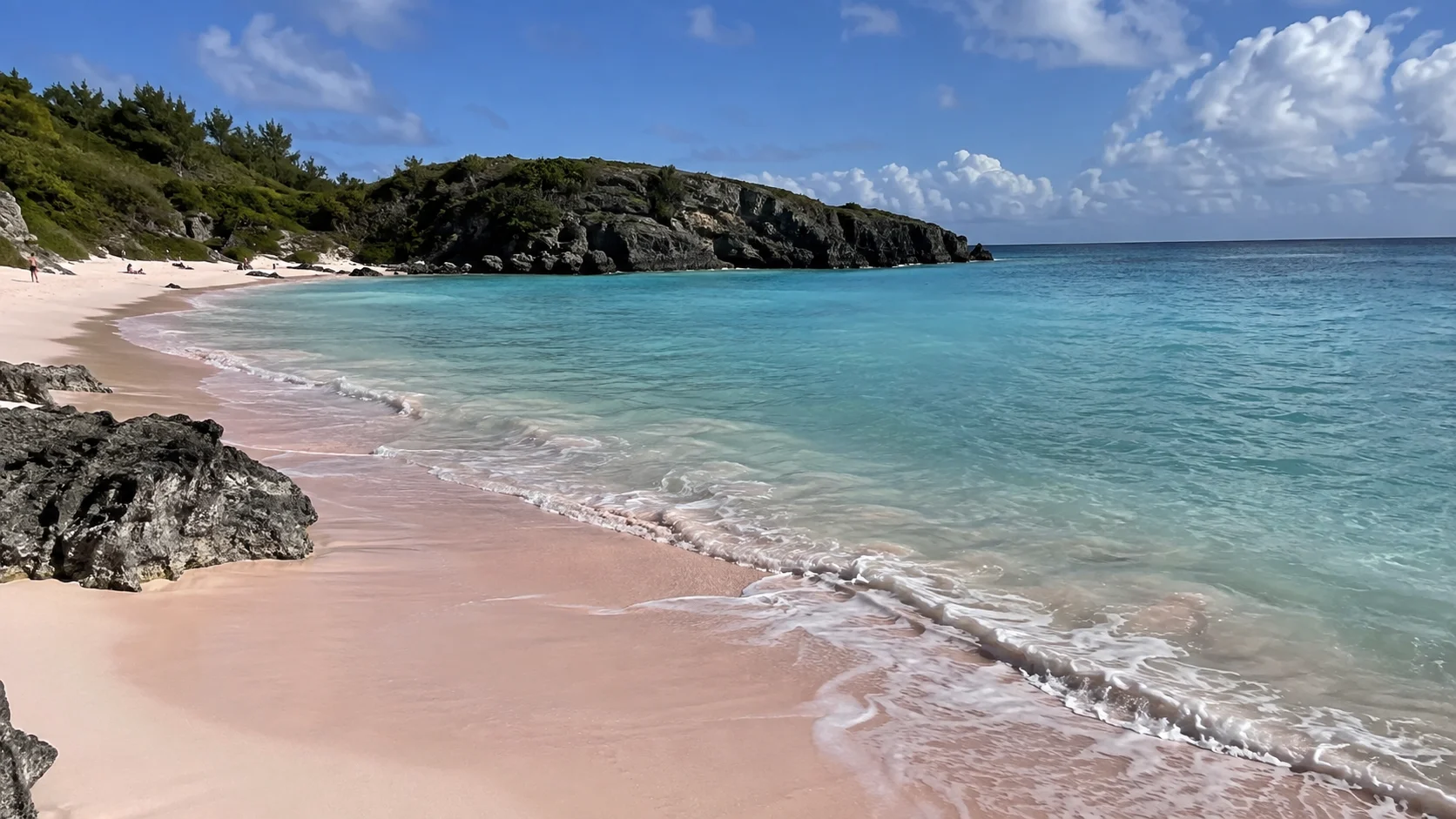
Which Bermuda port is best for beaches?
Dockyard is the most common starting point for Horseshoe Bay and the South Shore, but it is not the closest port to every beach. A Route 7 bus, taxi, or seasonal shuttle can make the trip, and the return needs a crowd buffer.
Hamilton provides central access to buses running toward the South Shore, so it can be a very efficient beach base for a smaller ship. St. George’s is better placed for East End beaches and forts, while a cross-island run to Horseshoe Bay uses much more of the day.
Pick a beach based on your berth, desired facilities, sea conditions, and transportation time. Pink sand is not limited to one famous address, and a quieter nearby beach can be far more relaxing than racing to the name everyone recognizes.
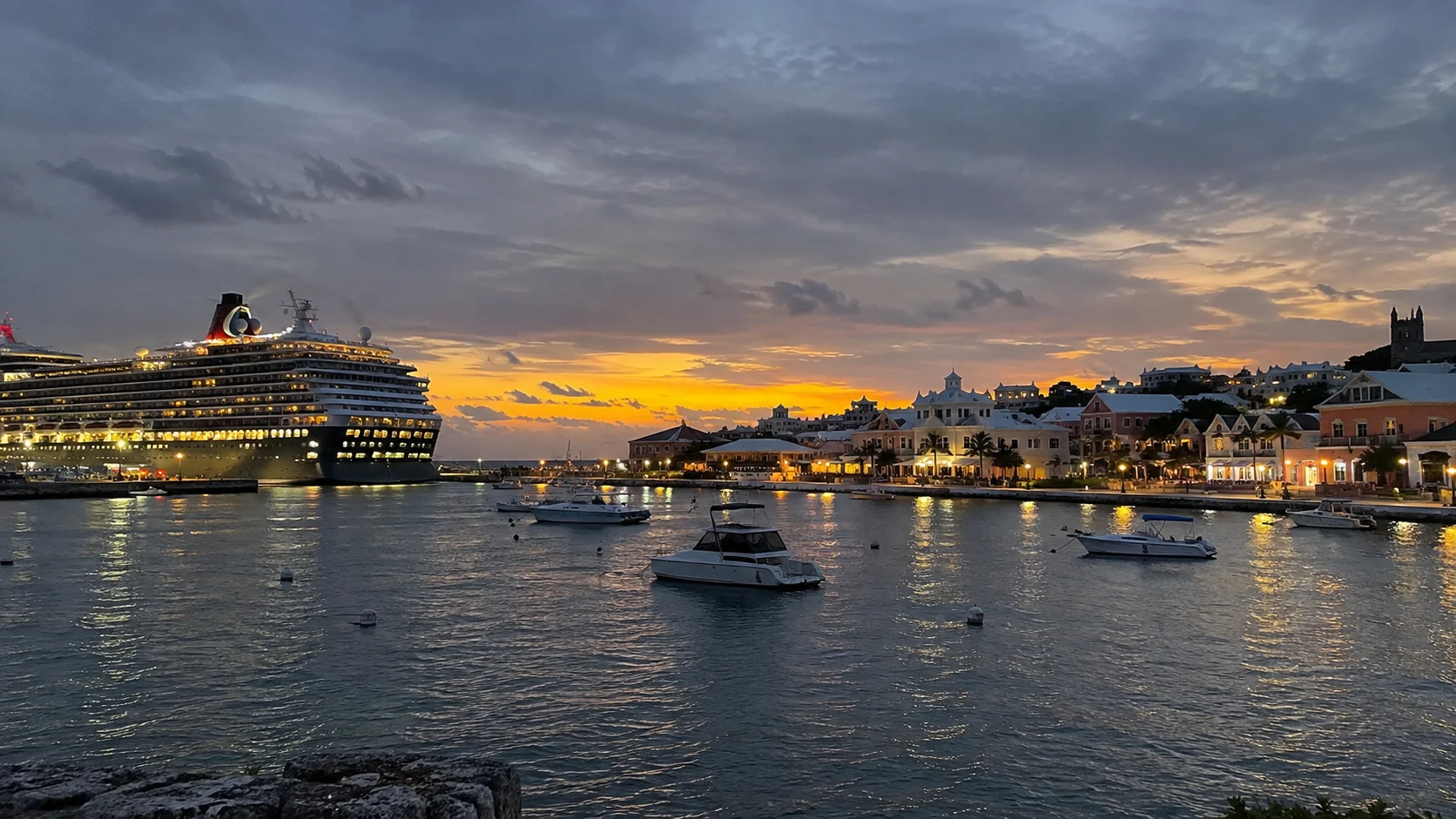
Planning an overnight Bermuda cruise stay
Bermuda itineraries often include one or more nights in port, which is a gift if you plan it sensibly. You can divide the island into regions instead of trying to cram Dockyard, Hamilton, St. George’s, and the South Shore into one frantic loop.
On the first day, go farthest from the ship while you have daylight and a second port day ahead. Save the area around your berth for the final morning, when the departure deadline matters most.
Your ship usually remains your hotel, but gangway access and onboard services follow ship and port rules. Check whether the gangway stays open overnight and carry the identification the cruise line requires when returning late.
Public ferries and buses do not run all night. The last ferry is a transit deadline, not the ship’s all-aboard time, and missing it may leave a long taxi ride as your only practical return.
For evening plans, screenshot the final usable ferry or bus, save a licensed taxi number, and decide your personal turnaround time before dinner. A midnight gangway does not make a 9 p.m. ferry magically appear.
All aboard, last ferry, and last tender
All-aboard time is the deadline set by your ship for guests to return before departure or a berth shift. It is not the same as the ship’s advertised sailing time, and it is not the same as the last public ferry.
If your ship is tendering, the announced last tender is the practical deadline for reaching the shore-side queue. The tender still has to carry passengers back to the ship, so do not use the vessel’s departure time as your target.
For an independent day across the island, I would aim to be back in the port area at least 60 to 90 minutes before all aboard. That is a conservative personal cushion, not an official minimum, and I would increase it for a tender, a berth shift, evening service, rain, mobility needs, or a multi-transfer route.
When the last leg depends on a ferry, choose a scheduled sailing that leaves room for cancellation and a taxi backup. The final ferry that technically works on paper is rarely the one I would trust with the whole vacation.
Weather and cruise-call changes
Bermuda sits in the North Atlantic, not the Caribbean, and its weather has more seasonal range than many first-time visitors expect. A sunny morning can still bring wind, showers, rough water, or a cooler evening.
Check the Bermuda Weather Service for public, marine, warning, and tropical information. Marine forecasts matter for tenders, ferries, boat tours, and beach safety even when a general phone app shows a bright sun icon.
Atlantic hurricane season officially runs from June 1 through November 30, but a seasonal forecast cannot tell you what will happen on your cruise date. Ships may change arrival, departure, berth, or itinerary for weather and operational reasons.
Book independent tours with a clear cancellation policy and avoid nonrefundable plans that assume the ship will arrive exactly on time. Travel insurance can help with covered events, but read its definitions and exclusions before purchasing.
Accessibility at Bermuda cruise ports
Docking is generally simpler than tendering for guests who use wheelchairs or scooters, but a berth does not guarantee a perfectly level route. Gangway slope changes with tide and ship position, while historic streets can include narrow sidewalks, uneven surfaces, and curbs.
Ask the cruise line about gangway dimensions, assistance, mobility-device limits, and any planned tender before sailing. “Bermuda is accessible” is too broad to answer whether your exact chair, transfer ability, or excursion will work.
The official ferry schedule identifies Dockyard, Hamilton, St. George’s, and Rockaway as accessible stops and tells passengers to see crew for assistance. Confirm the sailing and vessel on the day because weather, maintenance, and equipment can affect service.
For taxis and tours, ask whether the vehicle has a ramp or lift, whether the device must fold, and whether the driver can secure it. At beaches, verify the path from drop-off to sand, accessible restrooms, and whether a beach wheelchair is actually available.
Passports, entry rules, and the Bermuda Arrival Card
Cruise guests should carry the travel documents required by their cruise line for the entire itinerary. Passport rules can depend on citizenship, residency, itinerary, and the ports before and after Bermuda, so do not copy another traveler’s checklist.
The official Bermuda Arrival Card guidance says cruise ship passengers do not need to complete that form. The card applies to visitors arriving by air or private yacht, which is why generic Bermuda travel pages can cause unnecessary confusion for cruisers.
Take your ship card and whatever photo identification the cruise line instructs you to carry ashore. If you plan to leave a passport in the cabin safe, confirm that decision against the ship’s written guidance rather than assuming.
Simple port-based Bermuda plans
If you dock at King’s Wharf or Heritage Wharf
Spend one day on the South Shore or in Hamilton, then keep another day for St. George’s or Dockyard itself. On departure morning, stay near the West End unless the ship gives you a generous schedule.
If you berth at Hamilton #5/6
Enjoy Front Street, use buses toward the South Shore, and take the Blue Route to Dockyard if the current ferry fits. Keep your final hours in Hamilton so the return is a pleasant walk instead of an island crossing.
If you berth at Penno’s Wharf
Explore St. George’s and the East End first because that location is your special advantage. Visit Hamilton or Dockyard only after checking the live ferry or bus plan and your ship’s overnight movement.
Travelers sailing from the Northeast can also use my Bermuda cruises from Boston overview or New York cruise-port guide to make the embarkation end of the trip easier. Your departure port is a separate planning problem, and solving it early leaves more energy for Bermuda.
Bermuda cruise port questions
Are King’s Wharf and Royal Naval Dockyard the same place?
King’s Wharf is one cruise berth within Royal Naval Dockyard. Heritage Wharf is the neighboring large-ship berth in the same Dockyard complex.
Do cruise ships dock in Hamilton?
Selected smaller ships can berth at Hamilton #5/6, and the 2026 official schedule lists such calls. If a ship is assigned an anchorage instead, it will tender under ship-specific instructions.
Do cruise ships dock in St. George’s?
Selected small or medium-size ships can berth at Penno’s Wharf, subject to vessel and port limits. Other St. George’s calls may require tendering if specifically arranged and safe.
Can I ferry directly from Dockyard to St. George’s?
The Orange Route provides seasonal service, but operating dates and times change. Check the current Marine and Ports schedule and keep a backup route.
Which Dockyard berth is better?
King’s Wharf and Heritage Wharf share the same broader destination, so neither creates a fundamentally different island vacation. The better berth is simply the one your ship can use safely and operationally.
Can I stay out late on an overnight call?
Often yes, if the ship confirms overnight gangway access, but public transportation may finish much earlier. Plan the trip back before going out and carry the required identification.
Final thoughts
Bermuda becomes delightfully easy once you stop treating it as one cruise port. King’s Wharf and Heritage Wharf mean Dockyard, Hamilton 5/6 means the capital, and Penno’s Wharf means St. George’s, while any tender or berth shift requires its own onboard instructions.
Build each day around the live transport schedule, leave a generous return cushion, and save your berth area for the final hours. That gives you the freedom to enjoy Bermuda’s pink sand and pastel towns without turning the ride back into the most memorable part.