Carnival Miami Cruise Port: Terminal, Parking and Boarding Guide
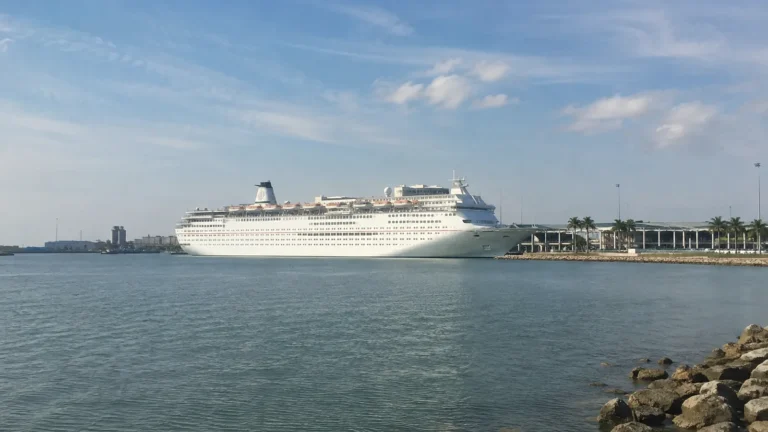
Carnival cruises from Miami use PortMiami on Dodge Island, commonly at terminals D, E, or F. Your exact terminal can change by ship and date, so treat the terminal letter on your current cruise documents and port signs as the answer, then plan parking, rideshare, luggage, and arrival around it.
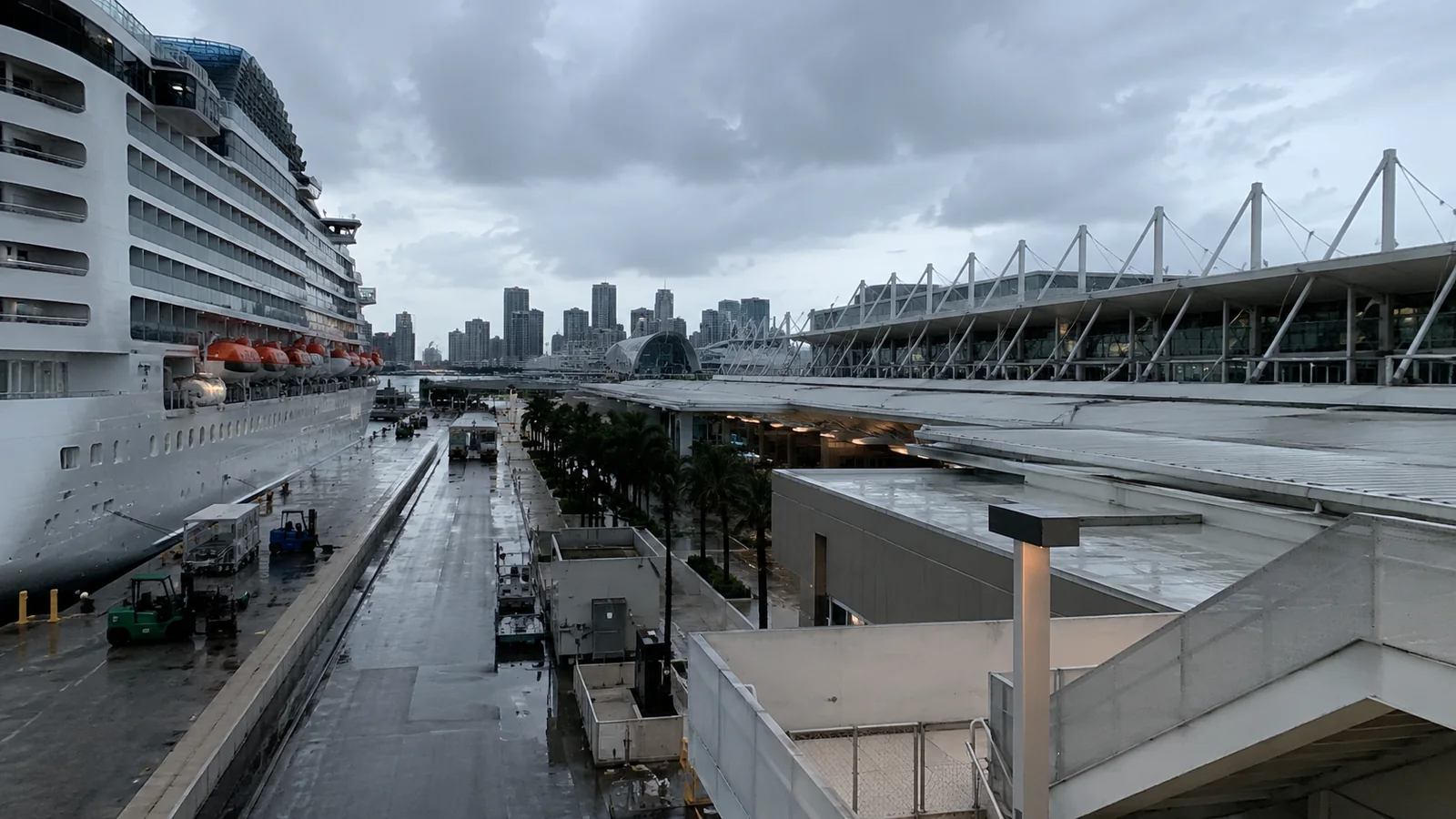
Carnival PortMiami quick facts
- Port: PortMiami, on Dodge Island.
- Main address: 1015 North America Way, Miami, FL 33132.
- Possible Carnival terminals: D, E, or F, subject to the day’s berth assignment.
- Closest major airport: Miami International Airport, about 9 miles away.
- Best arrival plan: reach Miami at least one day before sailing.
- Embarkation timing: follow the arrival appointment and final boarding time on your Carnival documents.
Do not set your navigation to “Carnival terminal” weeks ahead and assume it is final. Save your boarding pass, then verify the ship name and letter again on embarkation morning.
Which Miami terminal does Carnival use?
Carnival regularly operates from PortMiami’s north-side cruise terminals D, E, and F. Those letters describe separate buildings and curb zones, not three names for one entrance.
A ship’s usual terminal is useful for orientation but not a promise. Berth schedules can change because of vessel traffic, port operations, construction, or an itinerary adjustment.
I would check in this order:
- Your Carnival boarding pass and electronic documents.
- Messages in your Carnival account or HUB app.
- Electronic signs and staffed directions on Dodge Island.
- The ship name displayed at the terminal itself.
The last check protects you from dropping luggage beside a different ship. It also matters for drivers because D, E, and F have different parking relationships.
How to get to PortMiami
PortMiami connects to mainland roads by the PortMiami Tunnel and bridge access. Traffic is not constant, so use live navigation and add time for cruise-day queues even when the map distance looks short.
The port’s official directions page should be your route check. Use the main port address to reach Dodge Island, then follow signs for the confirmed terminal and passenger drop-off lane.
From Miami International Airport
Miami International Airport is about 9 miles from PortMiami. The airport lists cruise-line transfers, taxis, rideshare, and public transportation among the options on its official ground-transportation page.
A taxi or rideshare is usually the simplest choice for two or more people because it runs on your schedule and goes directly to the terminal. Cruise-line transfers can make sense for a solo traveler or someone who values a coordinated handoff, but compare per-person pricing and cutoff times.
Do not book a same-day flight based on a best-case drive. Baggage delivery, road congestion, terminal security, and an airline delay can consume a comfortable-looking margin.
From Fort Lauderdale-Hollywood International Airport
FLL is substantially farther north than MIA, with the route crossing busy parts of the regional highway network. It can offer a better airfare, but the complete calculation includes a longer transfer and a larger time buffer.
I would arrive the day before from either airport, and I would be especially firm about that when using FLL. An extra hotel night is cheaper than trying to catch a ship after a missed connection.
If you still need a room, choose it by the logic in our Carnival PortMiami hotel guide, where Downtown, Brickell, the airport area, and Miami Beach serve different arrival plans.
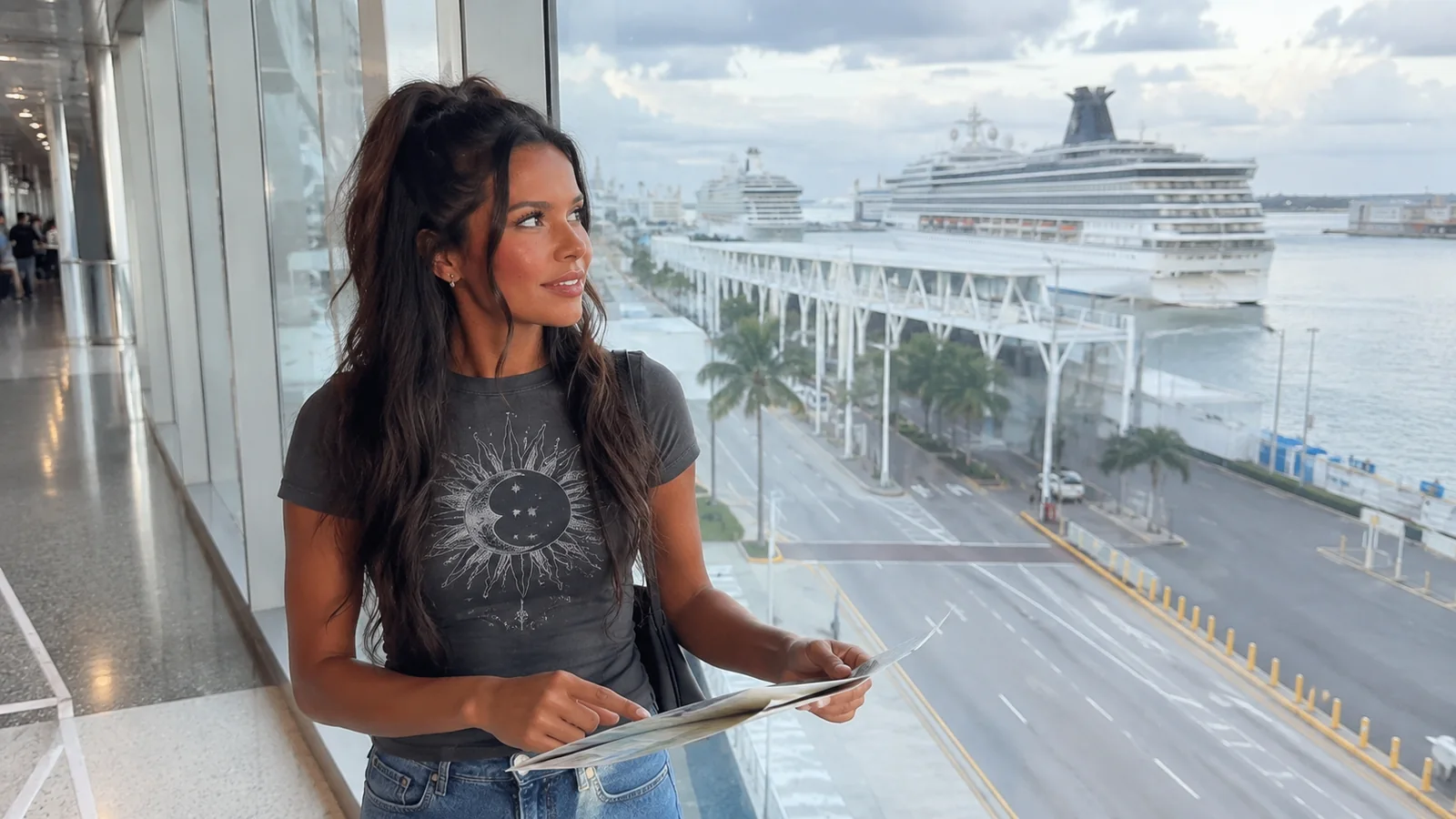
Rideshare, taxi, shuttle, or rental car?
Rideshare prices move with demand, while taxi fares and applicable charges follow local rules. Check both on the day rather than repeating an old flat-price claim.
At MIA, taxi and ride-app pickup areas are on designated airport levels outside the terminals. At PortMiami, drivers follow the terminal’s signed commercial-vehicle lanes, so share the ship name and terminal letter before the vehicle moves.
A private hotel shuttle is not automatically included because the property advertises cruise packages. Confirm direction, pickup time, luggage allowance, mobility-equipment capacity, and whether the quoted price covers everyone.
Returning a rental car on sailing morning adds fuel, agency return, and shuttle steps. Unless the car materially improves your pre-cruise stay, it is usually the most cumbersome choice.
Parking for Carnival terminals D, E, and F
PortMiami’s current parking assignments place Terminal D near Garage D and Surface Lot D, Terminal E at Surface Lot E, and Terminal F with Garage G. Follow live signs because capacity and traffic control can redirect vehicles.
The port lists long-term parking in Garages C, D, F, and G and Surface Lot E at $25 per vehicle, per space, per day or fraction. That “or fraction” matters because cruise parking is charged by the port’s day rules, not a hotel-style 24-hour clock.
The official PortMiami parking page is the source to revisit immediately before travel. It publishes payment methods, clearance heights, oversized-vehicle terms, and special disabled-parking conditions.
Parking details that catch people out
- Surface Lot E handles oversized vehicles, with charges based on spaces used.
- Garage clearances vary by building and floor.
- Accessible spaces exist, but free parking applies only to qualifying vehicles under the port’s stated rules.
- Rates and accepted payment methods can change after this check date.
- Your return terminal can occasionally differ after an operational change, so follow Carnival instructions.
Take a photo of your level, row, and nearest elevator before walking away. After several cruise days, “the garage by Terminal F” is not enough information.
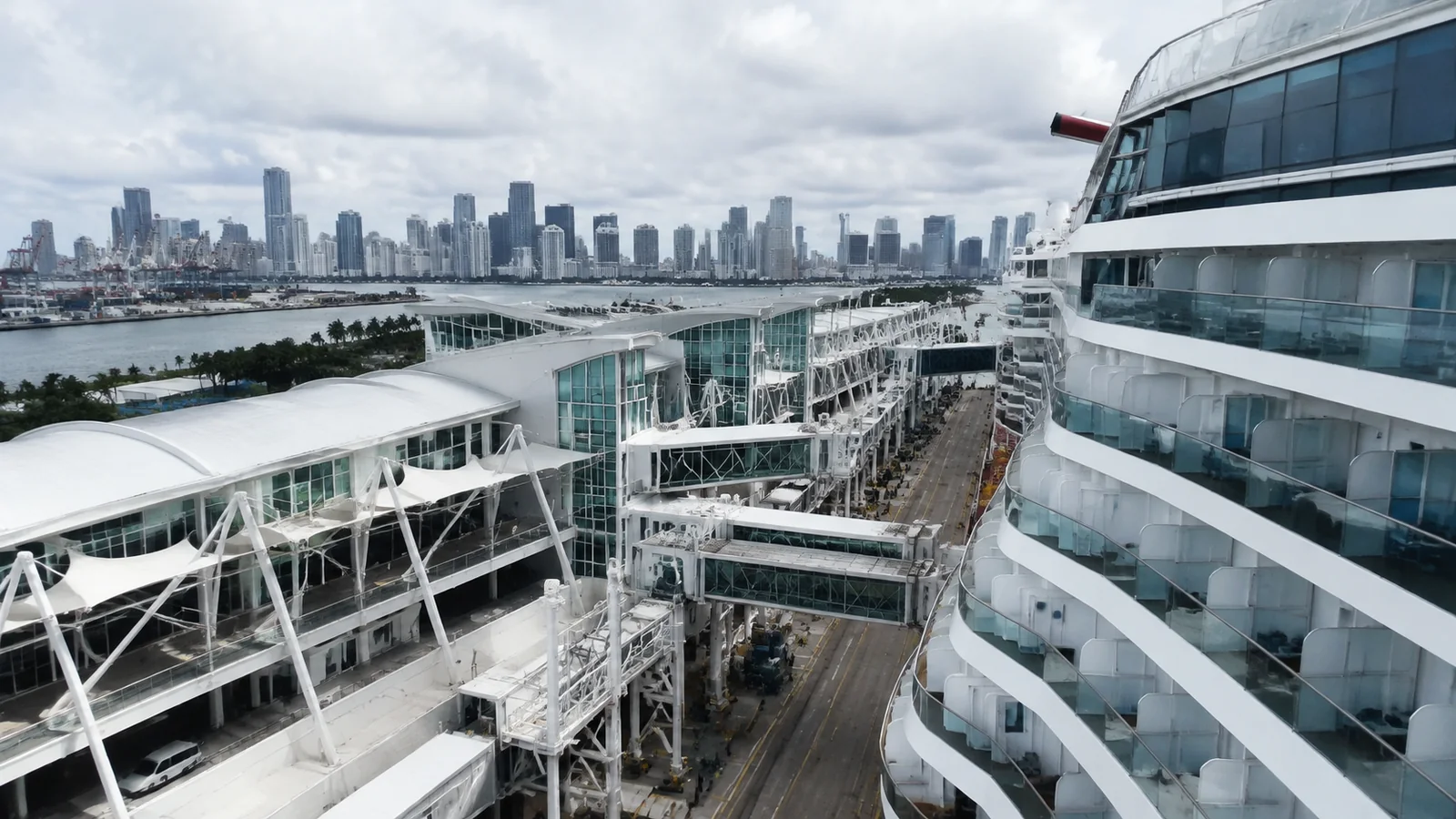
Porter and luggage procedure
Print and attach Carnival luggage tags before reaching the curb, with the cabin number readable. Porters can provide or correct tags, but your documents and medication never belong in checked luggage.
Carnival’s current embarkation and luggage guidance says checked bags should not exceed 50 pounds and must meet its size rules. The line also says checked-bag service ends two hours before the published sailing time, which is not permission to arrive that late.
Keep these items in a carry-on you can manage through screening:
- Passport or other approved citizenship and identity documents.
- Boarding pass and reservation details.
- Prescription medication and essential medical supplies.
- Phone, charging cable, valuables, and payment cards.
- Swimsuit or first-afternoon clothes if desired.
- Anything a child will need before checked bags reach the room.
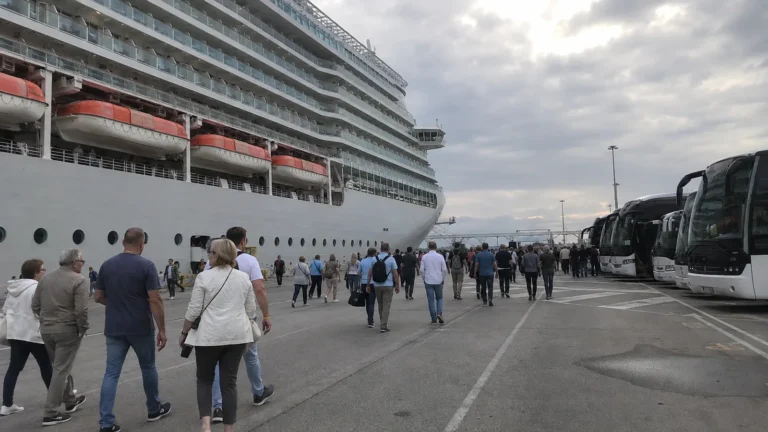
Hand bags only to an identifiable porter working your ship’s curb. Confirm the ship and terminal before stepping away, especially when two large vessels are loading nearby.
Online check-in and the arrival appointment
Carnival says online check-in must be completed no later than midnight Eastern time before the sailing date. During check-in, each stateroom selects an arrival appointment for when its guests should be at the terminal.
That appointment is not the ship’s departure time. It spreads passenger flow, while the final boarding time printed on the boarding pass is a firm cutoff.
Arriving much earlier can leave you waiting outside or in a holding area. Arriving after the appointment reduces your margin, so aim to enter the port zone with enough time for traffic and a wrong-lane correction while still honoring Carnival’s window.
What documents do you need?
Document rules depend on citizenship, residency status, itinerary, and whether the cruise returns to the same U.S. port. They also depend on every destination’s entry rules, so there is no safe one-line answer for all Carnival sailings from Miami.
For many U.S. citizens on eligible closed-loop cruises, approved proof of citizenship plus government-issued photo identification can satisfy sea-travel rules. The U.S. Customs and Border Protection WHTI guidance explains that exception, but Carnival may impose itinerary-specific requirements and strongly recommends a passport book.
A passport book is the most resilient choice because it can support an international flight home after an emergency. A passport card or birth-certificate combination cannot replace it for international air travel.
If the Bahamas is on the route, our explanation of Bahamas passport rules by cruise, ferry, and air shows why transportation mode matters. Still verify the entire itinerary, not only its most familiar stop.
Document checks to finish early
- Match the reservation name to the travel document.
- Check passport validity against Carnival and destination requirements.
- Bring supporting legal name-change documents when names differ.
- Review consent and custody paperwork for minors traveling without all guardians.
- Confirm visas and residency documents for every nationality in the group.
- Do not rely on a digital driver’s license where Carnival requires a physical ID.
Complete this work before the cancellation deadline, not at the terminal door. Missing documents can mean denied boarding without a refund.
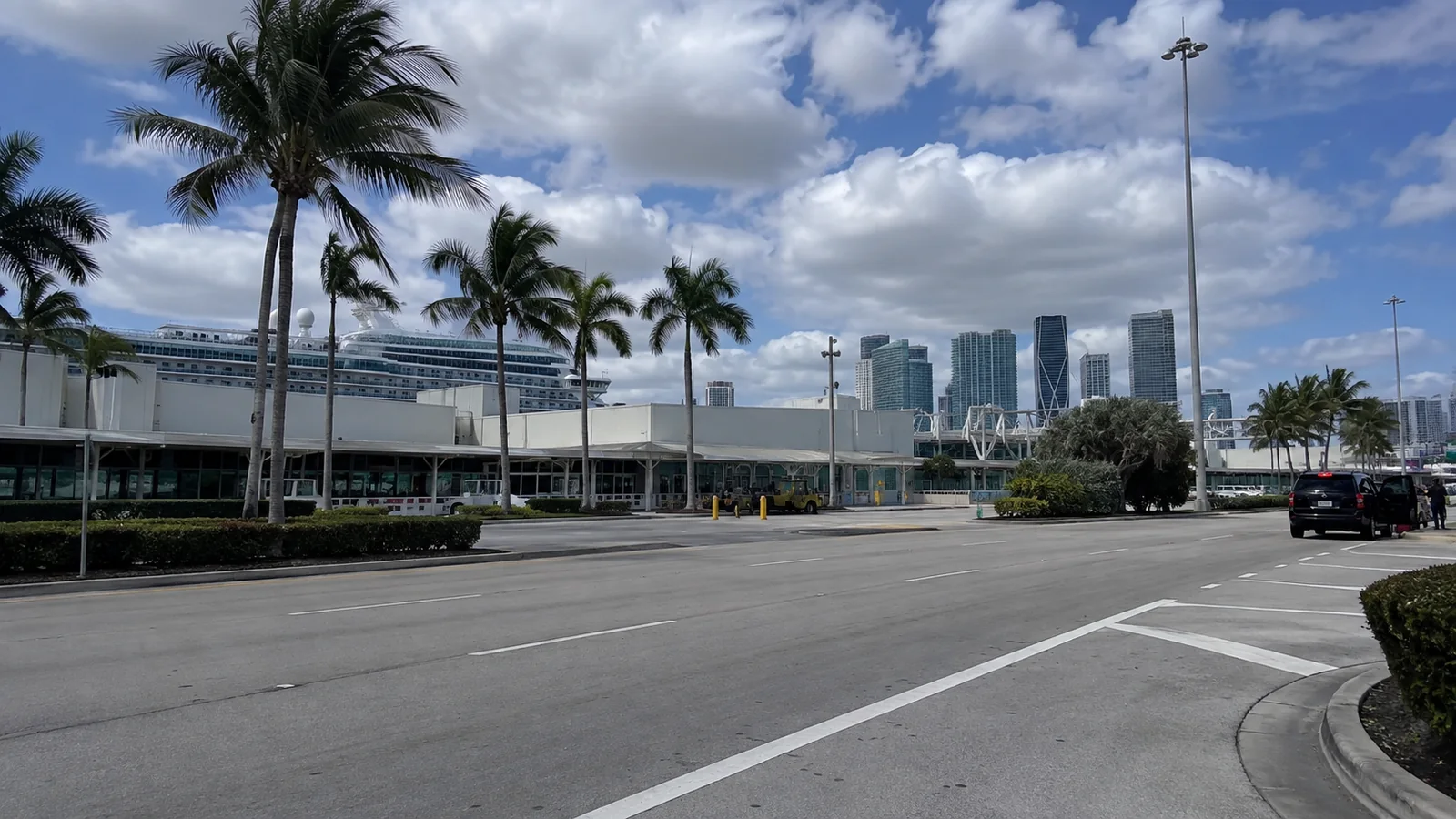
Accessibility at the port
Tell Carnival about accommodation needs before sailing, and arrange wheelchair or boarding assistance through the process it provides. A porter moves luggage, while passenger mobility assistance is a separate service.
Travelers using a scooter or power chair should confirm accessible transfer equipment before paying a shuttle operator. Provide device dimensions and weight because “wheelchair friendly” can mean only that a folded manual chair fits in the trunk.
If driving, review PortMiami’s qualifying rules for complimentary disabled parking instead of assuming a placard alone removes the charge. Also verify garage clearance if a lift, roof box, or tall van changes vehicle height.
When should you arrive in Miami?
For a Miami sailing, the best buffer is one hotel night before embarkation. Two nights are sensible after a long international trip, during a disruption-prone travel season, or when you actually want time in the city.
Short cruises still deserve this protection because their fixed departure makes a flight delay proportionally more costly. If you are comparing formats, our guide to cruise lengths and itinerary fit helps put that tradeoff in perspective.
Debarkation and the trip home
Do not book a very early flight based on the scheduled arrival time alone. The ship must reach the berth, receive clearance, unload baggage, and process passengers before you can travel to the airport.
Miami traffic and airport security add more variables. Follow Carnival’s current flight-time recommendation for your voyage and create extra room when checking bags, traveling with children, or requesting assistance.
For self-assist departure, every traveler must be able to control all luggage without porter help. It can save waiting time, but it is a poor bargain if stairs, gangways, elevators, or crowded curbs make the load unsafe.
Easy mistakes to avoid
- Assuming Carnival always uses one Miami terminal.
- Driving to the main address without checking the ship name and letter.
- Putting identification or daily medication in a checked suitcase.
- Treating the arrival appointment as optional or confusing it with final boarding.
- Flying into FLL without budgeting the longer ground transfer.
- Using a stale parking price or garage assignment.
- Booking a same-day flight because the airport is only 9 miles away.
Embarkation should feel pleasantly boring. The best way to get there is to decide every moving part before reaching Dodge Island.
The bottom line
Carnival’s Miami operation is easy to navigate once you stop treating D, E, or F as a permanent assignment. Confirm the terminal, use the matching port signs and parking facility, arrive within your appointment, and keep documents in hand.
The one choice I would not compromise is arriving in Miami a day early. Everything else, from rideshare versus taxi to garage versus hotel parking, can be optimized around your group and budget.