Grand Cayman Cruise Port Guide: Tenders, Beaches and Easy Day Plans
Grand Cayman is one of those ports where the water is impossibly blue and the logistics are just quirky enough to deserve a plan. Your ship normally anchors off George Town, you ride a tender ashore, and then you choose between an easy beach day, a boat adventure, or a relaxed wander through town.
Grand Cayman cruise port at a glance
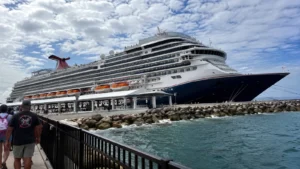
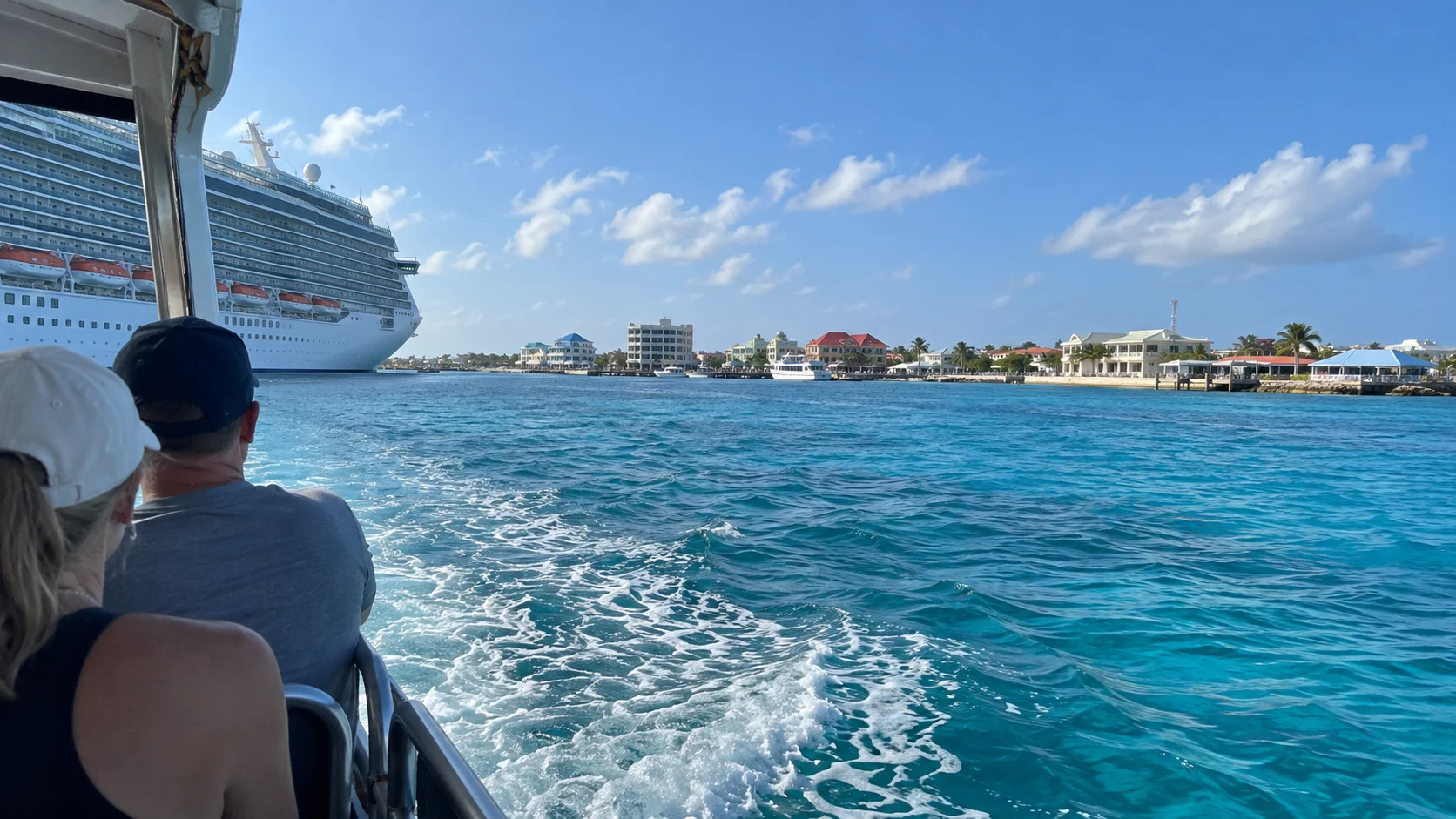
Grand Cayman is a tender port, so cruise guests do not walk down a gangway onto a fixed cruise pier. The Cayman Islands Department of Tourism says passengers are ferried to one of three terminals in George Town, with the boat ride described as about five minutes.
That five-minute figure is the ride itself, not the total time from cabin to curb. Waiting for a tender ticket, boarding, loading, sea conditions, and a line at the landing can turn the full process into a much longer chunk of your morning.
The three central landing sites are Royal Watler Terminal, North Terminal, and South Terminal. The Port Authority’s current port information lists Royal Watler Pier plus the North and South terminals, all along the George Town waterfront area.
Your ship decides where and how its guests go ashore, and the assigned landing can change. Listen to the onboard announcement rather than telling a taxi driver to meet you at a terminal you chose from an old map.
How tendering works in Grand Cayman
A tender is a smaller passenger boat that transfers guests between the anchored ship and land. Depending on the day, the operation may use ship boats, local tenders, or a combination arranged by the cruise line and port.
Some cruise lines distribute tender tickets or virtual queue numbers to guests without priority. Others announce open tendering later, and the exact process can change by ship and sailing.
Read the daily program the evening before and check the app again in the morning. If you have an independent tour, do not promise an exact shore meeting time until you understand your ship’s tender procedure.
Ship-sponsored excursions often receive coordinated meeting instructions, but that does not mean every participant will be on the first boat. Follow the ticket details you receive onboard rather than a generic rule from another cruise line.
If tender ports are new to you, my cruise tender explainer walks through tickets, boarding, and the little delays people forget to budget. Grand Cayman is a perfect place to understand that system before making a tightly timed reservation.
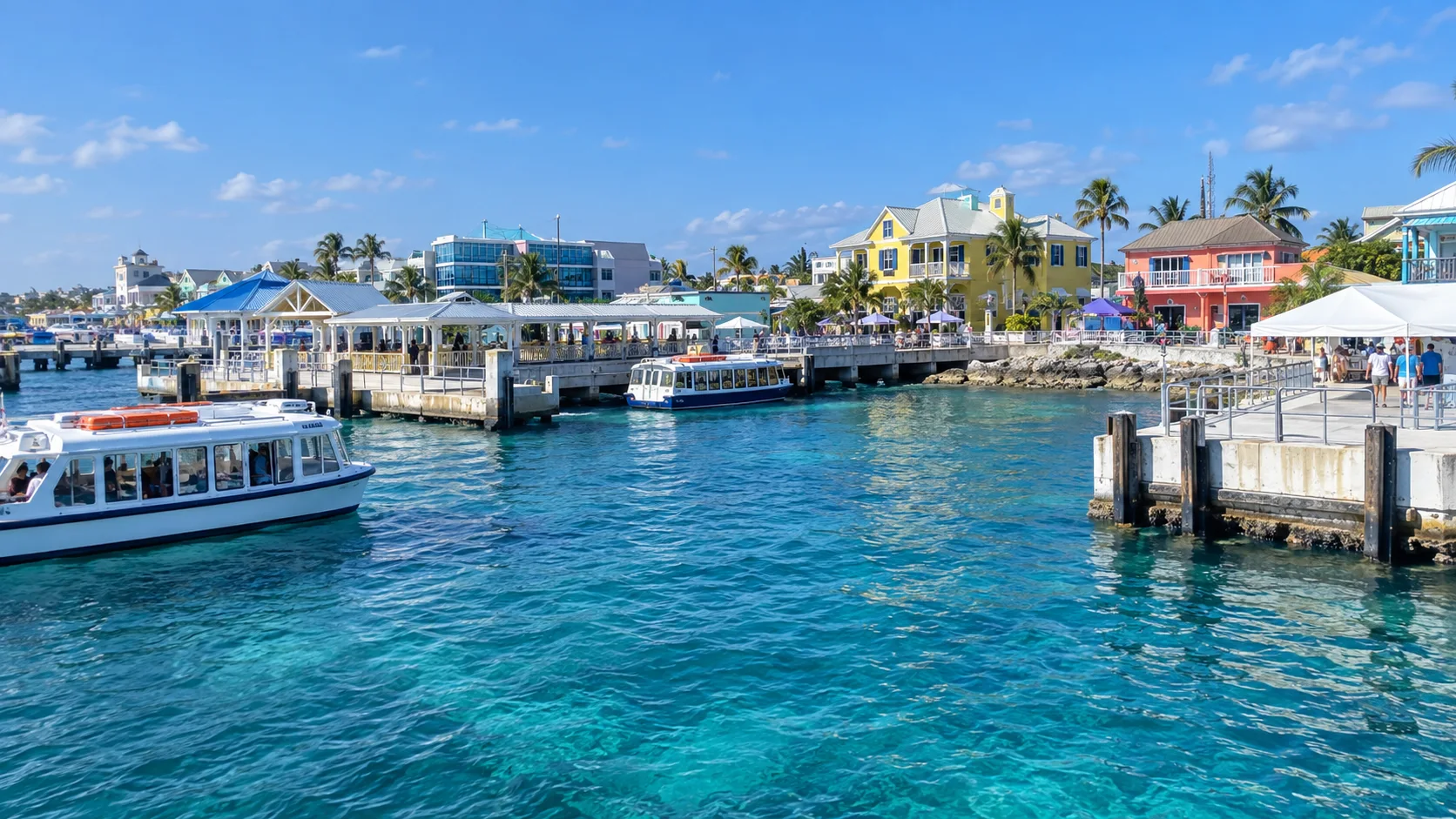
Royal Watler, North Terminal, and South Terminal
All three main terminals put you in central George Town rather than at a remote resort complex. You can reach waterfront shops, restaurants, tour dispatch points, and downtown sights without booking a transfer simply to escape the port.
Royal Watler is a purpose-built cruise terminal area with room for passenger processing and tourism services. North Terminal and South Terminal are separate landings on the waterfront, so remember the name shown by your ship when arranging a meetup.
The terminals are close enough that a mistaken meetup is usually fixable, but “close” is not the same as instant when crowds are moving. Screenshot the operator’s written directions and include the terminal name, landmark, local phone number, and latest acceptable meeting time.
Do not be surprised if operations change on the day. The Port Authority shows Spotts as a separate marine location, but cruise guests should never independently head there unless their ship specifically announces an alternate operation.
Can a Grand Cayman cruise call be canceled?
Yes, and this is the most important honest caveat in the whole guide. Tendering depends on safe sea and weather conditions, so a ship can skip Grand Cayman even when the sky looks bright from your balcony.
Swell, wind, or conditions at the transfer platform may matter more than whether it is raining. The captain, port, and marine teams make an operational safety decision that cannot be guaranteed months in advance.
The Port Authority’s official cruise schedule explicitly warns that schedules are made far ahead, can change, and may be affected by weather. It also tells passengers to follow ship-provided times because Cayman does not observe daylight saving time.
That last detail is easy to underestimate. Keep your phone and watch on ship time if instructed, because a device that updates automatically can create exactly the sort of vacation drama nobody needs.
Before booking a private tour, read the missed-port refund and delay policy in writing. “Weather permitting” sounds friendly, but you want to know whether you receive a refund, credit, reschedule, or nothing if the ship never sends passengers ashore.
Getting around from the George Town tender terminals
For most one-day visitors, the useful choices are walking, taxi, public bus, or a prearranged tour vehicle. A rental car adds driving time, left-side traffic, parking, and a return deadline, so it usually makes sense only for a carefully planned island loop.
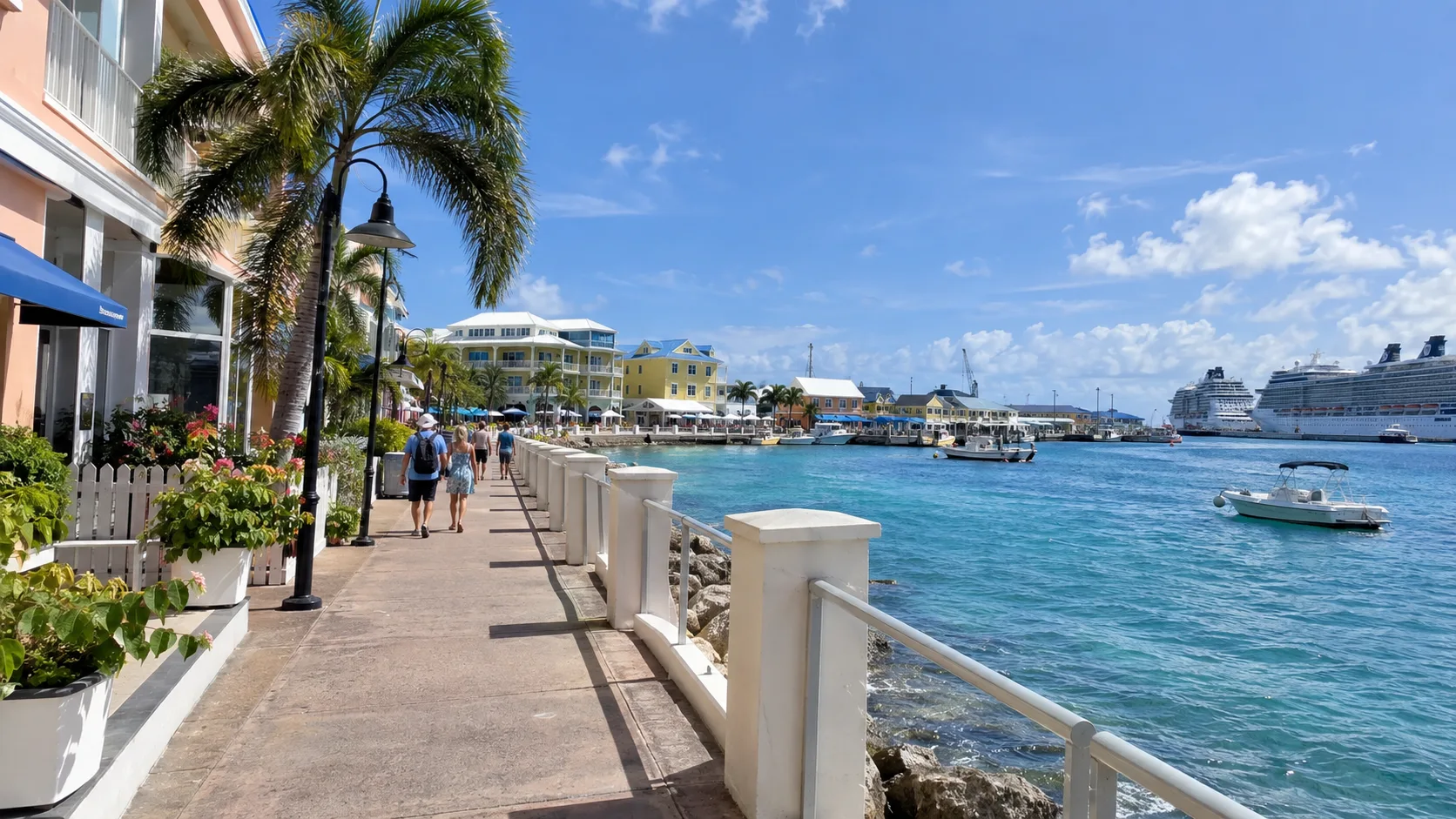
Walking
George Town is the easiest no-reservation option. You can stay near the waterfront, browse, have lunch, visit a downtown attraction if open, and keep the tender line comfortably close.
Heat and sun can make a short-looking walk feel longer, so carry water and use shade when you find it. Sidewalk conditions and curb cuts vary, which matters for wheelchairs, scooters, and strollers.
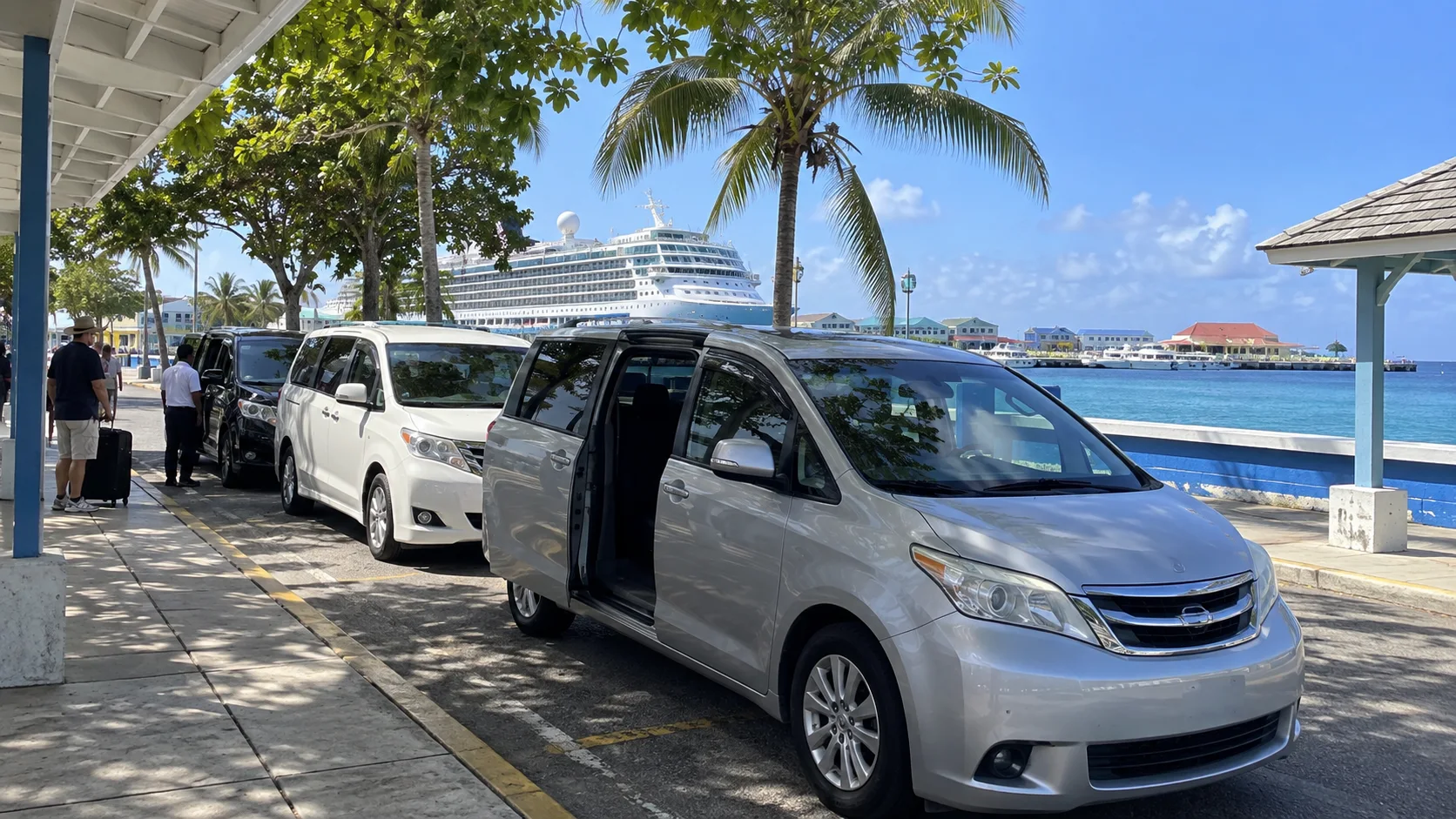
Taxis
Taxis are the simplest choice for a direct beach transfer or a small group that wants door-to-door convenience. Confirm the destination, whether the price is per person or per vehicle, accepted currency, and pickup plan before leaving the terminal area.
For the return, ask whether your driver will come back at a set time or whether you should find another taxi. Leave more time than the outbound drive took because beach traffic, queues, and several ships returning at once can slow the trip.
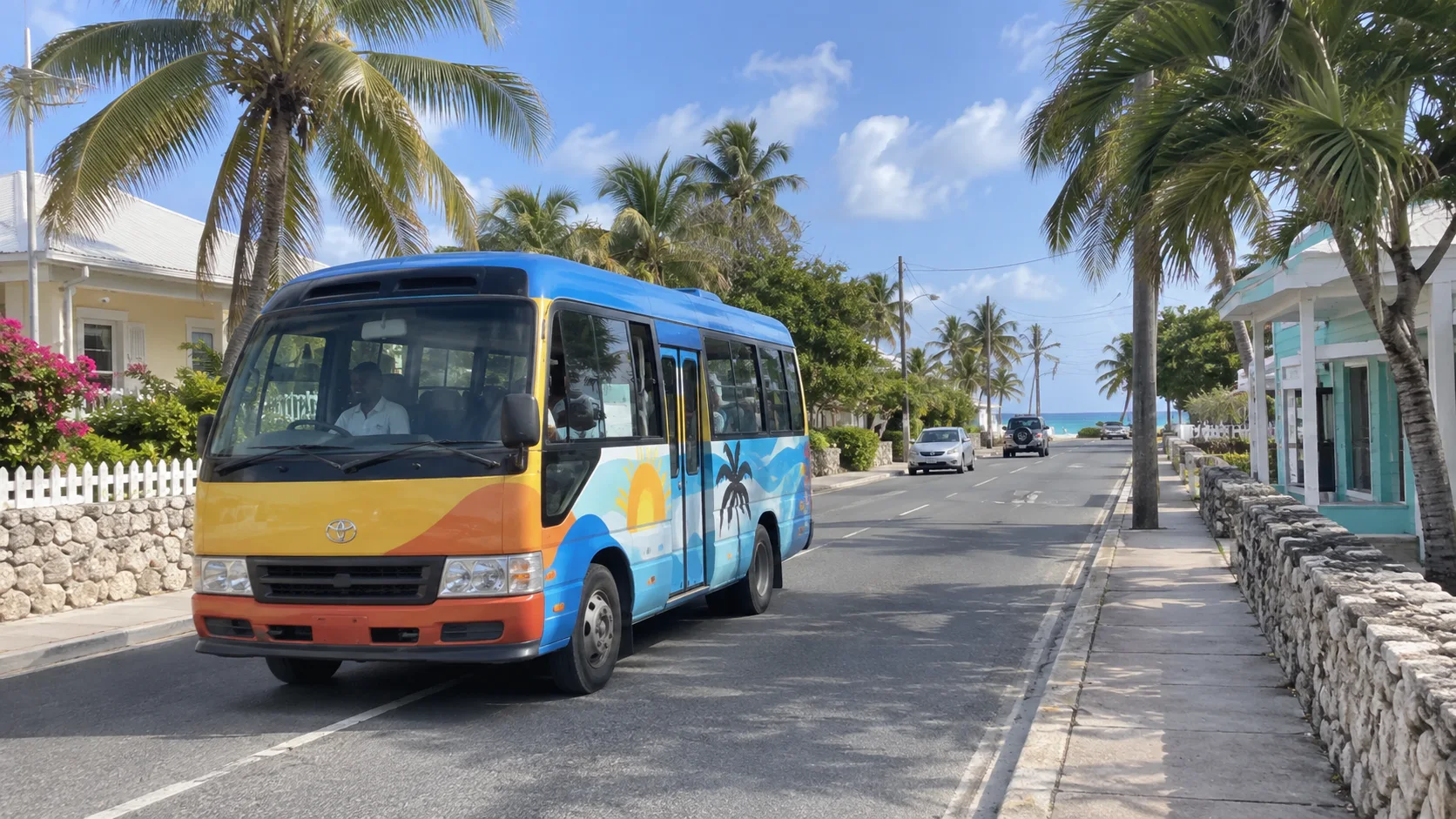
Public buses
The official tourism site’s getting-around information places the bus terminal on Edward Street beside the Public Library. Routes 1 and 2 run between George Town, West Bay, and Seven Mile Beach, while licensed buses carry blue number plates and accept Cayman Islands and U.S. dollars.
Buses are useful when you have generous time and a straightforward stop. They are not a fixed-time cruise transfer, so build in waiting, traffic, the walk back to the landing, and a backup taxi plan.
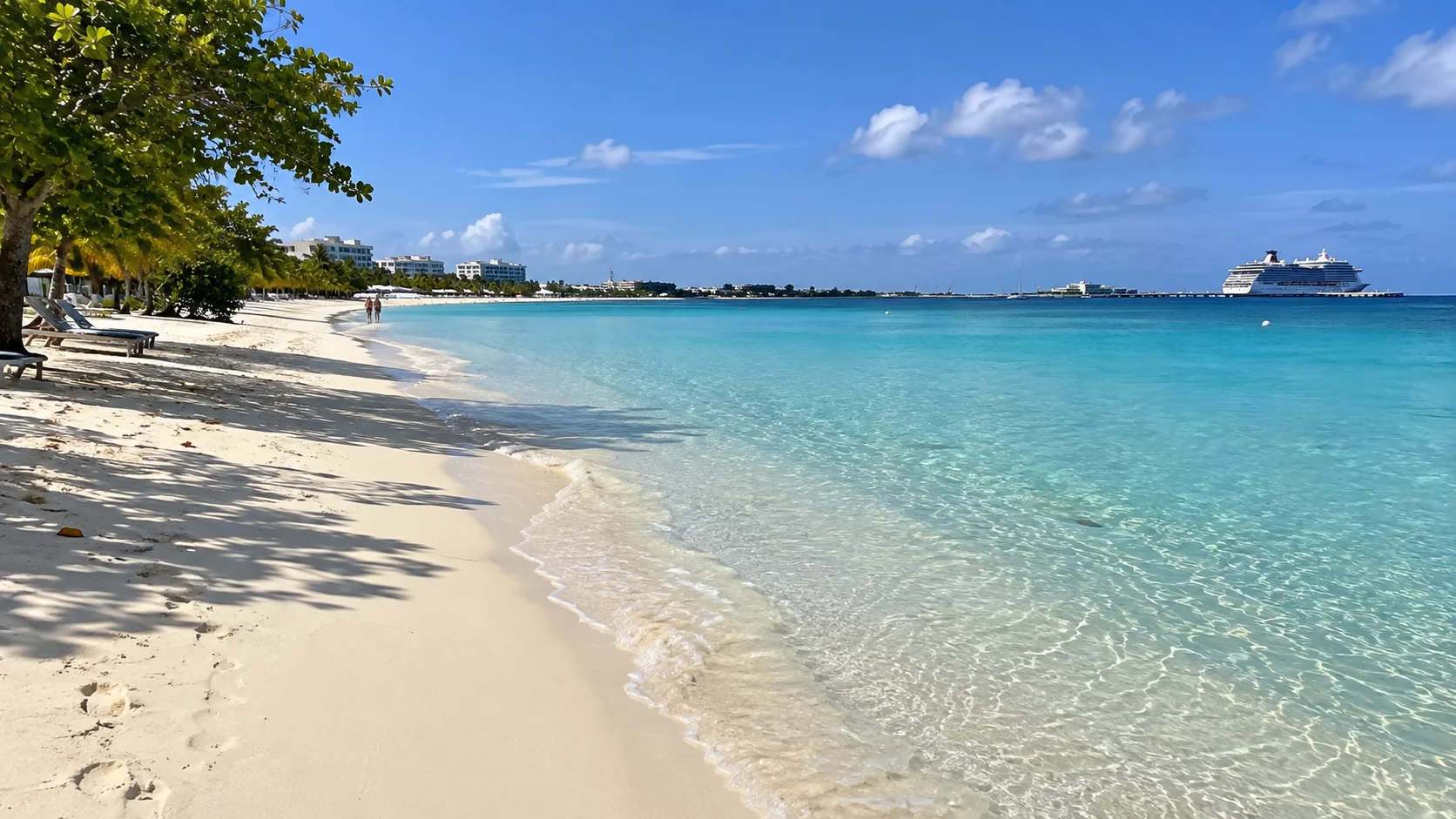
Seven Mile Beach from the cruise port
Seven Mile Beach is the classic first-timer choice, and it sits north of George Town along Grand Cayman’s west coast. The official tourism page describes a long white-sand shore with restaurants, resorts, watersports, and multiple ways to enjoy the water.
The name does not mean every access point offers the same experience. Beach width changes with natural erosion and weather, while restrooms, shade, food, chairs, and watersports vary by location and operator.
Decide what you actually want before getting into a taxi. “Seven Mile Beach” is an area, so ask for a specific public access, business, hotel, or agreed pickup point rather than expecting the driver to choose your perfect patch of sand.
A public access can be ideal for travelers who bring a towel and only need the sea. A resort or beach business may offer chairs, food, or a day-pass arrangement, but availability, access rules, and minimum purchases can change without much warning.
Do not arrive at a hotel assuming its chairs, restrooms, pool, or shade are public. Verify current day access directly with the property, and keep a public-beach backup in case it is full or unavailable.
For the easiest day, head to a known access, swim only in conditions you are comfortable with, and return before the mass exodus. The prettier the water looks, the easier it is to forget that you still have a taxi ride and tender queue between you and your cabin.
Choosing a Grand Cayman boat excursion
Many of Grand Cayman’s headline experiences require another boat after your tender reaches shore. Stingray City sandbar trips, reef snorkeling, sailing outings, and private charters all involve more moving parts than a beach transfer.
A cruise-line excursion offers one coordinated booking and ship-issued meeting instructions. Policies vary, but the cruise line is also the party managing the ship’s own tender operation, which can make a weather-compressed morning simpler.
An independent shared tour may offer a smaller group, different stops, or a more personal pace. Confirm the operator’s license and insurance, exact meeting point, boat departure cutoff, missed-port refund, and promised return location before paying.
A private charter gives you the most control over route and pace, but “private” does not remove tender delays, marine conditions, or the ship deadline. Tell the captain your announced last-tender time and request a shore return that leaves a very comfortable cushion.
If anyone in your group has limited mobility, ask about the exact boarding sequence for both tender and excursion boat. Words like “accessible” can hide steps, ladders, wet surfaces, a gap between vessels, or the need to transfer from a mobility device.
Never assume wildlife, clear visibility, flat seas, or a particular snorkeling site is guaranteed. A responsible captain may change the route or cancel when conditions make the planned stop unsuitable.
Last tender and all-aboard are not interchangeable
“All aboard” is the ship’s deadline for passengers to be back onboard. “Last tender” is the final scheduled passenger boat leaving shore, and that boat must still travel out to the ship.
On a tender call, the last-tender time is the practical deadline you need to obey. Use the time printed or announced by your ship that day, not the departure time on a third-party itinerary page.
I would aim to reach the tender queue entrance at least 60 to 90 minutes before the announced last tender after an independent outing. That is a personal planning cushion, not an official minimum, and I would make it larger for a distant drive, private boat, mobility need, holiday crowd, or uncertain weather.
Being early is not wasted time in George Town. You can have a cold drink, browse near the waterfront, and join the line without watching every red light like it has personally betrayed you.
Ship-sponsored excursions receive their own instructions if a tour runs late, so follow the escort rather than peeling away to improvise. Even then, keep the ship’s schedule in mind and listen for changes.
Grand Cayman weather and hurricane-season reality
Grand Cayman is warm, bright, and tropical, but a cruise visit can include intense sun, a fast shower, gusty wind, or rough water. Pack for heat and rain at the same time rather than betting the entire day on a cheerful weather-app icon.
For marine conditions and local alerts, check the Cayman Islands National Weather Service. Its forecasts include wind and wave information, which is more relevant to tendering than a simple rain percentage.
Atlantic hurricane season adds itinerary uncertainty, but tropical systems are not the only reason for a missed call. Local swell or wind can disrupt tendering on an otherwise ordinary-looking day.
My Caribbean cruise timing guide explains the seasonal tradeoffs without claiming any month is storm-proof. Travel insurance can help with covered losses, but read the policy definitions and exclusions before buying.
Safety tips that actually matter
Grand Cayman feels easy to navigate, which is lovely, but normal travel awareness still belongs in your beach bag. Keep valuables minimal, use licensed transportation, agree on fares and meeting points, and do not leave a phone or wallet unattended on the sand.
Vehicles drive on the left, so look both ways carefully and pay special attention to traffic coming from the direction your instincts may not expect. Roundabouts and busy beach-road crossings deserve patience.
The tropical sun can be fierce even when clouds soften it. Drink water, reapply reef-conscious sunscreen, add a hat or rash guard, and give children and older travelers regular shade breaks.
In the water, treat “usually calm” as a description rather than a guarantee. Watch local conditions, stay within your swimming ability, use a properly fitted life jacket when appropriate, and follow crew instructions on boats.
Do not touch or stand on coral, chase marine animals, or remove shells and sea life without knowing the rules. The official tourism guidance notes that many Cayman waters are protected and that removing coral or sponges is prohibited.
Cayman Customs and Border Control also warns that local drug laws cover marijuana, THC, and CBD products, including gummies and vapes. A product legal at home can still create a serious problem at the border.
Accessibility at the Grand Cayman cruise port
The biggest accessibility question is usually the tender, not the terminal. Boarding can involve a moving platform, steps, gaps, and crew safety limits that change with sea conditions.
Ask your cruise line before sailing whether it can accommodate your exact wheelchair or scooter on tenders and under what conditions. A manual chair, folding scooter, power chair, and traveler who cannot walk a few steps may receive very different answers.
Even an approved tender transfer can be paused if conditions become unsafe. Have a shipboard backup day in mind so a safety decision does not feel like the whole vacation has vanished.
For shore plans, ask about curb cuts, vehicle transfer height, beach surfaces, accessible restrooms, and boat boarding separately. “Accessible transportation” does not automatically mean an accessible beach entrance or excursion vessel.
Entry documents and identification
Carry the documents your cruise line tells you to take ashore, normally including your ship card and any required photo identification. Do not base this on what another nationality carried on a different itinerary.
Cayman Islands Customs and Border Control entry requirements say arriving travelers must be able to present a passport or another valid document establishing identity and nationality or permanent residence. Some nationalities also require a visa, and the rules can change.
Your cruise line checks documents for the full itinerary, but the traveler remains responsible for having the right ones. Verify requirements with the cruise line and Cayman authorities well before final payment, especially if anyone holds a passport from a visa-required country or has unusual residency documents.
Leave passports in the cabin safe only if your ship specifically says they are not needed ashore. Take a secure copy and emergency contact details, but remember that a copy may not replace an original when authorities require one.
Three easy Grand Cayman day plans
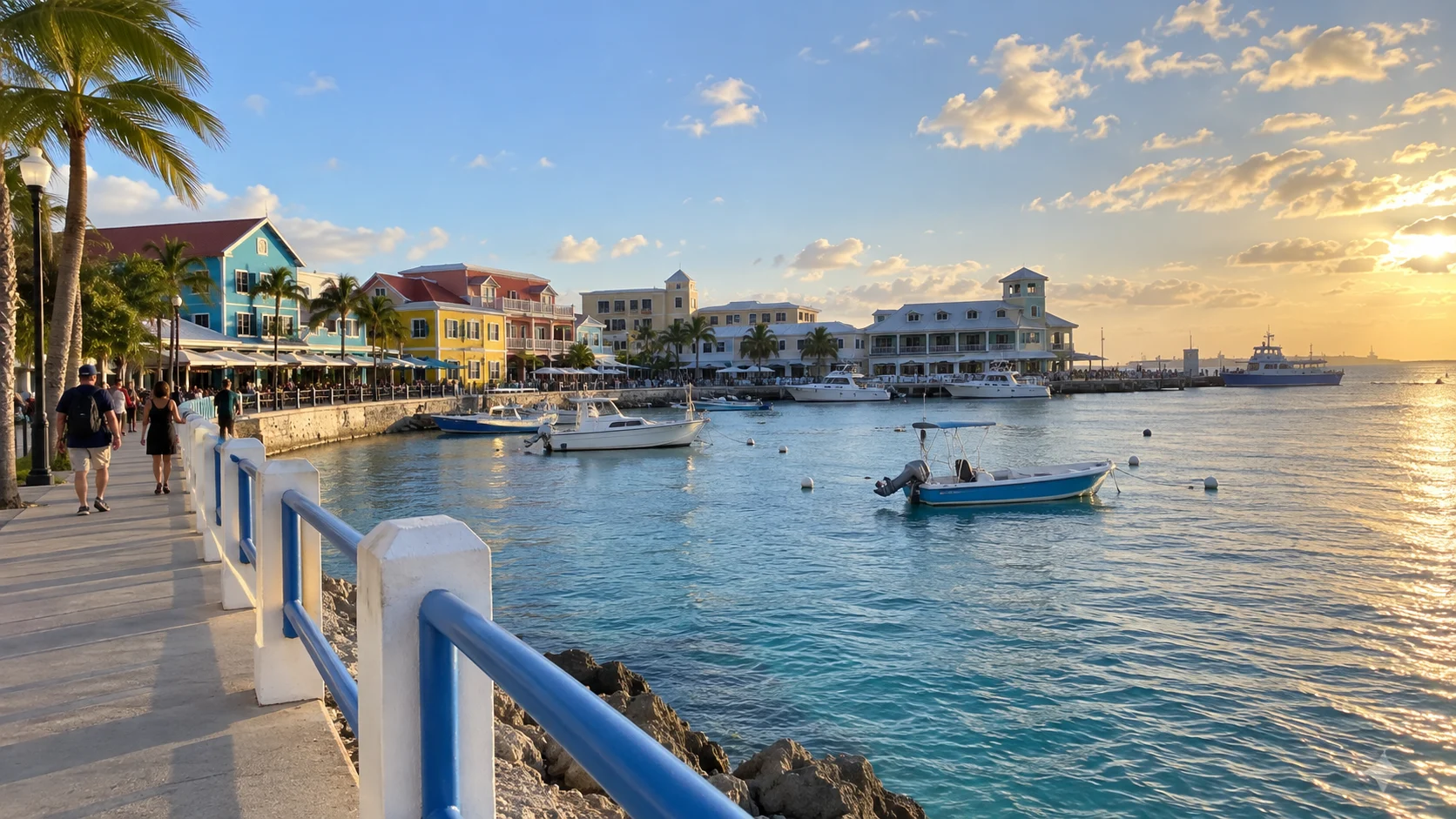
The relaxed George Town day
Tender ashore after the first rush, explore the waterfront, choose lunch based on what looks good, and stay within an easy walk of your landing. This is the least fragile plan if tendering starts late or the weather feels unsettled.
The Seven Mile Beach day
Take a taxi or bus to a preselected access point, enjoy a few unhurried hours, and leave well before the last-tender crowd. Confirm facilities and transport rather than expecting every stretch of the beach to work the same way.
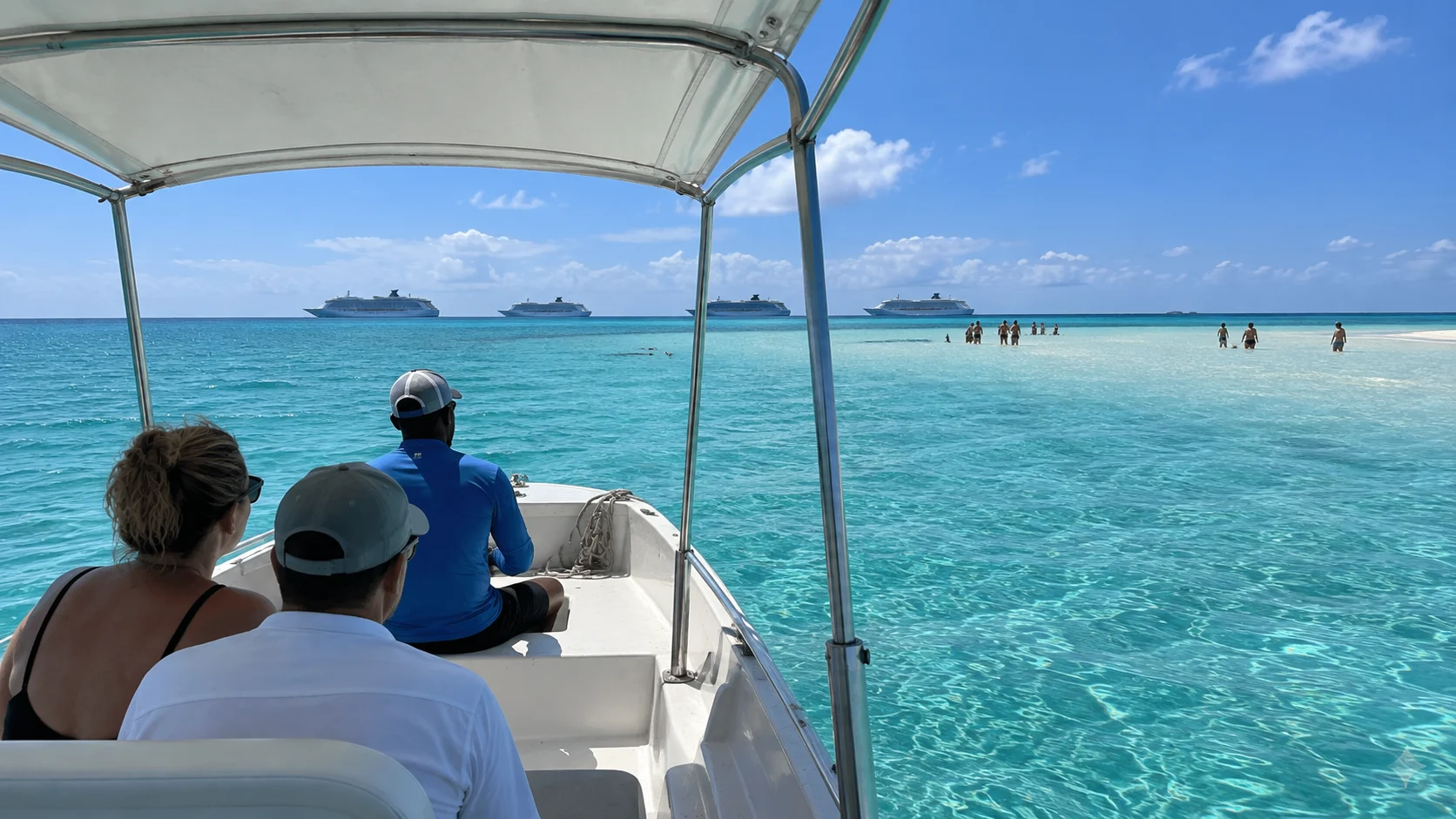
The boat-adventure day
Book a ship-sponsored or carefully vetted independent operator, send them your ship details, and understand the missed-port policy. Keep extra time between the excursion’s planned return and your ship’s last tender.
If your western Caribbean itinerary continues to Mexico, save my Cozumel port planning tips and Costa Maya port guide too. Those are pier calls more often than Grand Cayman, so the morning rhythm can feel quite different.
A George Town route for a short call
I would start at the Cayman Islands National Museum beside Hog Sty Bay, allow 45 to 60 minutes for its natural and cultural history exhibits, then walk north along the waterfront toward the historic Fort George remains. Keep another 30 to 45 minutes for the waterfront and photographs, remembering that your tender may land north or south of the museum.
For an optional meal, Cayman Cabana is a named waterfront restaurant in George Town. I would check lunch service that day and allow about an hour, or skip a sit-down meal if tendering has already shortened the call.
This is my first pick for a short visit or anyone who wants a land-based day without a long drive. Check museum opening hours before committing, and use the waterfront walk as the fallback when an interior visit is unavailable.
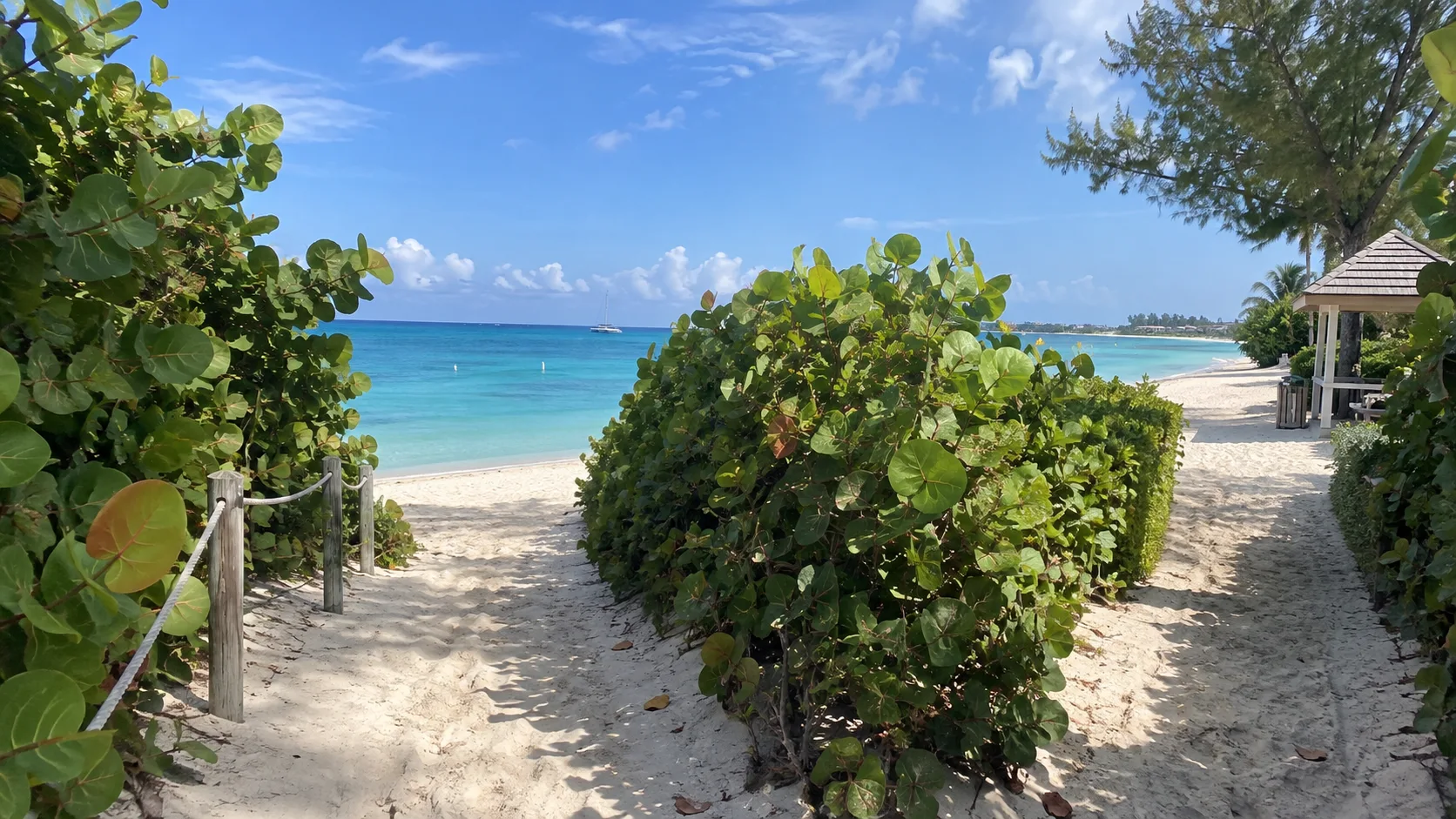
Two specific Seven Mile Beach access choices
Seven Mile Public Beach is the practical choice when restrooms, showers, picnic facilities, and the possibility of paid chair rental matter. Cayman government’s beach-access information also lists a mobility mat here, though a mat does not remove every transfer or sand-access obstacle.
Governors Beach, beside Government House, is the simpler alternative for a towel-on-the-sand stop. I would bring water and shade protection and avoid relying on guaranteed chair rentals, food service, or the neighboring hotels’ bathrooms.
For either choice, allow around 15 to 30 minutes by taxi from central George Town as a planning range, with more time if cruise-day traffic is heavy. Ask the driver for the named public access, then set a pickup well ahead of the last tender rather than searching for a ride at the last minute.
I would choose Public Beach for families needing facilities and Governors Beach for a shorter, simpler beach pause. Access to the sand does not include a resort chair or pool, and neither location promises calm swimming conditions.
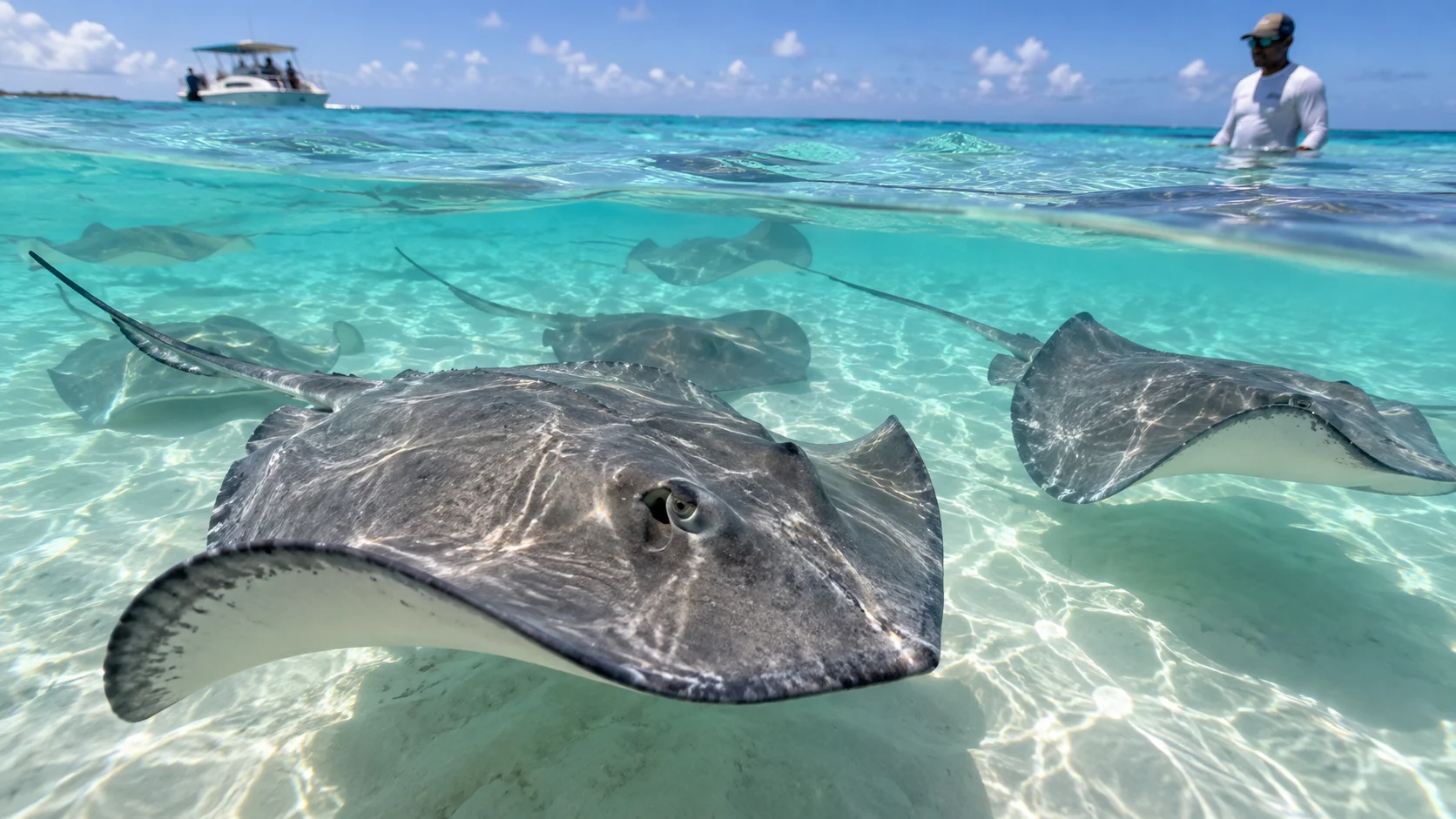
When Stingray City deserves the day
The usual visitor experience is the shallow Stingray City sandbar in North Sound, where wild southern stingrays gather; it is different from booking a deeper scuba dive. You reach it by boat and must manage boarding, a ladder or steps, and water that can feel much deeper with waves or a short person’s height.
Captain Marvin’s three-stop trip combines the sandbar with Barrier Reef and Coral Gardens snorkeling and lists three hours dock to dock. Add the terminal check-in, road transfer, waiting, and return tender queue before deciding whether it fits the call.
For a first visit with a long port window and comfortable swimmers, I would consider that combination because it gives the day a clear focus. Non-swimmers should discuss flotation, water depth, boat access, and the option to remain aboard, or choose the George Town route for an easier experience.
A sandbar-focused outing is more sensible than multiple snorkel stops if you tire easily or only want to see the rays. Book a departure that explicitly accommodates cruise tender arrivals, and never assume a three-hour boat tour means only three hours away from the ship.
Grand Cayman cruise port questions
Can you walk from the Grand Cayman cruise port to Seven Mile Beach?
Seven Mile Beach is an area north of central George Town, and the practical choice for most cruise visitors is a taxi or public bus to a specific access point. Save your walking energy for the sand and leave time for the return transfer.
Which terminal will my ship use?
Your ship may use Royal Watler, North Terminal, or South Terminal, and the assignment can change. Check the onboard announcement and shore instructions that morning.
Do I need Cayman dollars?
Official tourism guidance says licensed public buses accept both Cayman Islands and U.S. dollars. Ask other businesses about currency, card acceptance, and how change will be returned before buying.
Can I book an early independent tour?
You can, but the operator should understand that your ship tenders and that shore arrival is not guaranteed at a precise minute. A flexible meeting window and written missed-port policy are much safer than a nonrefundable hard cutoff.
Will the ship wait for me?
Do not assume it will wait for an independent guest or tour. Follow the announced last-tender time and return with a conservative buffer.
Is Grand Cayman good for a no-excursion day?
Yes. Central George Town makes it easy to enjoy a simple waterfront day, and Seven Mile Beach is reachable by taxi or bus if conditions and time allow.
Final thoughts
Grand Cayman rewards a plan that is specific but flexible. Pick a real beach access or operator, learn your ship’s tender process, keep the landing-terminal name handy, and build your return around the last tender rather than the ship’s departure time.
Then let the day feel easy, because that is what this island does best. A generous time cushion leaves more room for blue water, good food, and the kind of sunny little memory you actually wanted from the port.