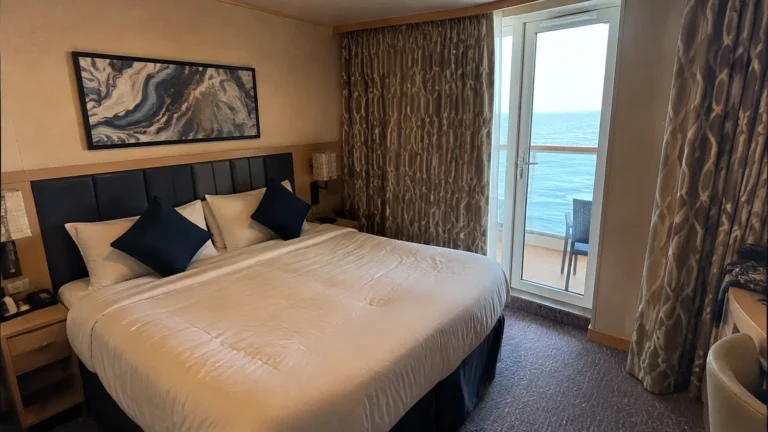
Serenade of the Seas Cabins to Avoid and Better Picks
Serenade of the Seas is easier to navigate than today’s mega-ships, but its cabin choices still reward careful plan reading. The biggest mismatches sit below the pool deck, above entertainment, beside the Centrum, or behind a balcony view that looks different from the category photo.
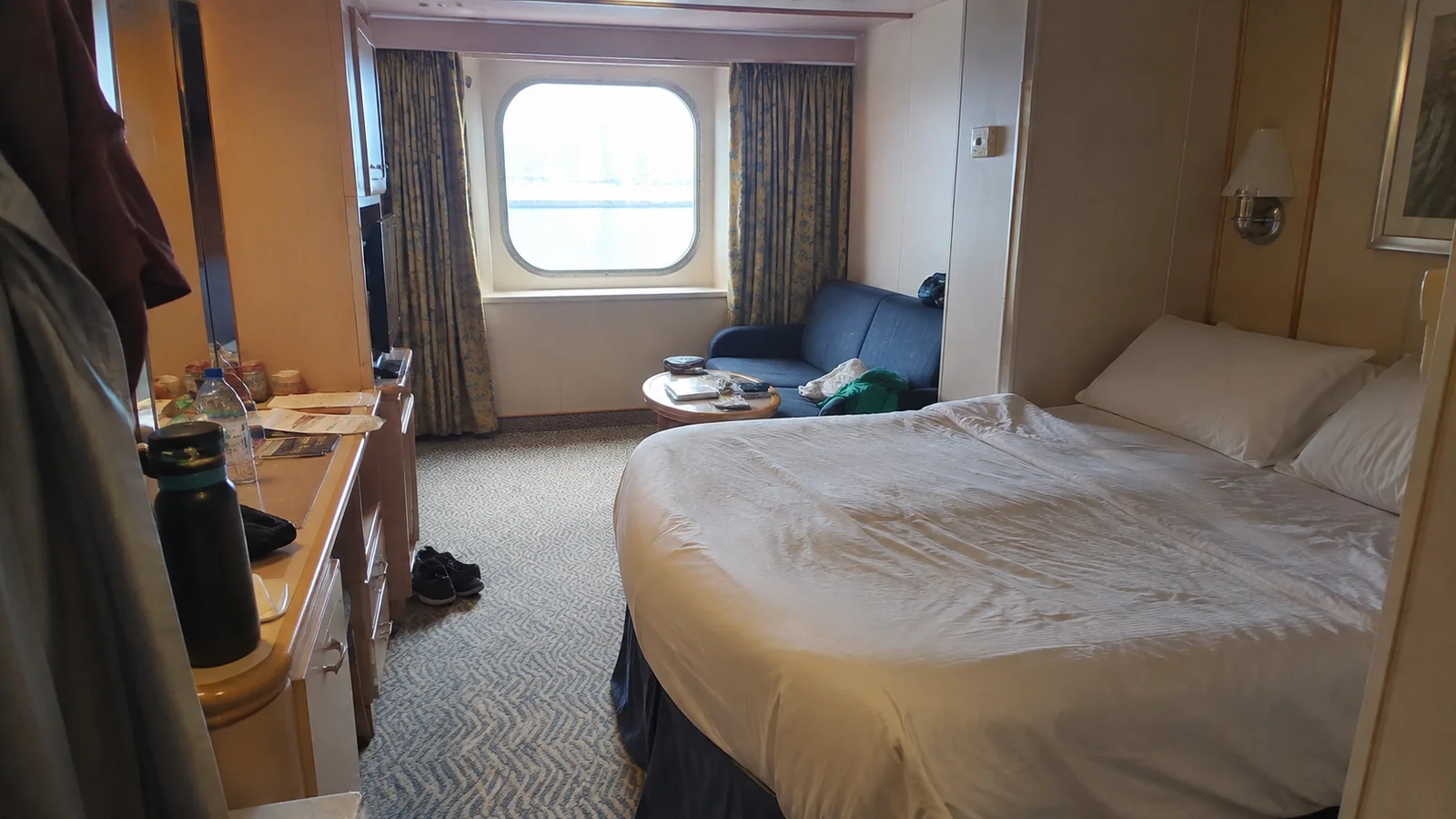
My quick Serenade cabin verdict
I would not blacklist an entire deck. I would eliminate any room whose verified surroundings conflict with my strongest priority, then compare the remaining fare and walking distance.
- Light sleepers: inspect Deck 10 below the pool and Windjammer.
- Early sleepers: question Deck 7 rooms above Deck 6 entertainment.
- View-sensitive guests: verify the partial-obstruction note on selected balcony cabins.
- Motion-sensitive guests: favor lower, midship rooms over high forward or far-aft cabins.
- Privacy seekers: avoid a connecting door unless your group needs it.
The plan establishes where a room sits, not how loudly one guest will perceive it. Music schedules, pool use, docking time, weather, and personal sensitivity make noise and motion variable.
Start with the dated Royal Caribbean plan
Royal Caribbean’s official Serenade of the Seas deck plan currently identifies the selected layout for sailings from May 5, 2026 through April 18, 2027. Use that version for a sailing inside the window and reselect the applicable dates for any later departure.
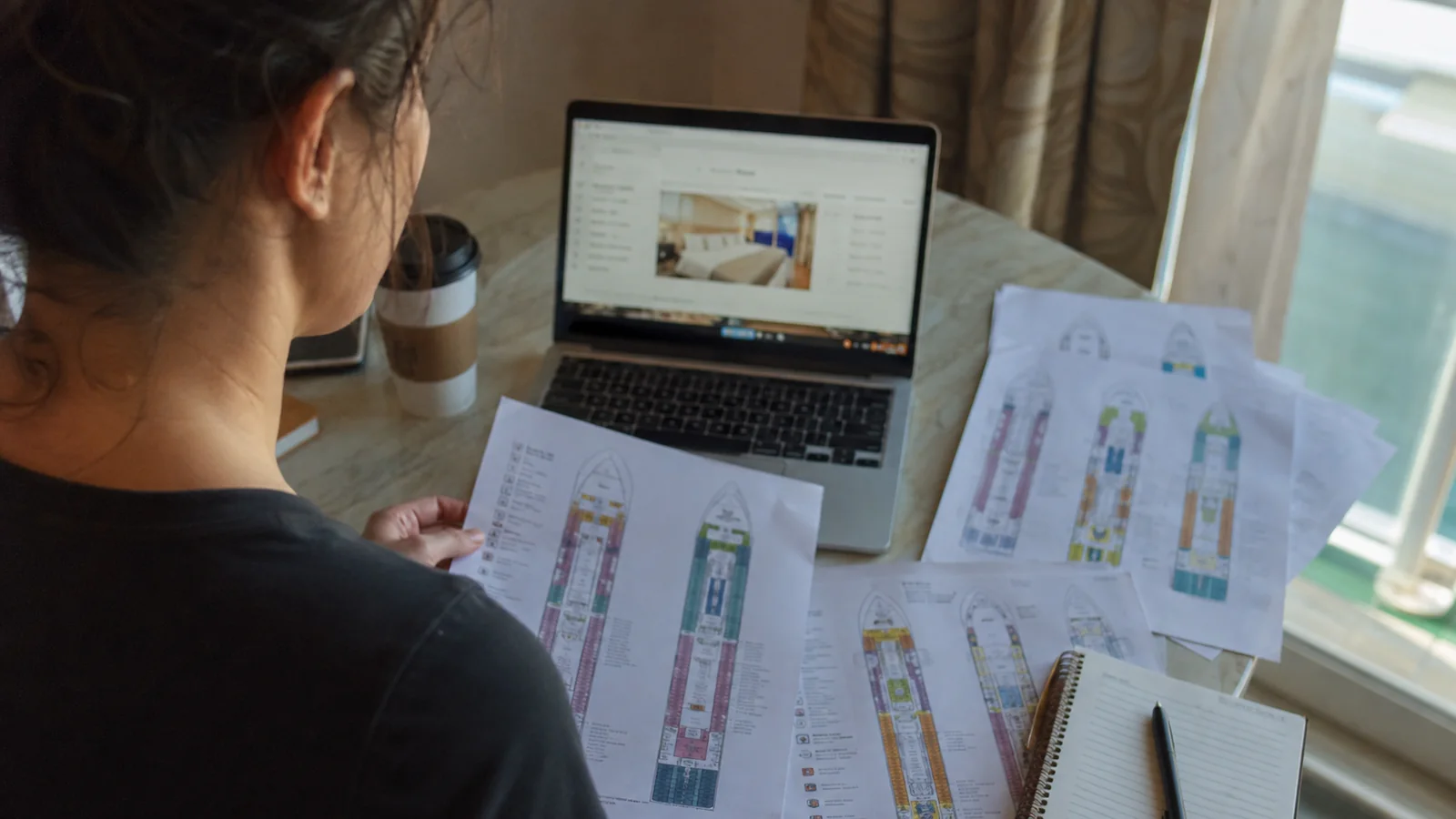
Search the exact cabin number, read every symbol, and line up the same position on the decks above and below. Category letters shown in old reviews may have changed even when the physical cabin stayed put.
Save the plan and room description visible when you book. Royal Caribbean notes that printable plans can lag updates, so the current interactive result and written reservation details deserve priority.
Deck 10 below pools and Windjammer
Deck 10 is the highest full cabin deck, and Deck 11 contains the main pool, Solarium, outdoor seating, and Windjammer Marketplace. That vertical relationship creates the ship’s clearest overhead-activity check.
Potential sounds include chairs, carts, cleaning, footsteps, and early breakfast setup. This does not mean every Deck 10 cabin is noisy, because enclosed areas, insulation, and the exact footprint all matter.
How to choose a better position
Overlay your cabin with Deck 11 instead of using a broad forward, midship, or aft label. A room under another enclosed space may behave differently from one directly beneath open seating or a food-service work area.
If quiet sleep matters more than fast pool access, begin on Deck 8 or 9 with cabins above and below. If you swim daily or eat most breakfasts in Windjammer, Deck 10’s convenience may outweigh a possible overhead risk.
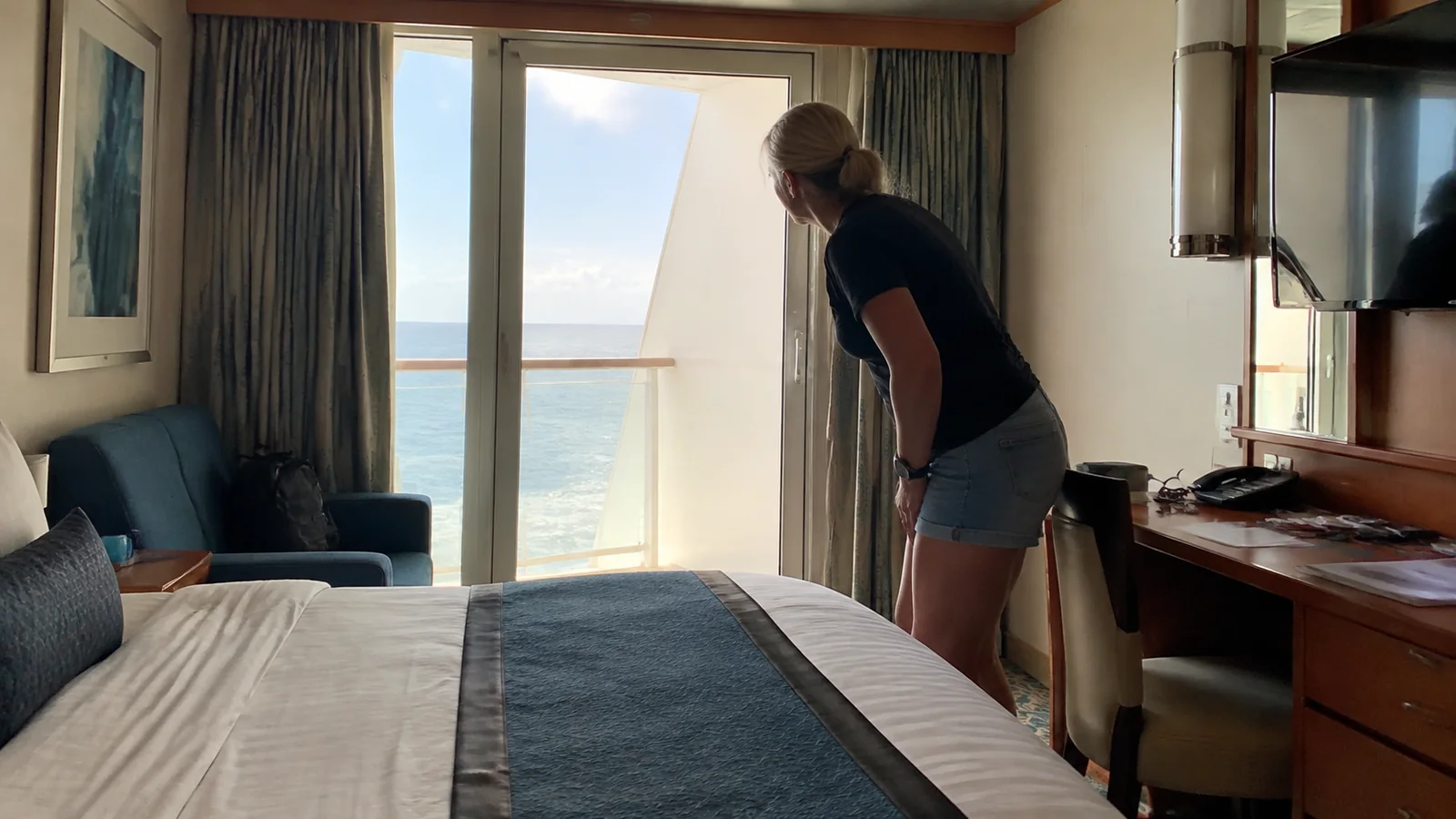
Deck 7 above Deck 6 entertainment
Deck 6 carries the theater level, casino, bars, specialty dining, and the aft Safari Club complex, while Deck 7 adds cabin inventory above those public spaces. Rooms at the forward and aft extremes deserve especially careful vertical tracing.
Possible issues include amplified music, applause, bass, closing activity, and people moving through nearby corridors. Royal Caribbean does not certify these rooms as noisy, and schedules vary by itinerary.
A room near the center bulge, often called the hump, may offer convenient elevator access but can still align with public rooms below. Do not let an attractive balcony shape distract from checking the deck underneath.
A quieter alternative
I would start with a nonconnecting midship cabin on Deck 8 or 9, set a few doors away from the elevator opening. That provides cabin buffers without forcing a far-end walk on a ship that still has long fore-and-aft corridors.
Partially obstructed balcony sightlines
The current deck-plan search should be the final word on an obstruction, and the reservation description should disclose it. Among the cabin numbers repeatedly flagged in Royal Caribbean plan material are 7064, 7066, 7564, 8058, 8060, 8558, 8560, 8162, 8164, 8662, and 8664.
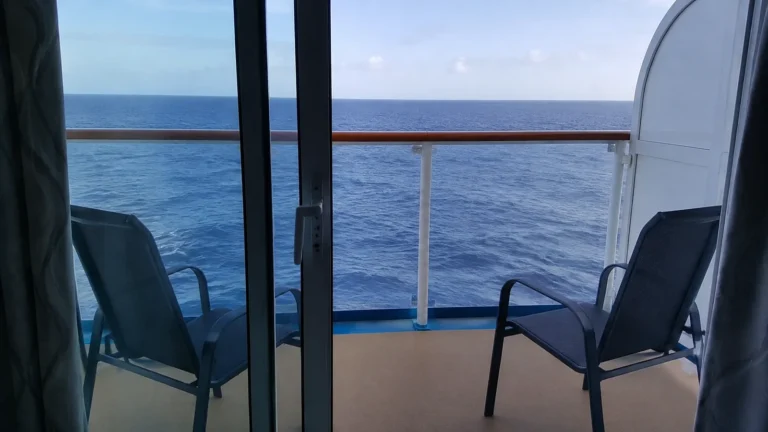
An obstruction may affect the view downward more than the horizon, or it may involve lifeboat hardware near one side. Do not infer the angle from the word “partial” alone, and do not assume a representative balcony photo matches that exact room.
I would skip a flagged room if photographing scenery, watching wildlife below, or seeing the water from a seated position drives the purchase. I would consider it when the discount is meaningful and fresh air matters more than a clean sightline.
Use cabin 7594 as a caution, not a verdict
Cabin 7594 is a Deck 7 balcony near the central projection, a location shoppers often notice for convenience. Its relationship to lifeboat-canopy structures below can affect the downward view, so obtain a recent cabin-specific image before choosing it for scenery.
That location may still have a useful outward horizon and quick access to elevators. The right question is what portion of the view matters to you, not whether another traveler used the word “obstructed.”
Far-aft balconies and suites
Serenade’s far-aft rooms can offer deep balconies and a wake-facing outlook that many travelers prize. They also add a longer walk to forward venues and can feel different movement or vibration during maneuvering.
Neither motion nor vibration is guaranteed, and some guests gladly trade both possibilities for the balcony geometry. I would avoid far aft when mobility, quick access, or motion sensitivity matters more than outdoor space.
Confirm the balcony shape on the dated plan because category photos are representative. A larger-looking outline may include structural angles or a different degree of shade than expected.
Forward rooms and early port operations
Lower forward rooms can encounter short periods of operational sound or vibration during arrivals, departures, or anchoring. This matters most on port-intensive routes where the ship reaches its berth before your alarm.
A high forward room trades that possibility for greater distance from the ship’s center of movement. Motion-sensitive travelers should begin lower and closer to midship, then check the surrounding venues.
No cabin is motion-proof, even on a protected route. Wind, swell direction, speed, and course can outweigh the difference between two nearby rooms.
Cabins around the Centrum
Serenade’s multi-deck Centrum is an architectural focal point with elevators, seating, and programmed activity. Rooms opening close to this core gain excellent access but may receive more voices and event sound than cabins farther down a side corridor.
Distance and door orientation matter. A room around the corner can retain short walks while reducing the direct line between the cabin door and the social space.
Travelers who enjoy live music and want minimal walking may prefer the trade. A light sleeper who turns in before evening programming should choose a more buffered location.
Elevator-adjacent cabins are not automatically bad
The elevator machinery itself is not the usual issue. People waiting, talking, returning from shows, and moving scooters or strollers through the lobby create the more plausible disturbance.
On a smaller ship, moving five or six doors away rarely ruins convenience. Our cruise ship length comparison adds useful scale, but the simplest location upgrade is usually a few doors within the same category.
My best cruise room framework helps weigh elevator access against motion, view, and venue proximity. The best balance changes when walking distance is itself the priority.
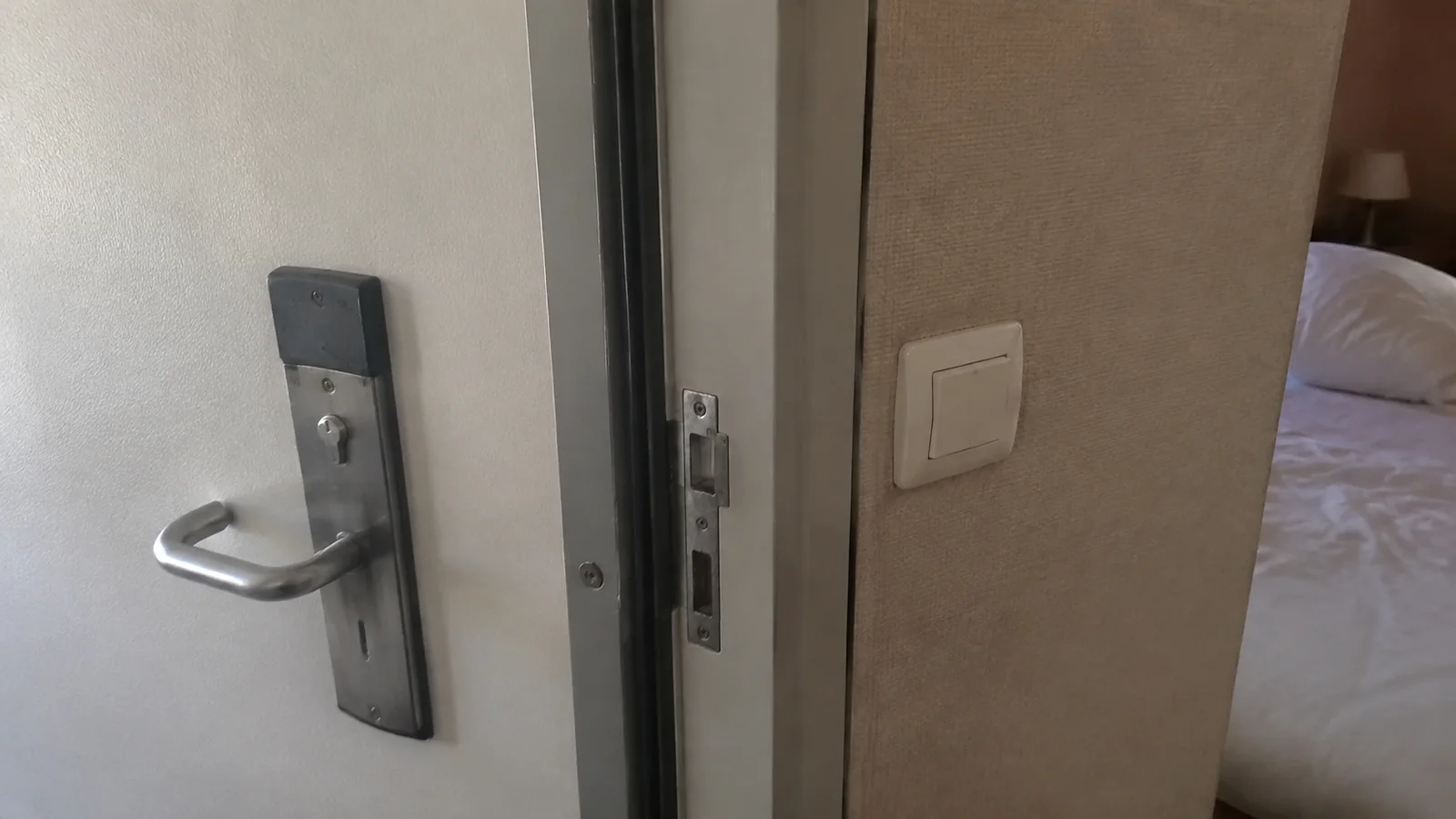
Connecting doors and multi-berth rooms
Connecting rooms are valuable for families, but the interior door may transmit voices differently from a solid wall. If your party does not need the connection and quiet is crucial, I would select a nonconnecting room at the same price.
Read the occupancy symbols carefully because some rooms use sofa beds or Pullman berths. Royal Caribbean’s Serenade room overview shows broad categories, while the exact plan tells you which features belong to one cabin.
A room that sleeps four is not necessarily comfortable for four adults with luggage. Ask where each bed opens, whether it blocks the sitting area, and how much floor space remains at night.
Guarantee cabins remove the choice that matters
A guarantee fare can save money, but the cruise line assigns the actual location within the booked terms. That is a weak fit for anyone with strict view, noise, motion, walking-distance, or connecting-door needs.
A nominal upgrade can move you higher, farther forward, or beneath a public deck. Use the steps in my general cabin-selection checklist to assess any assigned room promptly.
Accessible-cabin etiquette and planning
Royal Caribbean says all ships have accessible rooms for guests who require their mobility or disability features. The line’s accessibility information directs guests to its specialists for cabin and service questions.
Do not book an accessible room simply for extra floor area. The Guest Special Needs Form requires travelers to acknowledge their need for the accessible features, preserving scarce inventory for guests who rely on it.
Guests who need the room should verify the doorway, roll-in shower, transfer space, bed setup, balcony threshold, and scooter storage. The wheelchair symbol is essential, but it cannot describe every individual requirement.
Better Serenade cabins by traveler type
For a light sleeper
Choose Deck 8 or 9 with cabins above and below, no connecting symbol, and a short buffer from the Centrum or elevator lobby. Also avoid a large blank service area directly across the corridor when its use cannot be identified.
For a motion-sensitive traveler
Start lower and near midship, then remove any room above a venue that conflicts with sleep. A stable location is not useful if late-night music becomes the bigger concern.
For a scenery-first traveler
Confirm an unobstructed balcony or oceanview in writing and obtain a cabin-specific sightline when possible. Selected Deck 7 and 8 balconies can have a compromised downward angle even when much of the horizon remains visible.
For a walker with limited stamina
Choose the elevator bank serving the venues you will use most, then move a few doors down the corridor. Serenade is manageable, but repeated trips from a far-aft cabin to the theater or spa still add up.
My five-minute booking check
- Match the plan to sailings from May 5, 2026 through April 18, 2027.
- Search the cabin number and save its current category description.
- Inspect the same footprint one deck above and one deck below.
- Check obstruction, connection, occupancy, and accessibility symbols.
- Trace Deck 10 rooms against the pool, Solarium, and Windjammer.
- Trace Deck 7 rooms against the theater, casino, bars, and Safari Club.
- Use exact-cabin reports as clues rather than guarantees.
The bottom line
The Serenade of the Seas cabins to avoid are the cabins that make you pay for a compromise you dislike. Deck 10 overhead exposure, Deck 7 venue adjacency, partial balcony sightlines, far-end walks, and motion-sensitive positions can all be verified before payment.
I would choose a straightforward Deck 8 or 9 room with cabin buffers before chasing a higher category in a risky location. Use the dated plan, verify the exact number, and let your own sleep, view, and mobility needs decide the winner.