Oasis of the Seas Cabins to Avoid and Better Choices
Oasis of the Seas has very few objectively bad cabins, but plenty of rooms that are wrong for a particular traveler. The real traps are choosing an inside-facing balcony when you expected open ocean, sleeping under a busy deck, or paying more for a location that works against your sleep, mobility, or motion needs.
My quick Oasis of the Seas cabin verdict
I would start with five pressure points, then inspect the exact room rather than blacklisting a whole deck. Oasis is large enough that a difference of 100 yards can change both convenience and the space above your ceiling.
- Light sleepers: question Deck 14 rooms beneath active parts of Deck 15.
- Early sleepers: examine aft Boardwalk balconies facing the AquaTheater.
- Ocean-view shoppers: do not confuse Central Park or Boardwalk balconies with ocean balconies.
- Motion-sensitive guests: favor lower, midship rooms over the highest forward or far-aft choices.
- Long-walk avoiders: prioritize the correct elevator bank, not merely “midship.”
A possible noise risk is not a promise that a cabin will be noisy. Shows, cleaning schedules, sea conditions, neighboring guests, and individual sensitivity all change the experience.
Use the deck plan for your sailing date
Royal Caribbean’s official Oasis of the Seas deck plan currently labels its selected layout for sailings from April 18, 2026 through April 19, 2027. That date range matters because category codes and even venue names can change between plan versions.
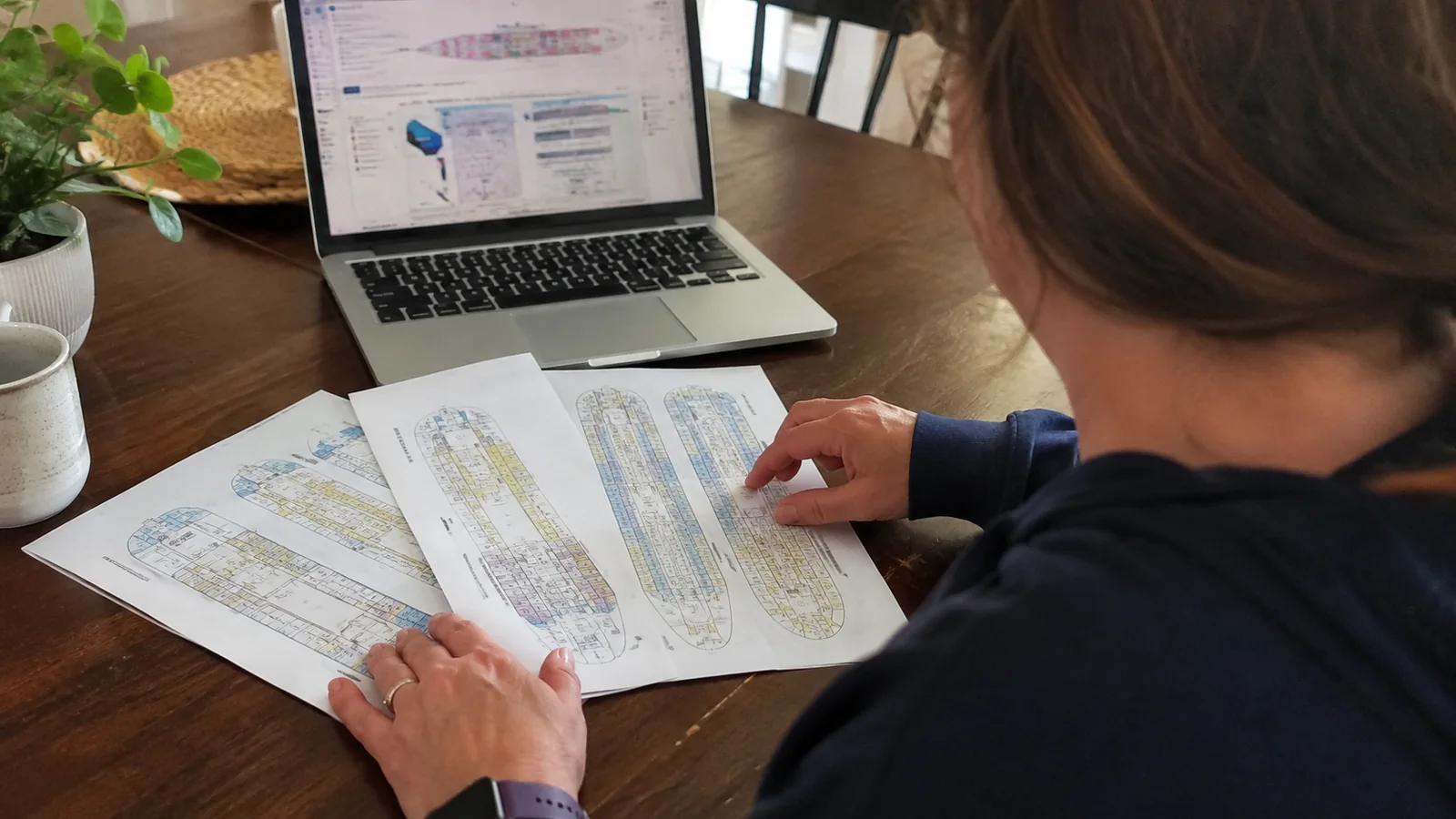
Search your cabin number on that plan, then compare the same horizontal position on the decks above and below. A current plan outranks an old blog diagram, a travel-agent inventory screen, or a cabin video whose upload date is unclear.
Royal Caribbean also warns on its printable plans that they may not reflect the latest changes. Save a screenshot of the cabin, legend, and surrounding decks when you book, then check again before final payment.
Deck 14 beneath the pool and sports deck
Deck 14 is the highest substantial cabin deck, while Deck 15 holds the main pools, whirlpools, outdoor seating, youth areas, and access toward sports spaces. That creates a defensible overhead-activity risk, particularly where a room’s ceiling aligns with open deck rather than another enclosed room.
Possible sounds include chairs moving, running feet, cleaning, music, and carts. The plan proves the vertical relationship, but it cannot tell you how much sound will reach one room on one sailing.
Who should skip it
I would be cautious with Deck 14 if you sleep late, nap daily, or wake easily from impact sounds. Families who want fast pool and youth-area access may reasonably value the same location.
A better quiet-room starting point is a midship room on Decks 9 through 12 with ordinary cabins directly above and below. Still inspect the corridor because an elevator lobby, service void, or connecting door can matter more than the deck number.
Aft Boardwalk balconies near the AquaTheater
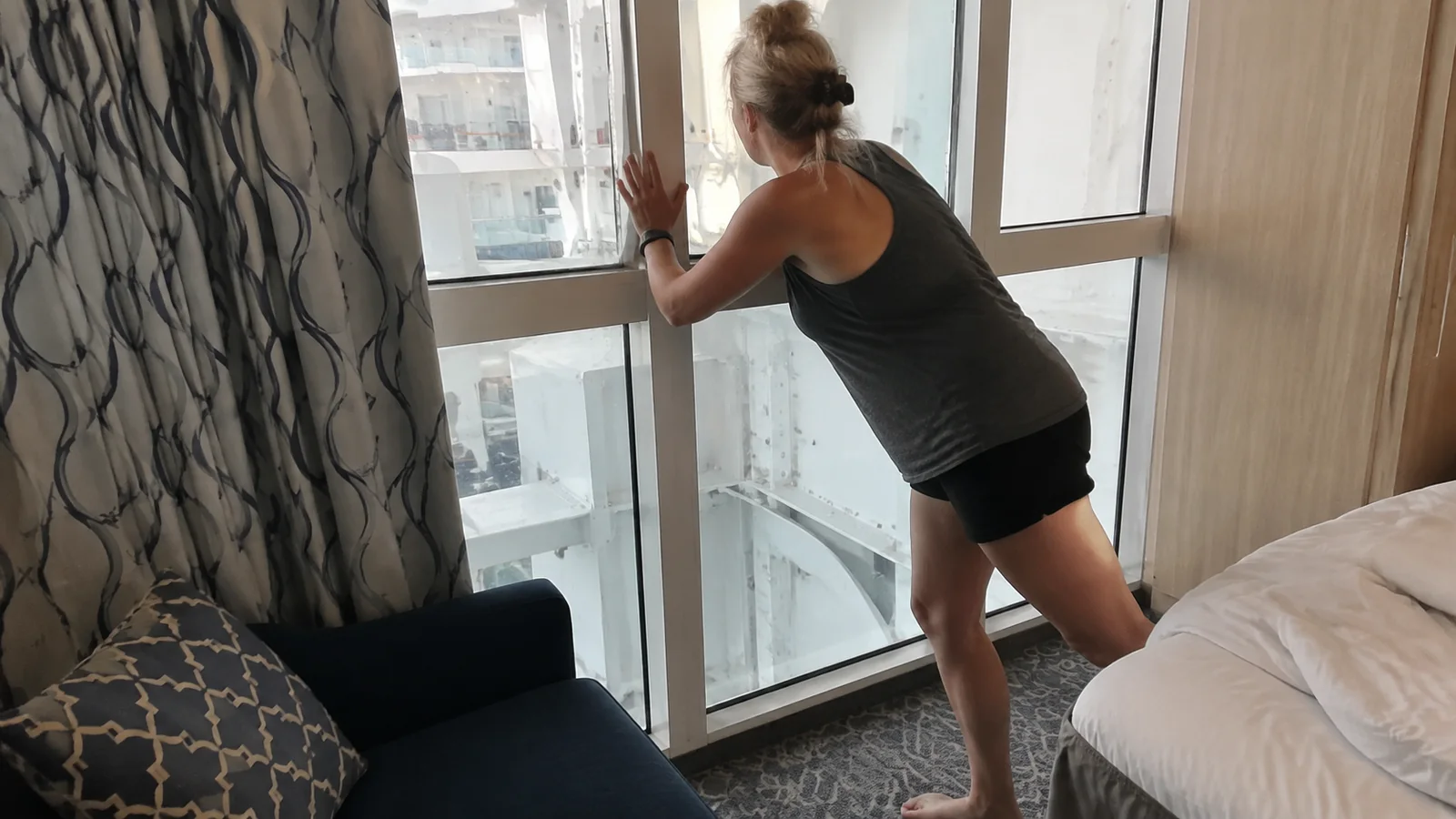
The Boardwalk runs aft toward the open-air AquaTheater, so the aft-most inward-facing balconies have a direct relationship with shows, rehearsals, screens, and crowd activity. Examples at the end of the Boardwalk stacks include 10329 and 10729, with corresponding 11329/11729, 12329/12729, and 14329/14729 positions shown on the current plan.
These numbers are useful location anchors, not a universal blacklist. Many travelers actively choose them for the theater sightline and neighborhood energy, while an early sleeper may hear more activity than desired.
Check whether the balcony is marketed as Boardwalk View and study its angle before assuming it gives a broad wake view. The farther forward you move within the neighborhood, the less direct the theater view may become, but the ocean glimpse also changes.
A better alternative
Choose an ocean-view balcony on a cabin-only portion of Deck 9, 10, 11, or 12 when a private horizon matters more than neighborhood theater. If you want Boardwalk atmosphere, moving several rooms forward from the aft end can reduce direct exposure without removing the neighborhood entirely.
Central Park balconies are not sea-view balconies
Central Park balconies face an interior open-air garden lined with restaurants and walkways. They provide outdoor space, daylight, and a distinctive view, but they do not provide the privacy, wind, or uninterrupted ocean outlook of an outward-facing balcony.
Opposite balconies can see across the neighborhood, so curtains matter when changing clothes or leaving lights on at night. Restaurant music, conversation, and programmed entertainment are possible, although the park is usually a different sound environment from the AquaTheater end of Boardwalk.
I would avoid this category if the reason for buying a balcony is watching arrivals, waves, or sunset from bed. I would consider it for a traveler who likes greenery and people-watching and has already accepted the reduced privacy.
Rooms beside elevator lobbies and neighborhood entrances
Oasis has forward and aft elevator banks rather than one magical central core. On a vessel whose scale is easier to understand through this cruise ship size comparison, a room close to the correct bank can save a surprising amount of walking.
A door facing the lobby or a neighborhood entrance may receive more passing conversation and cart traffic. That makes the exact corridor position more useful than a vague “midship” label.
Elevators themselves do not automatically create cabin noise. The practical concern is people gathering, children racing ahead, mobility devices turning, and groups returning after shows.
For convenience with a little separation, choose a room around the first corridor bend instead of the first door beside the lobby. Travelers with limited stamina should measure the route to dining, the gangway decks, and their most-used venues before chasing a theoretically quiet far-end room.
Connecting cabins when you do not need the door
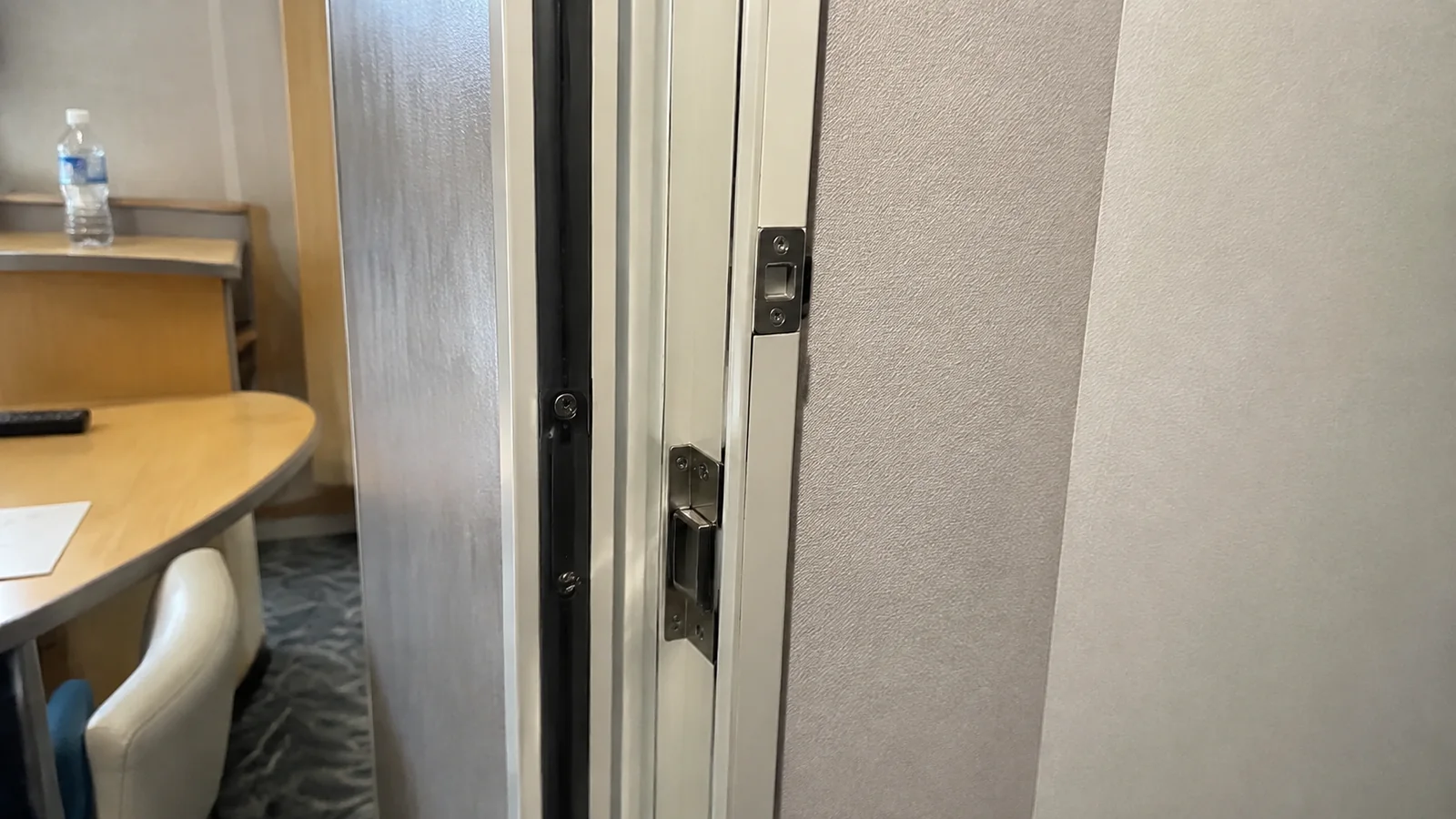
The deck-plan legend marks connecting rooms, and those pairs are excellent for families who need controlled access between cabins. A couple who does not need the door may prefer two solid walls because voices and television can transmit differently through the connecting panel.
This is a potential acoustic difference, not proof of a disturbance. Neighbor behavior and room layout often matter more, so do not pay a large premium solely to remove a connection symbol.
Also confirm occupancy symbols instead of assuming every sofa opens into a bed. Royal Caribbean’s room overview describes broad room types, but the exact plan legend and reservation screen determine the features of your cabin.
Far-forward and far-aft motion tradeoffs
No deck plan can promise a motion-free room. Wind, swell direction, ship speed, route, and weather affect movement, but a lower position near the ship’s center is the sensible first filter for a highly sensitive traveler.
I would question high forward rooms first because vertical movement can feel stronger away from the center. Far-aft cabins can also feel different movement and occasional vibration during maneuvering, although neither effect is guaranteed.
Do not choose an inside-facing balcony simply because it sits closer to the center without considering view and privacy. My best cruise room decision guide helps balance stability against the features you will actually use.
Lower-deck forward cabins and operational sounds
Lower forward cabins can be stable in some conditions, but arrivals and departures may bring short periods of mechanical sound or vibration from ship operations. That possibility is most relevant to light sleepers on port-intensive itineraries with early docking.
Operational noise is variable and does not make every forward room a bad buy. If sleeping through early arrival matters, a midship cabin several decks above the waterline is a safer compromise than going to either extreme.
Rooms near entertainment and late-night venues
Oasis places major public rooms across Decks 4 through 6, including the Royal Theater, Studio B, casino, bars, dining, promenade, and Boardwalk. Cabins close to venue entrances or sharing a vertical footprint deserve more scrutiny than rooms buffered by cabin corridors.
Trace the exact footprint rather than saying “Deck 6 is noisy.” Deck 6 includes both busy public neighborhoods and substantial cabin inventory, and the experience can change across a short corridor.
White space on a plan is not necessarily empty space. It may contain crew work areas, storage, machinery, or ventilation, so ask Royal Caribbean or your travel advisor what is known when a cabin borders a large unlabeled block.
Promenade-view rooms and privacy
Promenade-view rooms add an interior window over the Royal Promenade, but that window is not an ocean view. Guests across the promenade may have a sightline toward your room, and events below can create light and activity.
They can be an enjoyable value for parade-watchers who would otherwise book an inside cabin. Skip them if darkness, privacy without drawing curtains, or awareness of outside weather matters more than the interior view.
Guarantee cabins give up location control
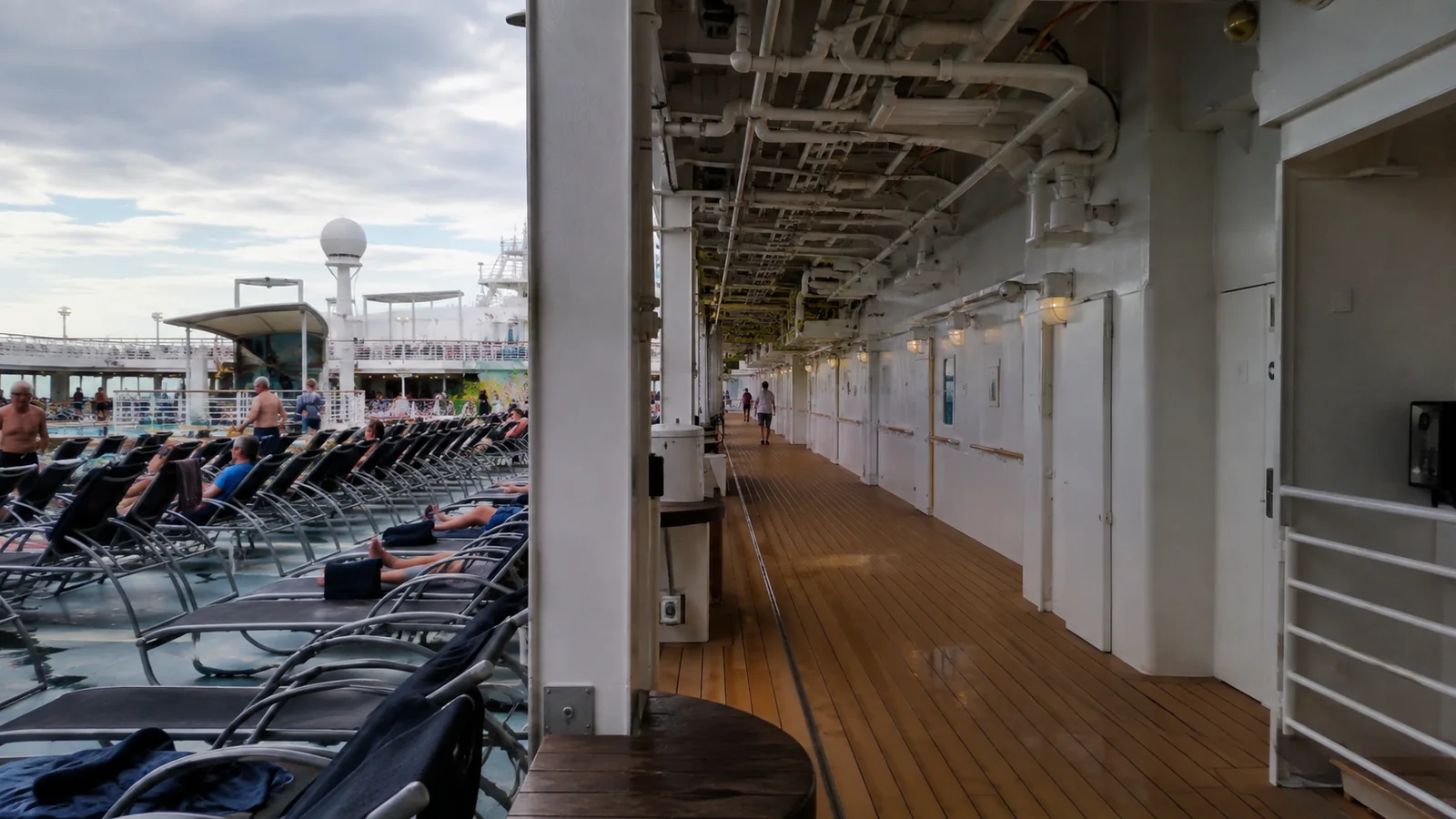
A guarantee rate can be attractive, but it is a poor match for strict needs about noise, walking distance, view type, or motion. The cruise line controls the eventual assignment within the booked terms, and a higher category does not necessarily mean a better personal location.
A neighborhood balcony can be an upgrade in price while still being wrong for someone expecting ocean. A higher deck can feel more prestigious while putting a light sleeper beneath outdoor activity.
If location is important, select a specific cabin and keep the booking confirmation. Use my broader cruise cabins to avoid checklist to inspect any later reassignment.
Accessible cabins are not bonus square footage
Royal Caribbean says every ship has rooms designed for guests whose disabilities require accessible features, and its accessibility information directs travelers to the Accessibility Department. Accessible symbols must be checked on the plan because inventory and categories are limited.
Do not reserve one simply because the wider turning space looks appealing. Royal Caribbean requires guests to acknowledge the need through its Guest Special Needs Form, and these rooms should remain available to travelers who need their roll-in shower, wider doorway, or maneuvering space.
Travelers who do need an accessible cabin should discuss bed height, bathroom setup, balcony threshold, equipment, and route to the muster station before paying. A symbol answers only the first question, not every functional need.
Better Oasis cabin choices by traveler type
For a light sleeper
Start with a nonconnecting room on Decks 9 through 12, buffered by cabins above and below and set around a corner from an elevator bank. Avoid direct alignment with the AquaTheater, open pool deck, and large unlabeled service areas.
For a motion-sensitive traveler
Begin lower and close to midship, then check what surrounds the room. Pack your usual preventive strategy because no cabin number can control sea conditions.
For an ocean-view purist
Book a category explicitly described as an ocean-view balcony, then confirm its outward position on the plan. Central Park, Boardwalk, and Promenade views are genuinely different products, not cheaper versions of the same view.
For a family
Connecting rooms and locations near youth spaces may be worth accepting extra traffic. Verify the exact bed symbols, maximum occupancy, bathroom count, and whether everyone can sleep without folding the room away each morning.
My five-minute booking check
- Match the plan to the April 18, 2026 through April 19, 2027 sailing window.
- Search the exact cabin number and confirm the view category in writing.
- Compare the identical footprint on the decks above and below.
- Check connecting, occupancy, accessible, and obstructed-view symbols.
- Measure the walk to the useful elevator bank, not only the ship’s center.
- Look for pool deck, AquaTheater, Royal Promenade, casino, dining, and service-space adjacency.
- Treat reviews as clues from one sailing, never as guarantees.
The bottom line
The Oasis of the Seas cabins to avoid are the ones whose verified location conflicts with your priorities. Deck 14 overhead exposure, aft Boardwalk show activity, interior-facing balcony privacy, long walks, connecting doors, and motion-sensitive extremes are real planning issues, but their importance is personal.
I would choose an ordinary cabin in the right location over a flashy category in the wrong neighborhood. Confirm the current Royal Caribbean plan, inspect three decks, and pay for the view and access you actually want.