Road Tripping in Snow: 25 Winter Driving Tips
A snowy road trip can be gorgeous, but fresh powder does not make an ordinary drive prettier and harmless. It changes traction, visibility, stopping distance, fuel planning, and sometimes the sensible answer is to postpone the trip.
These winter road trip tips start with that decision, then cover the car, route, driving technique, emergency gear, and the moment conditions stop being worth the risk.
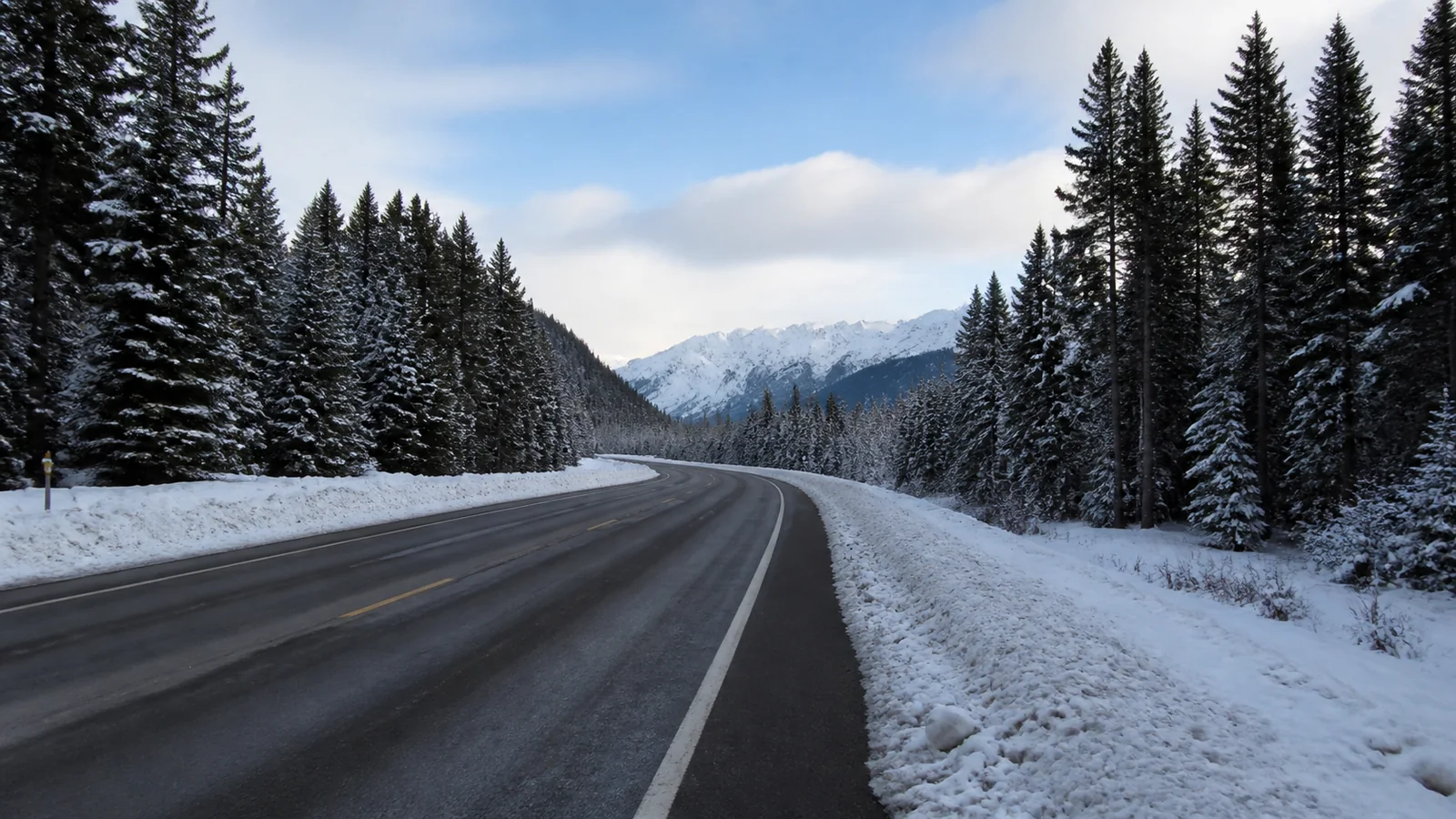
Before You Drive: Make the Go-or-No-Go Decision
1. Read the warning, not just the snow total
A forecast of 3 inches says less than travelers think. Timing, ice, wind, pavement temperature, mountain exposure, and whether plows can keep up matter just as much.
Check the National Weather Service forecast along your whole route, not only at the destination. Its winter alert definitions make the decision clearer: a watch means prepare, while warnings call for action and can mean delaying travel until conditions improve.
2. Treat freezing rain as a stronger stop sign
Snow can be challenging, but ice strips away the margin that even a careful driver expects. If freezing rain or an ice storm is forecast, moving the hotel night is usually the better travel skill.
Black ice can look like wet pavement and commonly forms when melted snow or rain refreezes overnight. The National Weather Service warns that it is especially prevalent in early morning, so a dawn start is not automatically the safe shortcut.
3. Check road conditions twice
Look at the state transportation department’s 511 map the evening before departure and again immediately before leaving. Closures, traction restrictions, crashes, and plow activity can change after the weather app last refreshed.
Never let navigation software route you around a closure onto an unmaintained road. Download an offline map, mark two credible stopping towns, and accept that the only safe alternate may be a hotel.
4. Choose the easy road, not the shortest road
A winter route should favor divided highways, lower passes, regular services, and roads maintained around the clock. Saving 25 miles loses its appeal when the shortcut is shaded, steep, remote, or outside reliable cell coverage.
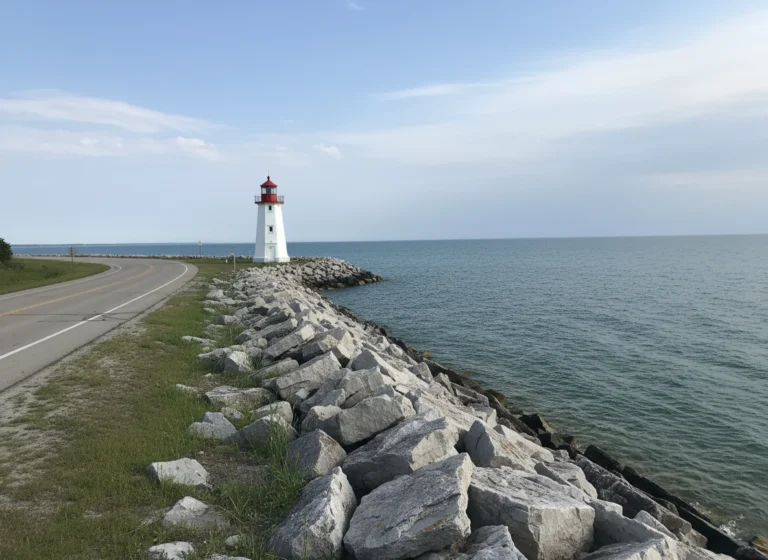
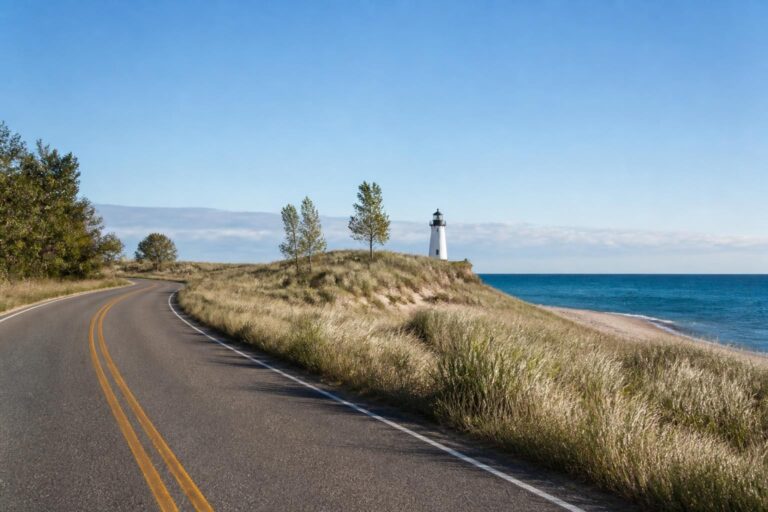
This matters on scenic routes such as a Great Lakes road trip, where lake-effect snow can hit one corridor much harder than another. Keep the beautiful backroad for a clear day.
5. Build a weather day into the trip
Reserve lodging with a workable cancellation policy and avoid a chain of nonrefundable bookings. A spare day removes the pressure to drive because tonight’s room, attraction ticket, or flight feels too expensive to miss.
Tell someone your route, planned stops, vehicle description, and expected arrival time. Update them if you divert rather than assuming a location-sharing app will work everywhere.
Prepare the Vehicle Before Snow Starts
6. Start with tires, not all-wheel drive
All-wheel drive can help a vehicle accelerate, but it does not repeal the limits of tire grip when braking or turning. Proper winter tires can be a meaningful advantage in sustained cold and snow, while worn tires make every drivetrain less capable.
Check tread, sidewalls, and cold tire pressure before a long trip, using the pressure on the driver-door label rather than the tire’s sidewall maximum. NHTSA notes that pressure falls as outside temperature drops and recommends inspecting tires at least monthly and before long drives.
7. Know your chain or traction-device rules
Chain laws vary by state, road, vehicle type, tire, and current restriction. Some mountain corridors can require motorists to carry or install approved traction devices even when the vehicle has four-wheel drive.
Check every state’s official transportation page on your route, then confirm the rental agreement and owner’s manual. Colorado’s winter driving page is a useful example of how one state separates passenger-vehicle traction rules, chain laws, and live road conditions.
Buy the correct size and practice installing the devices at home with gloves on. Follow the device maker’s speed limit and instructions, remove chains when required, and never discover the fit problem on a dark shoulder.
8. Test the battery and cold-weather systems
Have a mechanic check the battery and charging system if either is questionable, because cold weather reduces battery power while the engine needs more power to start. Test the heater, defrosters, lights, hazard flashers, brakes, and windshield wipers.
Fill with winter-rated washer fluid suited to the expected temperature, and confirm the coolant matches the manufacturer’s specification. Replace weak wiper blades before the trip rather than after road spray turns the windshield opaque.
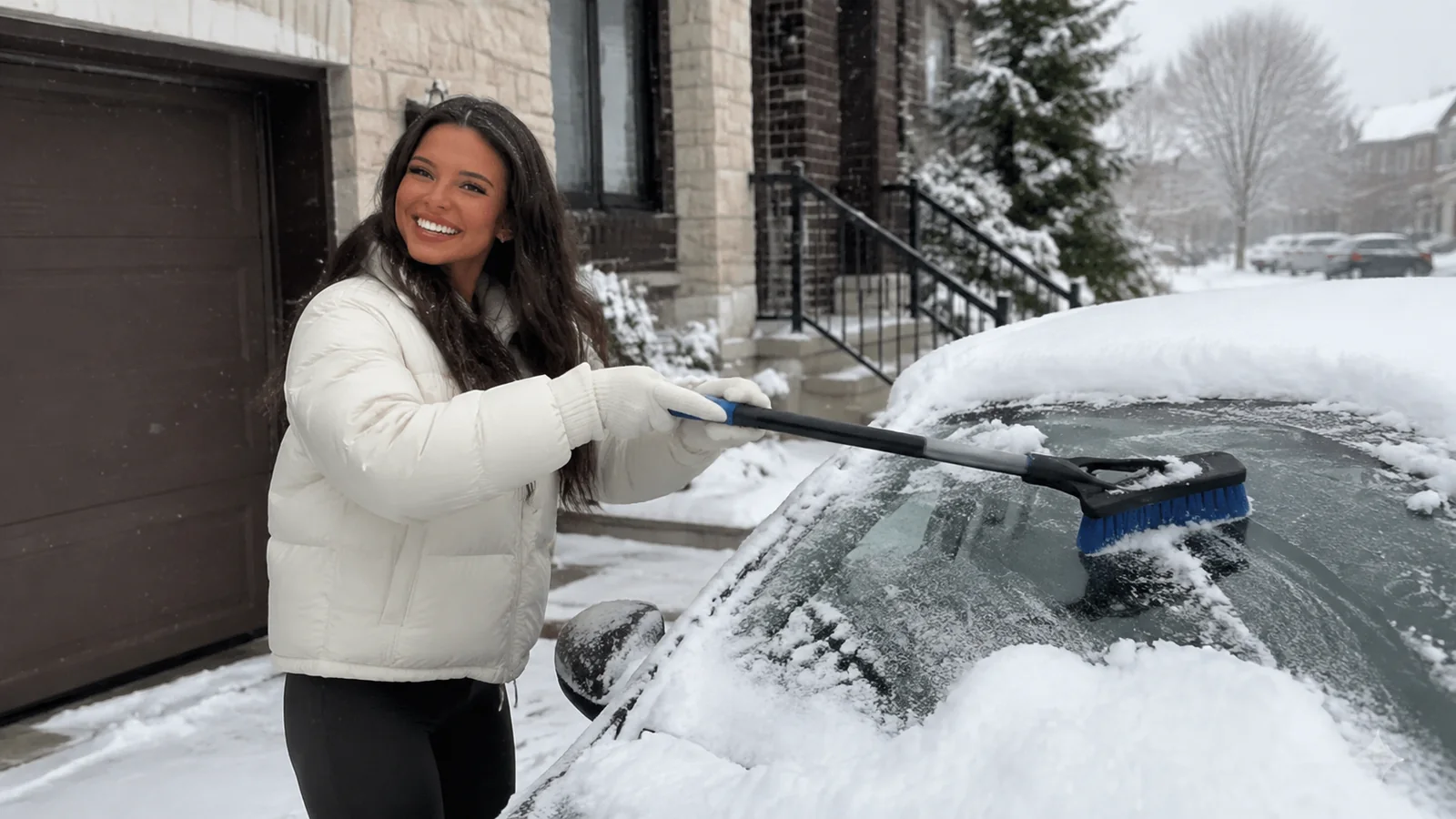
9. Clear the whole vehicle
Remove snow and ice from every window, mirror, light, license plate, camera, sensor, and the roof before moving. A clean peephole in the windshield is not adequate visibility, and roof snow can slide forward under braking or blow into traffic.
Pack a long snow brush and sturdy scraper where they remain reachable. A trunk tool is useless when the trunk lid is frozen or buried.
10. Keep fuel or charge in reserve
Begin with a nearly full gas tank and refuel earlier than you would in summer. Detours, traffic queues, idling, headwinds, and a closed rural station can all consume the comfortable buffer.
Cold can reduce electric-vehicle range, and cabin heat adds demand. Charge early, precondition while plugged in when the vehicle supports it, plan more than one charging option, and arrive with enough reserve to handle a broken charger or closed highway.
Pack a Winter Roadside Kit That Matches the Route
11. Pack for hours, not a quick rescue
A highway can close behind a crash or snow squall even when your car is running perfectly. Pack as though everyone may wait several cold hours without a store, tow truck, or usable restroom.
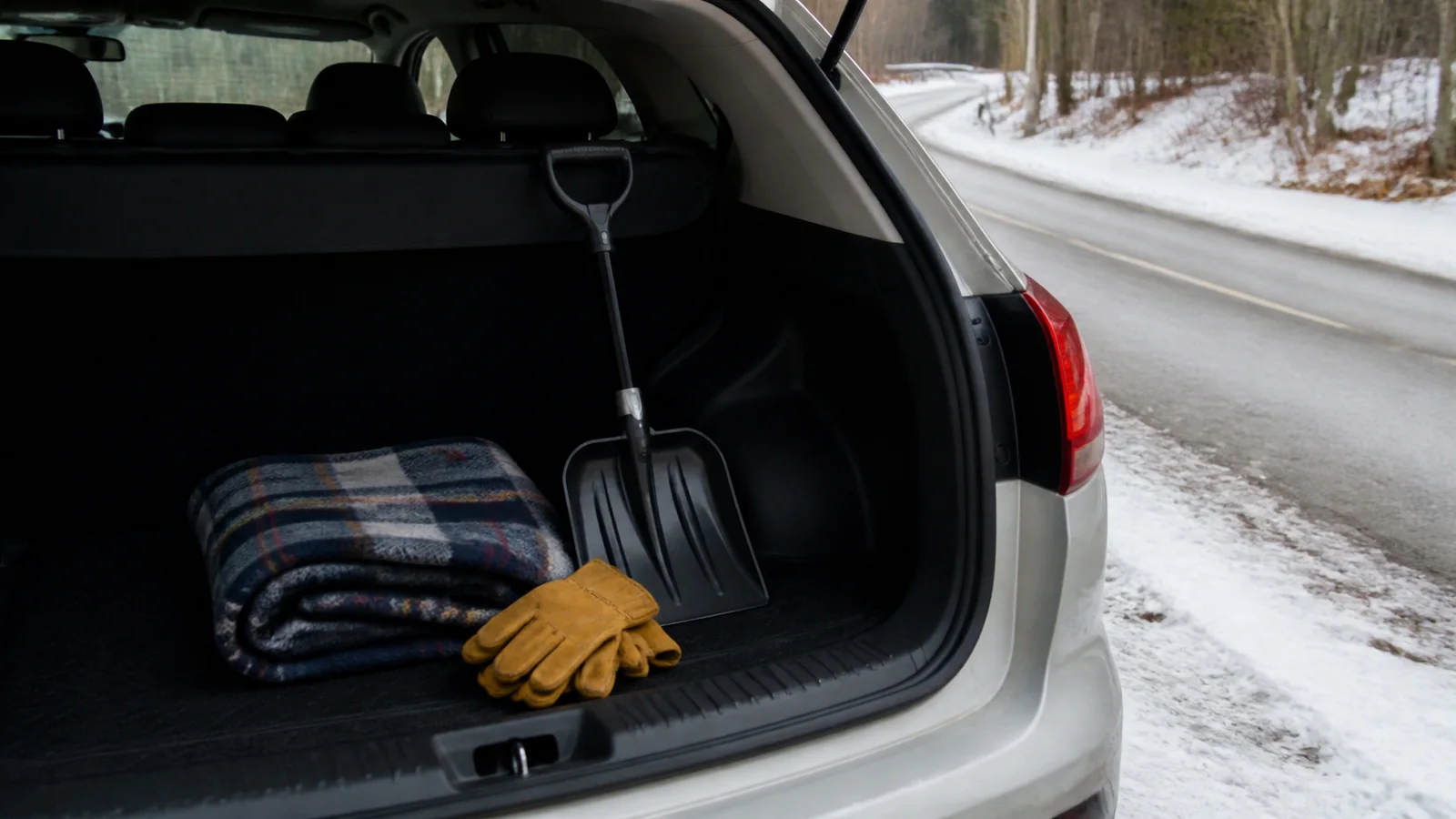
NHTSA’s winter kit includes a shovel, ice scraper, abrasive material, jumper cables, flashlight, warning devices, first aid, blankets, phone charger, water, food, and necessary medicine. Add these practical items:
- Warm hats, gloves, dry socks, boots, and insulated layers for every person
- A sleeping bag or extra blanket for each row of passengers
- A power bank, charging cables, and flashlight batteries
- A compact shovel, traction material, and recovery points identified in the manual
- High-calorie snacks and water protected from freezing
- First-aid supplies, essential prescriptions, and spare eyeglasses
- Reflective markers, a bright cloth, paper maps, and a pencil
- Paper towels, trash bags, hand warmers, and basic hygiene supplies
Keep coats and boots inside the cabin rather than beneath all the luggage. If the car becomes disabled, opening a snow-packed hatch may be difficult and outside exposure starts immediately.
12. Adapt the kit for children and pets
Bring more food, water, medication, and warmth than the planned drive requires. For children in car seats, NHTSA advises thin warm layers beneath a properly fitted harness, with a coat or blanket placed over the secured child rather than bulky clothing under the straps.
Pets need a secure carrier or restraint, leash, water, food, cleanup supplies, and a warm layer appropriate to the animal. Never plan to leave a child or pet waiting alone in a cold vehicle while the adults seek help.
How to Drive When the Road Turns White
13. Slow every input down
Accelerate, steer, and brake gently enough that the tires are asked to do one job at a time. Sudden corrections can turn a small slide into a much larger one.
Increase following distance until you have ample room to stop without a panic maneuver. Posted speed limits describe favorable conditions, not the correct speed in snow, glare ice, or poor visibility.
14. Turn off cruise control
Cruise control is the wrong tool when traction is uncertain because the driver needs direct, continuous control of acceleration. Driver-assistance features also have limits when lane markings and sensors are obscured, so know what the owner’s manual says and stay fully engaged.
15. Look for ice where the road changes
Bridges, overpasses, shaded curves, untreated ramps, and low spots can freeze before the open highway. Ease off early and make no abrupt steering or braking input when a surface looks glossy or the outside temperature hovers near freezing.
Do not treat a four-wheel-drive vehicle, studded tire, or electronic stability system as permission to maintain dry-road speed. Technology helps, but grip remains finite.
16. Give snowplows room
Plows make wide turns, stop, overlap lanes, and can throw snow or treatment material across the roadway. NHTSA advises drivers not to crowd or travel beside them, so stay well back and pass only when it is legal, clearly visible, and genuinely necessary.
17. Use low beams in falling snow
Turn on headlights so the front and rear of the car are illuminated, even if daytime running lights activate automatically. Low beams generally create less glare from snow and fog than high beams.
If visibility collapses in a snow squall, slow smoothly and avoid stopping in a travel lane. Exit or pull completely into a safe legal area when possible, then wait for conditions to improve.
18. Approach hills with a plan
Build only the modest momentum needed before an uphill grade, then use steady power and avoid stopping midway when possible. Crest slowly because traffic, ice, or a stopped vehicle may be hidden on the far side.
Descend in a lower gear if the manufacturer recommends it, keeping speed controlled before the slope steepens. Riding the brakes or making a last-second downshift invites trouble.
19. If the vehicle skids, stay measured
Lift off the accelerator, look where you want to go, and steer smoothly without overcorrecting. Braking technique depends on the vehicle, so know the manual before travel: NHTSA advises firm, continuous pressure with antilock brakes, while a vehicle without ABS may require different input if wheels lock.
If traction does not return promptly, the trip has already given you useful information. Stop in the next safe place rather than proving that the next 100 miles might be better.
20. Never drive tired to beat a storm
Fatigue and winter conditions multiply each other’s risks. Swap drivers, stop early, or take the hotel before concentration fades, even if the forecast makes continuing feel urgent.
For more general planning habits around breaks, documents, backup money, and communication, the site’s practical travel tips pair well with this winter checklist.
When to Turn Around or Stop
21. Use clear stop conditions
Decide before departure what will end the driving day: a road closure, chain requirement you cannot meet, freezing rain, repeated traction loss, worsening whiteout, driver fatigue, or the fuel reserve dropping below your buffer. A preset rule is easier to follow than an emotional decision beside the highway.
22. Do not race a closing pass
If officials announce a closure or recommend delaying travel, obey the restriction and find a safe stopping point. Do not use local residential roads, forest roads, or a navigation-app detour to get around a gate.
This flexible thinking also improves fair-weather itineraries such as a Pacific Coast road trip, where landslides, coastal storms, and seasonal road work can force major reroutes. The route is part of the plan, not a promise.
If You Become Stranded
23. Stay with the vehicle in most situations
Call 911 for an immediate emergency and roadside assistance for a mechanical problem, then share an exact location if service allows. Unless a clearly safe occupied building is very close and officials direct otherwise, the vehicle is easier for rescuers to find and offers shelter.
NHTSA says stranded travelers should stay with the car, avoid overexertion, and make the vehicle visible with bright markers and the interior dome light. Put on warm layers before you feel cold and keep everyone together.
24. Prevent carbon monoxide buildup
Clear snow from the exhaust pipe and continue checking that it remains open. Run the engine only sporadically, just long enough to maintain warmth, and do not run it for extended periods with the windows closed or in an enclosed space.
Do not sleep with the engine running. Carbon monoxide has no useful warning smell, so exhaust safety is as important as conserving fuel.
25. Signal without draining the battery
Tie a bright cloth to an antenna or window, turn on the dome light when rescuers are nearby, and use hazard lights strategically. Keep the phone warm against the body, switch on low-power mode, and send brief location updates rather than watching video while you wait.

A Simple Winter Road Trip Timeline
One week before: Service questionable systems, inspect tires, verify traction-device rules, practice installing chains, and assemble the roadside kit.
Two days before: Recheck the route forecast, road alerts, cancellation deadlines, fuel or charging stops, and backup towns. Move the trip if the risk is already clear.
The night before: Charge devices, download maps, fill the tank or battery, place warm gear in the cabin, and send the route to your contact.
At departure: Check weather and 511 again, clear the vehicle completely, inspect tires, and confirm everyone has suitable clothing. If conditions no longer match the plan, do not leave just because the bags are packed.
On the road: Stop every couple of hours to check weather, tires, lights, driver alertness, and the remaining safety buffer. A winter road trip succeeds when everyone arrives safely, even if the route gets shorter along the way.