Big Island Surfing Guide: Where Beginners Should Start
The Big Island can deliver a wonderful first surf lesson and serious reef waves, but the same beach is not right for both surfers. Beginners should book a permitted instructor who chooses the lesson zone for that morning, while experienced visitors need to match swell, wind, tide, reef, access, and crowd level before paddling out.
The quick answer by skill level
- First time: Book a permitted Kahaluʻu Bay lesson when the operator confirms conditions suit beginners.
- Novice after several lessons: Keep working with an instructor rather than renting a board and chasing named breaks.
- Intermediate: Ask a reputable local shop or coach to identify a suitable break for the day’s exact swell.
- Advanced: Consider established reef and point breaks only after observing the lineup, entry, exit, current, and local use.
- Non-surfer: Watch from a safe developed park during suitable conditions and never stand on wet rock near breaking waves.
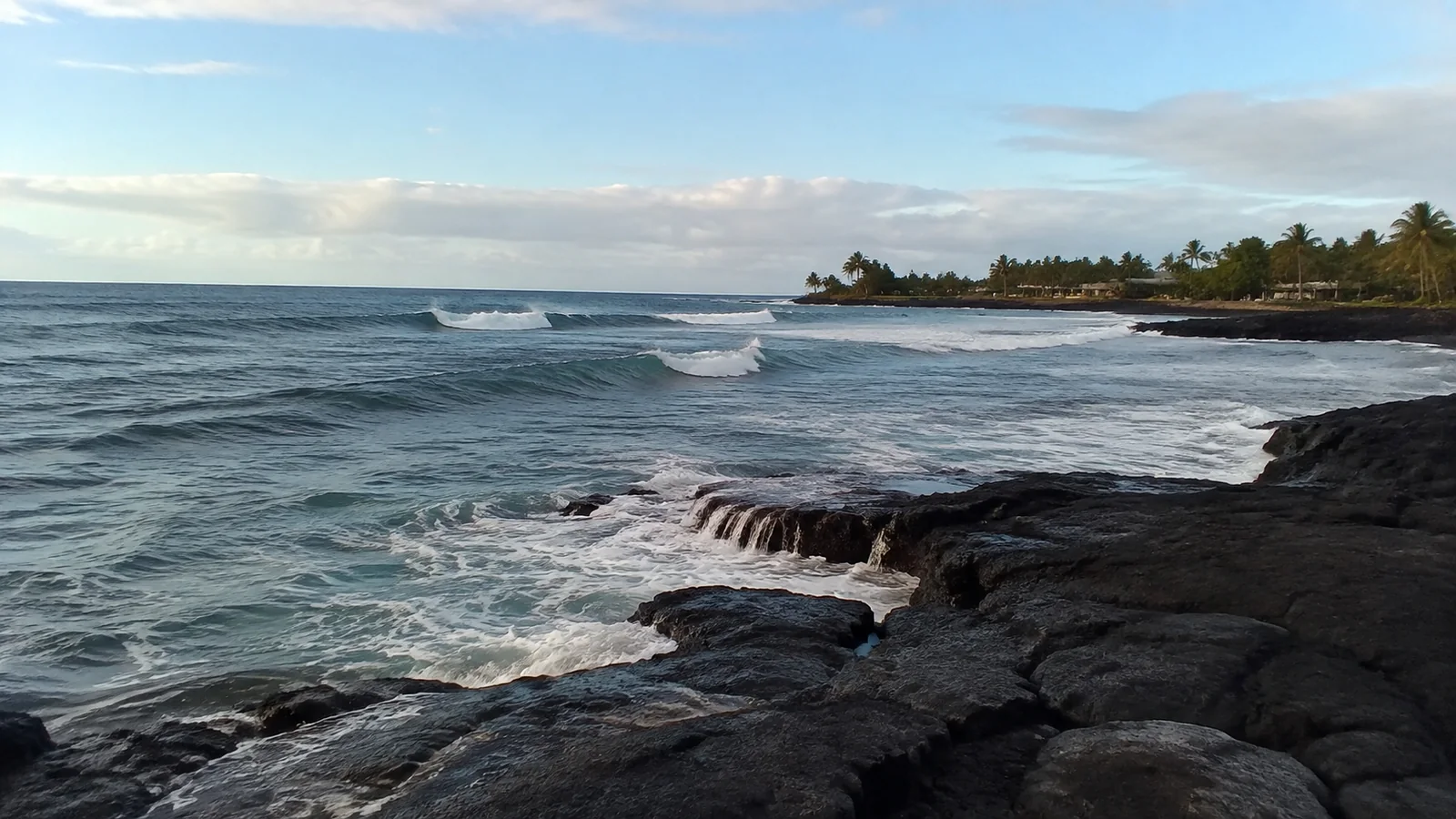
The Big Island does not have one dependable beginner beach that works every day. Lava reef, exposed coastlines, variable sand, river runoff, and long-period swells can transform a familiar location between breakfast and lunch.
Best place for a first lesson: Kahaluʻu Bay
Kahaluʻu Bay on the Kona side has a defined area for commercial surf instruction and access to professional lessons. That makes it the logical place to start, but only when a permitted operator assesses the day as appropriate.
State rules limit commercial instruction to Zone A and require the activity to operate through permitted providers. The Hawaiʻi boating division’s Kahaluʻu rules also cap the number of students in the water for each permitted operator, so verify that the school holds current authorization.
The bay contains living reef and supports snorkeling, wildlife, cultural use, and other recreation alongside surf lessons. Stay in the assigned lesson area, listen to the beach and water briefing, and never stand on coral to rest.
A beginner lesson should cover paddling, pop-up position, board control, falling safely, right of way, the designated inside area, and what to do after separation from the board. If an operator skips conditions and safety to rush directly into photos, choose another company.
Big Island surf spots, with honest limits
A named break is not a promise of public parking, beginner water, or a welcoming gap in the lineup. Treat this list as a screening tool, then use current official conditions and direct local instruction to make the final decision.
Honoliʻi Beach Park
Honoliʻi is the most established surf-watching and surfing park near Hilo. Hawaiʻi County describes a black-sand and pebble cove with hazardous waves and currents, a steep stair or ramp approach, limited parking, and Ocean Safety staffing.
The current county park listing should control lifeguard hours and facilities. Ask the lifeguard about the current, river influence, entry, and safe viewing area before deciding whether your experience matches the break.
Honoliʻi can offer both lefts and rights, but a surfable wave is not necessarily a beginner wave. New surfers should use a local lesson rather than assume the smaller-looking inside is safe.

Kohanaiki Beach Park and Pine Trees
Pine Trees is a popular reef break accessed through the Kohanaiki area north of Kailua-Kona. Its reputation and public beach-park access do not make it a learn-to-surf beach, and shallow reef, crowding, wind, tide, and swell direction all matter.
Intermediate and advanced surfers should confirm legal parking, park hours, entry, exit, and the lineup before unloading boards. Do not drive beyond signs, park on vegetation, or assume a resort or private road provides public access.
For families, the shore can still support a picnic or surf-watching stop when the park is open. Keep children away from reef shelves and the waterline during high surf.
Banyans
Banyans is a respected Kona reef break better suited to experienced surfers who understand fast takeoffs, shallow hazards, crowded priority, and controlled entry and exit. It is not a casual vacation rental-board stop.
Parking and shoreline space are limited, and the neighborhood deserves quiet, lawful behavior. If you cannot identify the takeoff zone and exit by watching from land, that uncertainty is the reason to surf elsewhere.
Lymans and Honl’s
Lymans and Honl’s are established Kona-area names, but both require daily judgment around reef, exposure, shoreline access, and other surfers. Neither should be presented as a universal beginner alternative to a lesson zone.
Observe before entering, use only lawful public access, and leave driveways and narrow roads clear. A smaller forecast does not remove the consequences of falling over shallow lava or missing a tight exit.
Laʻaloa, often called Magic Sands
Laʻaloa can change character dramatically as surf moves sand on and off the beach. Strong shore break and powerful sets can make it better for watching than learning, even when skilled bodyboarders or surfers are in the water.
Use the staffed beach area and follow the lifeguard’s direction. Do not copy someone entering from a rock or treat visible sand as evidence that the next set will be gentle.
Pohoiki and Isaac Hale Beach Park
The 2018 eruption reshaped the shoreline and damaged regional access, while road-recovery work has continued through 2026. Pohoiki is therefore a current-conditions destination, not a dependable surf anchor for a short visit.
Check county road, park, construction, and Civil Defense updates before driving into lower Puna. Stay out of work zones and do not expect a past video to show today’s road, parking, warm ponds, shoreline, or safe water entry.
If open and surfable, the site still calls for strong local knowledge rather than experimentation. Beginners should keep their lesson near Kona or Hilo instead of making a long drive for uncertain conditions.
When is surf season on the Big Island?
North Pacific storms generally send larger north and northwest swells during the cooler months, while Southern Hemisphere swells more often energize south-facing shores in spring and summer. East-facing coasts can receive trade-wind swell across much of the year.
Those patterns describe possible swell sources, not guaranteed surf at a specific break. Island shape, shadowing from other islands, reef depth, swell period, local wind, tide, and bathymetry decide what actually reaches the lineup.
Beginners should not chase a season advertised as “best.” Book enough trip flexibility for the instructor to select the safer morning, and be willing to replace surfing with another activity if conditions exceed the lesson threshold.
Read the forecast before choosing a coast
Start with the National Weather Service Hawaiʻi surf forecast, which separates Big Island windward, southeast, leeward, west, and south exposures. It reports surf as trough-to-crest face height and warns that larger waves can arrive periodically beyond the listed range.
Then check Hawaii Beach Safety for current beach hazards supplied by lifeguard and fire departments. Finally, ask the on-duty lifeguard or instructor because a regional number cannot reveal the safest entry at one reef.
Pay attention to five variables rather than one attractive wave-height icon:
- Swell direction: Determines which coast and reef receive energy.
- Swell period: Longer-period energy can create more powerful, widely spaced sets.
- Wind: Changes surface quality, drift, and the difficulty of returning.
- Tide: Changes reef depth, current, and access at many breaks.
- Advisories: High surf, strong wind, thunderstorms, runoff, and coastal flooding can cancel the plan.
A sunny sky is not an ocean forecast. Rip currents and dangerous waves can exist on a beautiful day, and stronger surf usually increases current strength within and near the surf zone.
Lesson or board rental?
Take a lesson if you have never surfed, cannot consistently paddle and pop up, do not understand priority, or have not surfed reef. Renting alone saves money only when you already possess the judgment the instructor would provide.
Ask a prospective school these questions before paying:
- Are you currently permitted to teach in this exact lesson zone?
- What student-to-instructor ratio will be in the water?
- How do you change or cancel when surf is unsuitable?
- Does the lesson include a soft-top board, leash, rash guard, and reef briefing?
- Where do non-swimming family members wait safely?
- What age, swimming ability, and health disclosures do you require?
For an independent rental, tell the shop your honest skill, height, weight, and intended break. Confirm board volume, fin type, leash condition, ding policy, transport straps, theft responsibility, return time, and whether the agreement restricts certain roads or locations.
A soft-top longboard adds stability for learning but does not make reef, current, or collision harmless. Never tie a board through a car window or rely on an improvised strap for a highway drive.
A five-day surf-friendly Kona plan
On day one, settle in, check three days of forecasts, and visit the lesson beach from land. On day two, take the morning lesson and keep the afternoon flexible for rest, food, or an easy walk.
Use day three as the weather backup rather than prepaying a second independent surf session. If the first lesson went well, ask the same instructor whether another coached session will build skill or whether the current swell favors staying out.
Day four can focus on a non-surf experience such as Hawaiʻi Volcanoes National Park, coffee country, or a cultural site. The Big Island versus Oʻahu comparison helps decide whether this road-trip style suits your larger vacation.
Save day five for the second lesson, a calm-water activity under professional guidance, or watching advanced surfers from a safe park. This sequence gives the ocean two chances without making the whole trip depend on one forecast.
Surf etiquette for visitors
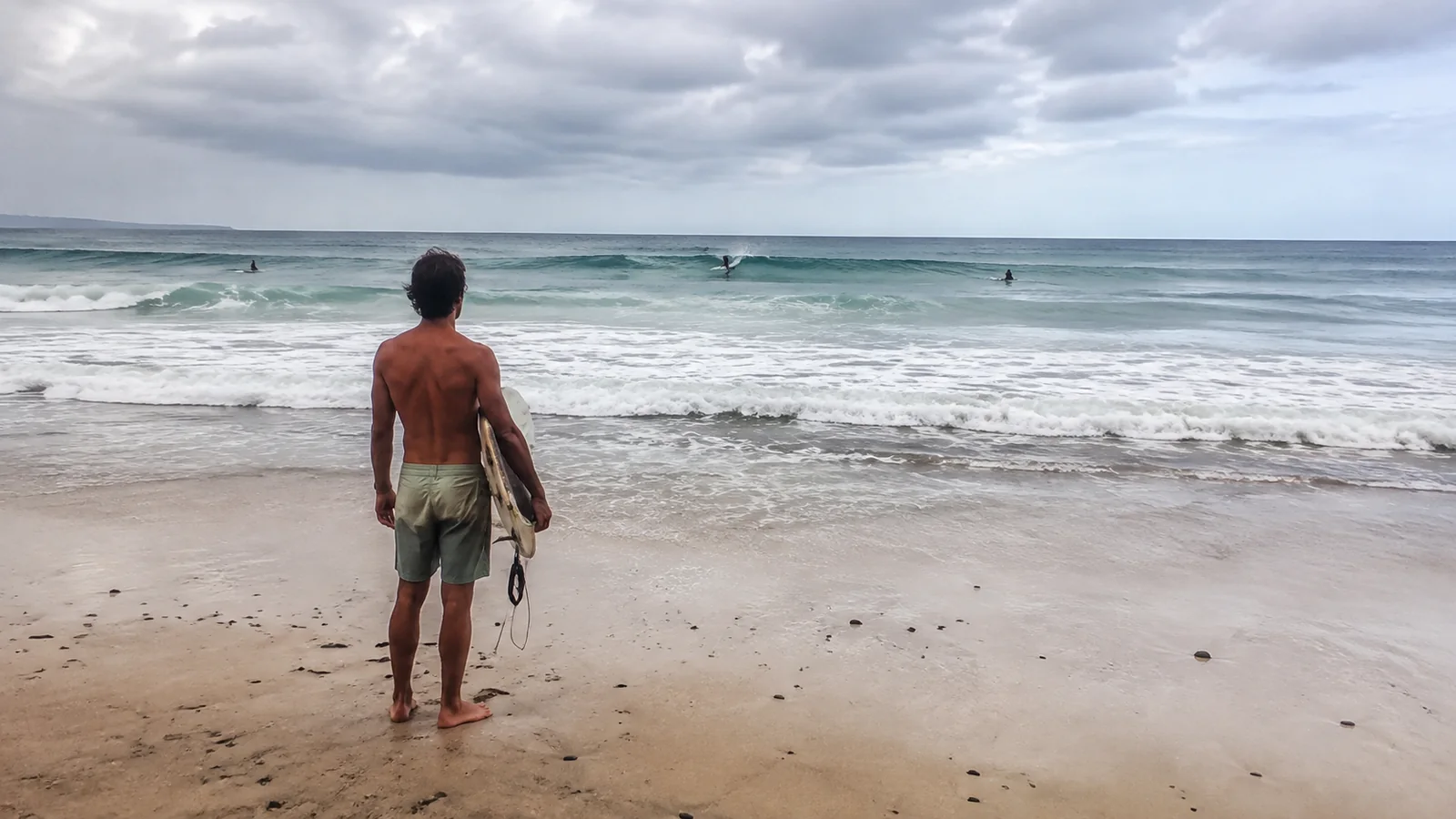
Watch the lineup before paddling out and understand where surfers enter, wait, take off, and exit. The surfer closest to the breaking peak generally has priority, and dropping in or paddling directly through the riding line creates collision risk.
Do not assume local surfers owe visitors a secret spot, coaching, or a turn in a crowded takeoff zone. Be patient, control your board, apologize when you make a mistake, and leave when the crowd exceeds your ability.
Park legally, keep voices down near homes, use public restrooms, pack out waste, and never rinse sandy equipment in a private yard. A respectful session begins before the board touches water.
Protect the reef and wildlife
Hawaiʻi law prohibits taking, breaking, or damaging stony coral and live rock. The state coral rules reflect how slowly reef can recover, so never stand, kick, push off, or drag a fin across living structure.
Give turtles, monk seals, dolphins, and other wildlife space, and never touch, chase, feed, or surround an animal. Wildlife appearing near the lineup does not create permission for a closer photo.
If manta viewing is also on the trip, treat it as a separate guided activity with different equipment and risks. The Big Island manta night guide separates snorkeling from certified diving and explains why operator standards matter.
Safety checklist before paddling out
- Check the official surf forecast, local hazards, tide, wind, rain, and advisories.
- Choose a lifeguarded beach and speak with the lifeguard when available.
- Watch several full wave sets and identify the current, entry, exit, and shallow reef.
- Use a board suited to your ability and inspect the leash, fins, and deck.
- Surf with a capable partner and tell someone ashore your return time.
- Protect skin from sun and abrasion, hydrate, and stop before fatigue controls decisions.
- Leave immediately for thunder, rapidly rising surf, brown runoff, injury, or lost board control.
If caught in a rip current, conserve energy, avoid fighting directly against the flow, and signal for help. Prevention is better, so choose a lifeguarded location and ask about the current before entering.
Do not surf after drinking alcohol or when illness, medication, poor sleep, or an injury affects coordination. A prepaid rental is never a reason to enter unsuitable water.
What to do when the surf is too big
Watch from a developed viewpoint well above the wash zone, visit a cultural site, tour a coffee farm, or use a hotel pool. Do not switch automatically to snorkeling because the same swell can make entries, visibility, and current worse.
A volcanic landscape day is another strong option, but check park conditions and driving distance first. Current access guidance also matters at remote coasts, as the Papakōlea planning update makes clear.

Is the Big Island right for a surf trip?
The Big Island works best for surfers who value varied landscapes and are comfortable letting conditions redesign the week. It is less forgiving for a traveler who expects one famous break to deliver a specific wave on a fixed morning.
Beginners should start with a permitted Kahaluʻu lesson, while experienced surfers should use the forecast, lifeguards, lawful access, and local knowledge to choose each session. The smartest Big Island surf plan always includes a dry-land day you would be happy to take.