New Brunswick Travel Guide: A 7-Day Fundy Route
New Brunswick is at its best when you let the Bay of Fundy set the clock. Tides, coastal roads, fishing towns, forest trails, Acadian culture, and city markets need more than a quick pass between Nova Scotia and Maine.
This seven-day first-trip route links Saint John, Fundy Trail, Fundy National Park, Hopewell Rocks, and Moncton. A separate Acadian coast option helps you extend the trip without cramming the province into one loop.
New Brunswick at a Glance
- Best first-trip length: Seven full days
- Best first route: Saint John to the Fundy coast and Moncton
- Best tide-dependent stop: Hopewell Rocks Provincial Park
- Best hiking base: Alma for Fundy National Park
- Best cultural extension: The Acadian coast
- Biggest mistake: Planning ocean-floor access without the official tide table
Why I Would Start With the Fundy Coast
The Fundy route brings together New Brunswick’s most distinctive natural feature, two useful city gateways, and several strong small-town bases. It also works by road without a domestic flight or a heroic drive to the far north.
Tourism New Brunswick’s official Fundy Coast road trip suggests seven to 10 days across roughly 205 miles. That pace is sensible because tide timing, hiking, food stops, and coastal weather make mileage a poor measure of a day.
Travelers who care most about French-speaking Acadian communities, beaches, music, and northeastern seafood should consider the Acadian route instead. Trying to add the entire Acadian Peninsula to a one-week Fundy trip turns both into drive-through versions.
A Seven-Day New Brunswick Itinerary
Day 1: Arrive in Saint John
Begin at Saint John City Market, then walk the uptown core and waterfront at an unhurried pace. The city makes a better arrival base than forcing a coastal drive after a flight or border crossing.
Reversing Falls is tide dependent and can look dramatically different across the cycle. Check locally for the useful viewing window instead of assuming “high tide” alone explains the river-and-bay interaction.
Spend the evening on seafood or another regional meal, but do not reduce the province to lobster. Look for scallops, clams, smoked fish, fiddleheads in season, potatoes, blueberries, maple products, and Acadian dishes.
Day 2: Saint John and the Lower Bay
Use a second day for a museum, architecture walk, harbor activity, or a carefully chosen trip toward St. Martins. City time provides a weather buffer before the most outdoor-heavy portion of the route.
If visiting sea caves or beaches, consult tide and local safety information. A beach that is wide at one point in the cycle can lose its safe return route as water rises.
Travelers entering from the United States should verify passports and entry requirements for every member of the group. A driver’s license proves permission to drive, not necessarily permission to cross an international border.

Day 3: St. Martins and Fundy Trail Provincial Park
Drive toward St. Martins, then continue through Fundy Trail Provincial Park based on current entrances, operating information, and road conditions. Make room for overlooks and short walks instead of planning the road as a fast shortcut.
The coastal terrain includes cliffs, forest, river valleys, and beaches where weather changes the experience quickly. Wear shoes with grip and keep well back from unprotected edges.
Finish in Alma or another booked base near Fundy National Park. Check restaurant hours before arriving late because a small village does not operate like a highway service center.
Day 4: Fundy National Park
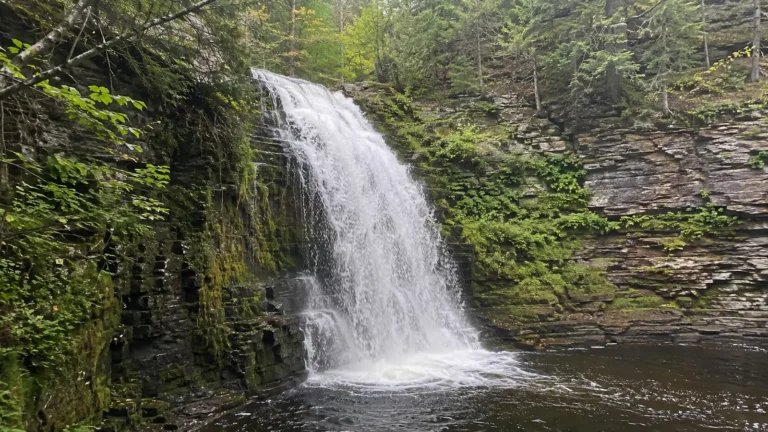
Choose one main hike and one easier backup after reviewing the live trail report. Waterfall walks, forest routes, coast views, and lake activities vary in length, surface, elevation, and seasonal access.
The official Fundy National Park page publishes current closures, maps, facilities, camping, programs, and safety guidance. As checked in September 2026, the Point Wolfe Covered Bridge is scheduled to close from September 8 through December 2026, affecting access to facilities beyond it.
That closure is a useful reminder to check again even when the park itself is open. One bridge, storm, or maintenance project can change the best trail choice without closing the entire destination.
Day 5: Alma, Cape Enrage, and Hopewell Cape
Give Alma a slow morning, then choose Cape Enrage or another coastal stop en route to Hopewell Cape. Leave enough flexibility to match Hopewell Rocks’ safe ocean-floor window rather than arriving at the prettiest hour on your hotel schedule.
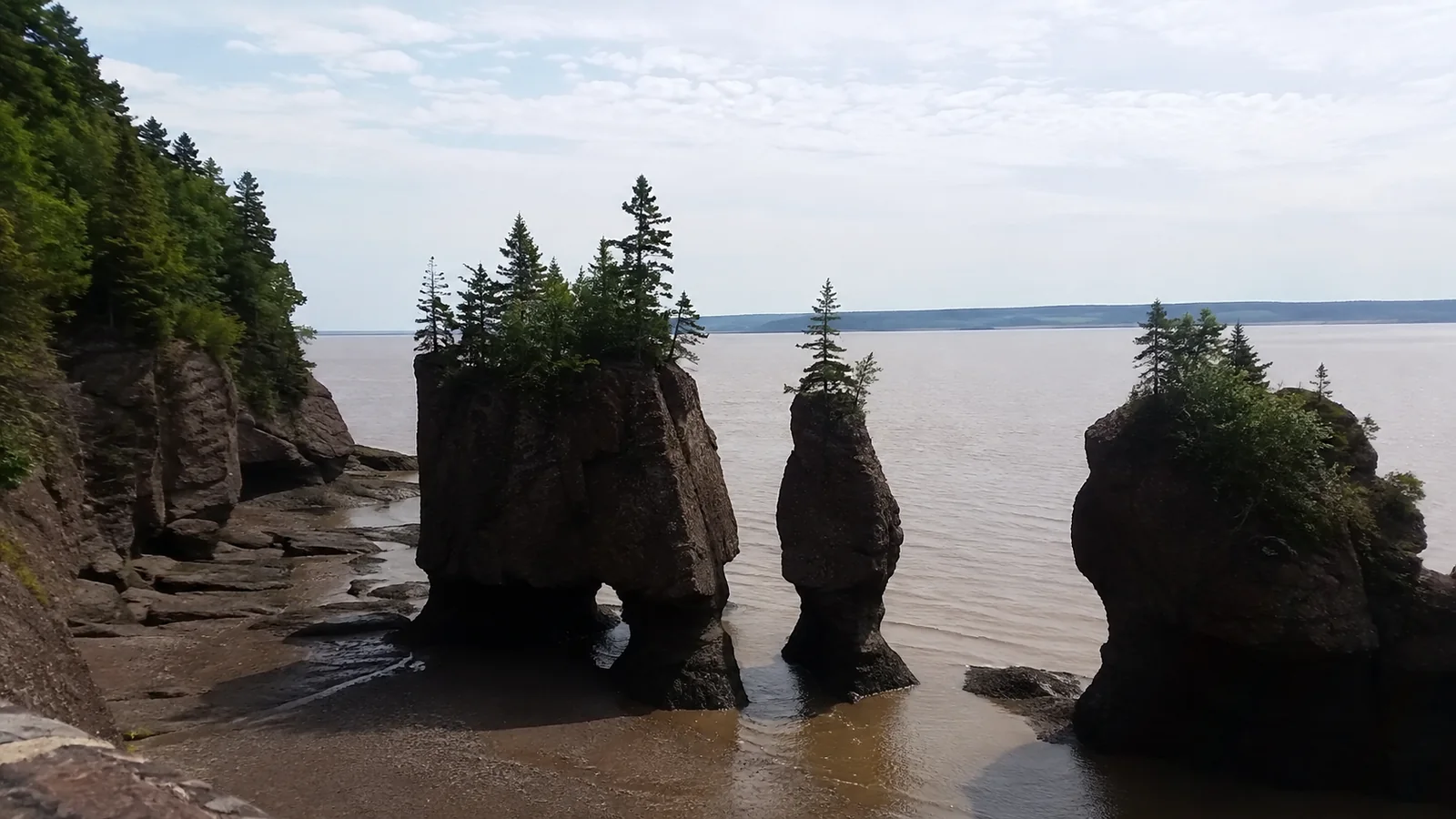
At Hopewell Rocks, low tide can permit walking on the ocean floor during managed access, while high tide changes the view from above or from the water. These are two distinct experiences, and neither should be promised outside park hours or safe conditions.
Day 6: Hopewell Rocks and Moncton
Use the official Hopewell Rocks tide table, which displays times in Atlantic Time. Park admission is currently valid for two consecutive days, giving visitors a practical way to see different tide states during operating hours.
Wear sturdy footwear because the ocean floor can be wet, muddy, and uneven. Respect every closure and staff instruction, since a beautiful photograph is not worth getting caught below a rising tide.
Continue to Moncton for dinner and an overnight base. Moncton is useful for flights, food, and regional connections, but its famous Magnetic Hill is a brief novelty rather than a reason to cut Fundy hiking.
Day 7: Moncton, Shediac, or Departure
If the schedule allows, spend the morning in Moncton or drive to Shediac for a gentler taste of the Northumberland Strait coast. Beach operation, water conditions, and seasonal services need their own checks.
Keep the final afternoon light before a flight or long drive. If Prince Edward Island comes next, my Cavendish Beach planning guide explains why national-park access, surfguard service, dogs, dunes, and commercial attractions are separate questions.
The Acadian Coast Alternative
The official Acadian Shores road trip describes a seven-to-10-day, roughly 320-mile journey. It fits travelers drawn to coastal villages, French language and culture, beaches, seafood, and a slower cottage-style trip.
Possible anchors include Shediac, Bouctouche, the Acadian Peninsula, Caraquet, and the Chaleur Bay area. Choose two or three bases rather than changing lodging nightly.
French and English are both official languages in New Brunswick, but community language patterns differ. Approach Acadian culture as living and varied, not as a museum label or one themed dinner.
Check festival dates, cultural-site schedules, and restaurant hours for the exact season. A special event can make a town wonderfully lively while also reducing lodging availability.
Should You Add Fredericton?
Fredericton fits travelers who want the provincial capital, riverfront trails, galleries, historic architecture, and craft beverages. Add one or two nights rather than detouring for a rushed lunch.
It combines naturally with Saint John and a River Valley route, especially when arriving from Maine or Quebec. On a coast-first seven-day trip, I would keep Fredericton optional unless city culture matters more than another park day.
Best Time to Visit New Brunswick
Summer for the Broadest Access
Late June through early September usually offers the widest selection of coastal services, parks, tours, beaches, and events. It also brings peak demand, insects, occasional heat, and prices that reward early booking.
Fall for Color and a Quieter Pace
September and early October can pair colorful forests with cooler walking weather. Seasonal restaurants, attractions, ferries, visitor centers, and campgrounds may reduce hours or close, so exact dates matter.
Winter and Spring Need Different Plans
Winter suits snow sports, cozy city stays, and specific events, not a copy of the summer coastal itinerary. Spring may be muddy, cool, and quiet before seasonal operations fully begin.
Whale watching, paddling, beach swimming, and foliage each follow different windows and conditions. There is no single “best month” for every New Brunswick activity.
Tide Planning Without Getting Trapped
A tide table is location and date specific. Do not use the Hopewell Rocks time to decide when a different beach, cave, harbor, or river feature is safe.
Arrive with enough buffer to park, walk to the site, hear staff instructions, and leave the shore before access closes. Fog, wind, waves, rain, and slippery surfaces can make a technically available window a poor choice.
Never cross a wet channel or round a headland simply because other visitors are doing it. Ask park staff about the safe return point, and keep children within immediate reach.
Driving and Transportation
A rental car is the simplest tool for this route because many coastal parks and villages have limited public transportation. Confirm border permission, insurance, roadside coverage, and ferry policies before collecting the keys.
Check New Brunswick 511 for current road conditions, incidents, construction, and advisories. Coastal fog, wildlife, winter weather, and darkness can make an easy-looking road slower than expected.
Do not rely on cell service for every rural turn. Download maps, carry a charging cable, and keep the fuel tank comfortably above empty.
If this province is one segment of a larger loop, my Canada road-trip framework helps protect days for each region. New Brunswick, Nova Scotia, Prince Edward Island, and Newfoundland are not one interchangeable Atlantic stop.
Wildlife and Outdoor Safety
Keep distance from bears, moose, seals, whales, nesting birds, and other wildlife. Use established operators for marine trips, follow viewing rules, and never feed an animal for a closer photograph.
Forest trails can be muddy, rooty, and slick, while coastal cliffs and tides create different hazards. Carry water, layers, rain protection, navigation, and the gear appropriate to the specific outing.
For paddling, cold water and rapidly changing coastal conditions matter even on a sunny day. Beginners should use a qualified outfitter rather than treating a sheltered-looking cove as proof of easy water.
Food and Budget
Plan a mix of markets, casual seafood, bakeries, Acadian cooking, and one or two special dinners. Ask for current market price before ordering lobster or a large seafood platter.
Your real budget should include the car, fuel, parking, park admission, lodging, food, tide-dependent activities, guided tours, insurance, and cross-province transport. A free viewpoint does not make a long rental-car day free.
Save by sleeping two or three nights per base, carrying a picnic lunch, and choosing one paid anchor activity per day. The North America trip-cost comparison is useful for ideas, but live totals should decide whether New Brunswick fits your dates.
What to Pack
- Waterproof shell and a warm layer
- Walking shoes with grip and a second dry pair
- Sun protection and insect repellent
- Refillable water bottle and picnic container
- Offline maps, charging cable, and power bank
- Binoculars for responsible wildlife viewing
- Passport and other documents required for your route
Pack for wind and rain even if the inland forecast looks mild. Coastal weather can make a comfortable temperature feel much colder.
The Bottom Line
For a first New Brunswick trip, I would spend seven days moving from Saint John through Fundy Trail, Alma, Hopewell Rocks, and Moncton. It is varied, practical, and gives the tides enough room to change the plan without ruining it.
Add the Acadian coast or Fredericton only with extra time or a clear preference for that region. New Brunswick is not a filler province, and it gets much better when the schedule stops treating it like one.