
South America can reward a careful budget, but no country stays universally cheap. Compare the whole trip from your home airport, then choose the route whose tradeoffs fit how you actually travel.

How I would compare these five countries
Start with one set of dates and one comfort standard. Price international flights, baggage, airport transfers, lodging in a practical neighborhood, ordinary meals, the experiences you care about, regional transport, insurance, entry costs, payment fees, and a disruption cushion.
A favorable exchange rate can help, but it is not a travel budget. The World Bank exchange-rate series is national and annual, while the rate on a card or at an exchange counter can be different.
Purchasing-power data has the same limitation. The IMF purchasing-power comparison is useful macroeconomic context, not a quote for a hotel, flight, meal, or tour.
I would make a small spreadsheet with the same cost categories for all five countries. That makes an expensive flight or remote side trip visible instead of letting a cheap lunch decide the winner.

1. Peru for a varied first trip
Peru can work well when you want history, food, mountains, desert coast, and major visitor infrastructure in one country. The budget advantage is strongest when your route is compact rather than a collection of distant highlights.
Lima, Cusco, the Sacred Valley, Arequipa, northern cities, and Amazon gateways create very different trips. Each extra flight, long bus journey, premium train, permit, or guided attraction can reshape the total.
Altitude is a planning cost as well as a health consideration. A slower first few days, a suitable room location, and flexible transport may be more valuable than squeezing another stop into the itinerary.
For an itinerary beyond the familiar southern circuit, my guide to Trujillo attractions helps you judge whether the northern coast belongs in your route. Add it only after pricing the connection and the time it removes from other places.
Peru cost traps to check
Look closely at timed tickets, mandatory guide arrangements, premium rail products, checked bags on domestic flights, and airport transfers. A low room rate far from the area you plan to explore can also create a daily transport penalty.
Peru is my strongest fit here for a traveler who wants variety and can build a logical corridor. It is a weaker fit if the trip depends on several remote regions in a short holiday.

2. Ecuador for shorter travel distances
Ecuador is appealing when you want several landscapes without crossing the full length of a continent. Quito, Andean towns, cloud forest, coast, and Amazon access can be combined, but the cheapest-looking route is not always the easiest one.
The Galápagos should be treated as a separate financial decision. Flights, park or transit requirements, inter-island movement, cruises, and guided activities can make an island extension unlike a mainland Ecuador budget.
On the mainland, choose a route before choosing hotels. A room that supports walking or simple local transport may beat a cheaper property that forces repeated taxi trips.
Ecuador cost traps to check
Price airport access, private transfers to nature areas, guided excursions, baggage rules, and any high-demand holiday period. Also check whether an attraction is realistic as a day trip or deserves an overnight stay.
Ecuador fits travelers who value route efficiency more than collecting famous landmarks. It may disappoint a budget built around the islands while pretending they cost like the mainland.

3. Chile when the route is the reason
Chile deserves the most careful framing on this list because it is not an automatic low-cost winner. It can still be good value when a specific region is your priority and you avoid an inefficient chain of long domestic journeys.
Santiago and Valparaíso form a different budget problem from Atacama, Patagonia, or remote islands. Long distances, limited alternatives, seasonal demand, and specialist excursions can dominate the bill in those regions.
If the port city is part of your plan, use my Valparaíso attractions guide to decide what deserves time. Do not assume a Santiago flight and a Valparaíso stay share one simple transfer cost.
When Chile can still make sense
Choose Chile when one landscape or city pairing is central to the trip, not because an old country ranking called it cheap. Compare a focused Chile itinerary against the cost of reaching a cheaper-looking but more complicated alternative.
A traveler who can book one coherent corridor may find acceptable whole-trip value. Someone trying to combine Atacama, central Chile, Patagonia, and an island on one short visit is buying several trips at once.

4. Bolivia for travelers comfortable with friction
Bolivia may deliver strong local value, but the saving is conditional on transport tolerance, altitude, schedule flexibility, and the exact experience. A remote salt-flat trip cannot be compared fairly with a city stay using only meal and room prices.
La Paz, Sucre, Cochabamba, and Uyuni ask different things of a traveler. Overnight transport, private transfers, weather-related changes, altitude recovery, and tour standards all belong in the budget.
Bolivia cost traps to check
Compare tour inclusions line by line, especially accommodation standard, meals, protective gear, vehicle occupancy, guide language, and the plan for disruption. The cheapest offer is not a saving if it omits something you need or leaves no workable backup.
Bolivia best suits an adaptable traveler who accepts longer ground journeys and asks detailed operator questions. Travelers who need step-free access, predictable rest stops, or rapid medical support should investigate each segment before treating the country as a budget shortcut.

5. Colombia for a focused city-and-region plan
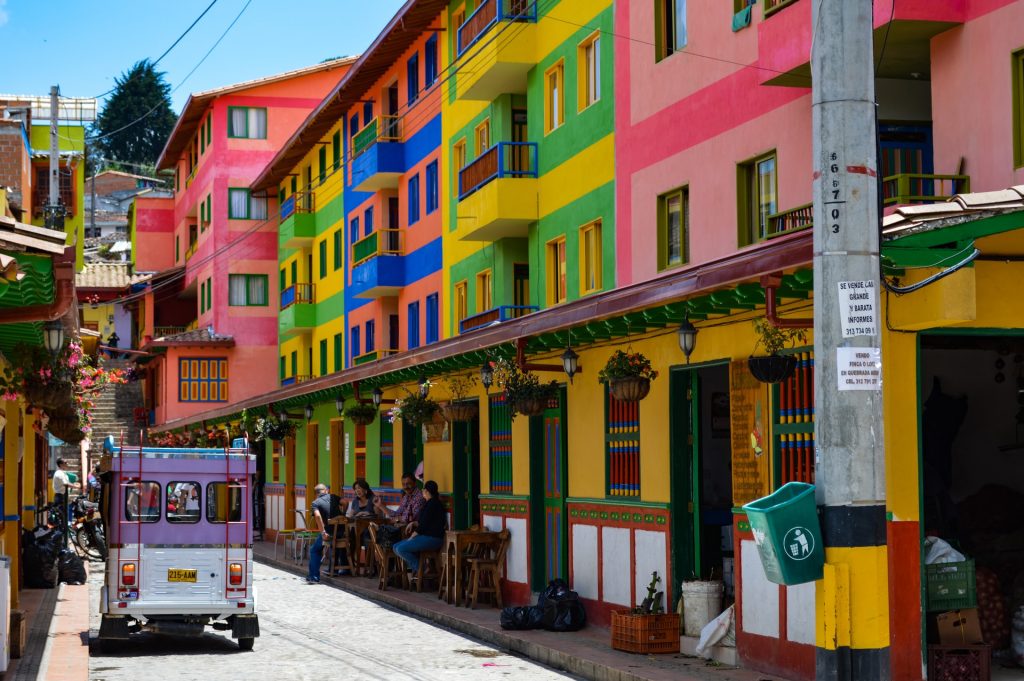
Colombia can suit a traveler who chooses one or two connected regions instead of racing between every famous city. Bogotá, Medellín, Cartagena, the coffee region, and Caribbean nature areas should not be treated as one compact destination.
Domestic flights may save time, but baggage, airport transfers, and schedule risk belong in the comparison. Long ground journeys may look cheaper until they consume a meaningful part of a short trip.
Colombia cost traps to check
Historic-center lodging, holiday weekends, coastal excursions, private transfers, and last-minute domestic travel can change the result. Compare a practical location and the experience you actually want rather than starting with the lowest room rate.
Colombia is a good fit for city energy plus one contrasting region. It is less budget-friendly when the plan is a rapid national sampler connected by repeated flights.
How to choose your lower-cost winner
First, remove any country whose entry rules, altitude, access, or journey length do not fit you. Then compare live flight options with baggage, a realistic route, and a lodging location that supports the way you will spend each day.
Next, add the defining experience rather than comparing bare-bones survival budgets. Machu Picchu, the Galápagos, Atacama, Uyuni, or a Caribbean-coast excursion can be the reason for traveling, so hiding it would make the comparison useless.
Finally, stress-test the plan. Add insurance, card fees, a missed connection or transport alternative, and enough flexibility that one disruption does not break the entire trip.
If five countries feel too broad, the South America destination comparison narrows the question to specific cities and regions. That is usually the more useful next step after choosing a country or route family.
Entry, health, and safety checks
Visa and passport answers depend on nationality, residence, transit points, and date. Use your own government's advice, the destination authority, and the airline rather than copying the rule for another traveler.
Health needs also change by route and person. The World Health Organization travel-vaccine guidance explains why border requirements and medical recommendations are separate checks.
Review official safety advice during planning and again before departure, then adapt the route to current regional conditions. No article can guarantee safety, transport continuity, or a particular exchange rate.
Do an accessibility and payment stress test
Affordability changes when a traveler needs step-free rooms, private transport, reliable restrooms, refrigerated medication, dietary certainty, or a companion. Check the complete route from airport through hotel, street, attraction, transport, and return rather than accepting one broad accessibility label.
Ask hotels and operators for measurements, surface details, vehicle type, lifting policy, and assistance limits in writing when access is essential. A slightly higher base price may be better value if it removes repeated private transfers or an unusable booking.
Payment systems deserve their own check because the posted local price and the final account charge may differ. Compare card acceptance, foreign transaction fees, cash access, withdrawal limits, dynamic currency conversion, and the safe amount of backup cash without assuming one method works nationwide.
Keep a second payment method separately and know how to freeze a lost card. Do not build an itinerary around obtaining one particular exchange rate after arrival, especially when the next transfer or hotel depends on immediate payment.
Test two complete sample routes
Before booking, make one compact route and one ambitious route for the same country. Price every connection and required night, then compare how much usable destination time each plan creates.
The compact route often wins because fewer transfers reduce baggage fees, airport journeys, exhaustion, and disruption exposure. If the ambitious version still offers enough extra value, you will be choosing it with the real cost visible.
My practical verdict
Peru is the easiest all-round comparison for many first-time visitors, Ecuador rewards compact routing, Bolivia rewards flexibility, Colombia rewards regional focus, and Chile works when a particular route justifies its costs. None wins for every origin or travel style.
The best budget choice is the trip you can price honestly and execute comfortably. A smaller route with fewer fragile connections often delivers more value than a longer list of supposedly cheap stops.

Ellie is the founder of Ellie's Travel Tips, where she shares practical cruise tips, port guides, and step-by-step itineraries to help you plan smarter trips for less. Her checklists and packing guides turn travel daydreams into doable plans.